Some People Love Dead Jews; We Love Living, Joyful Jews by Rabbi Lerner YK 5786
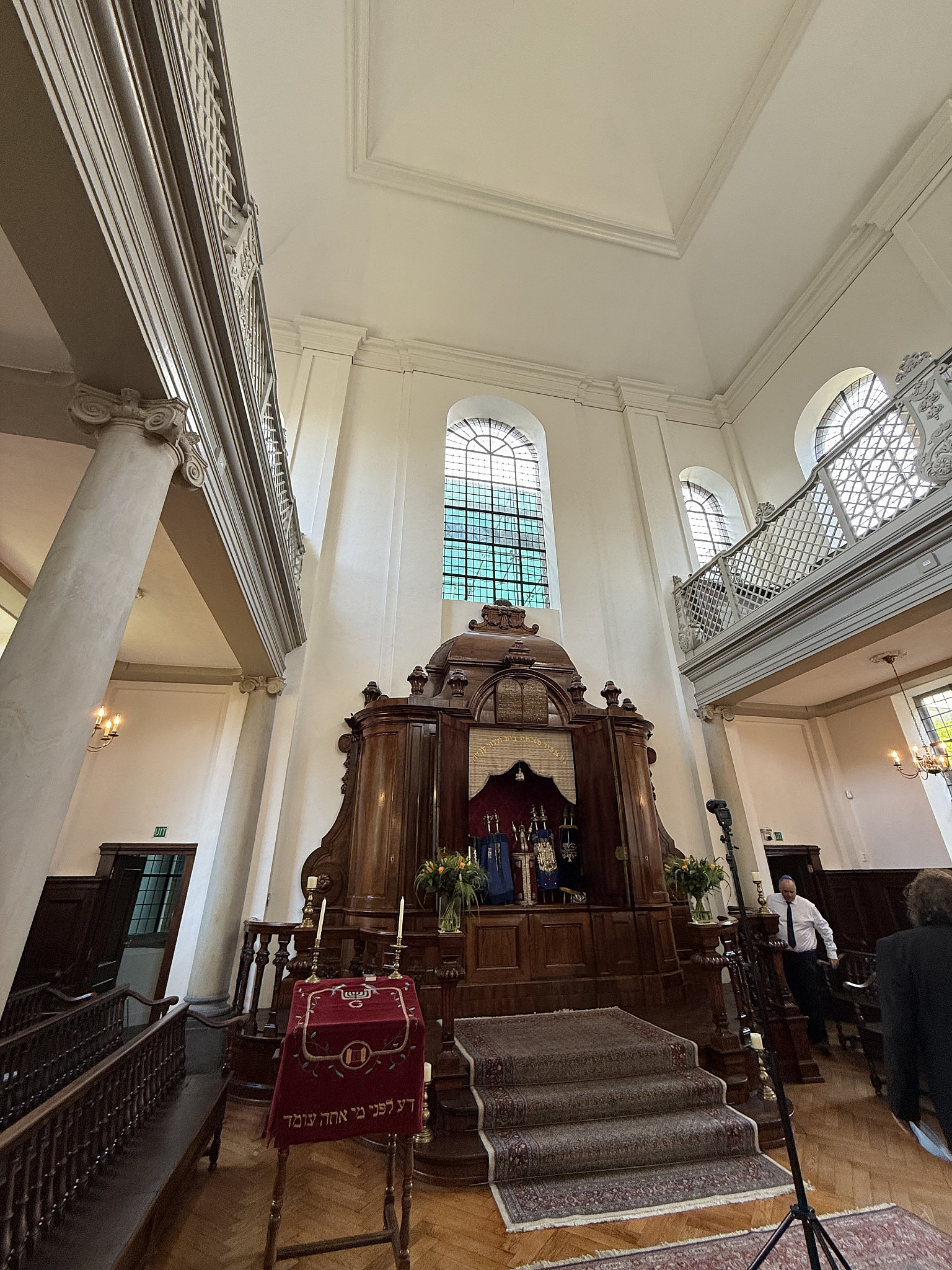
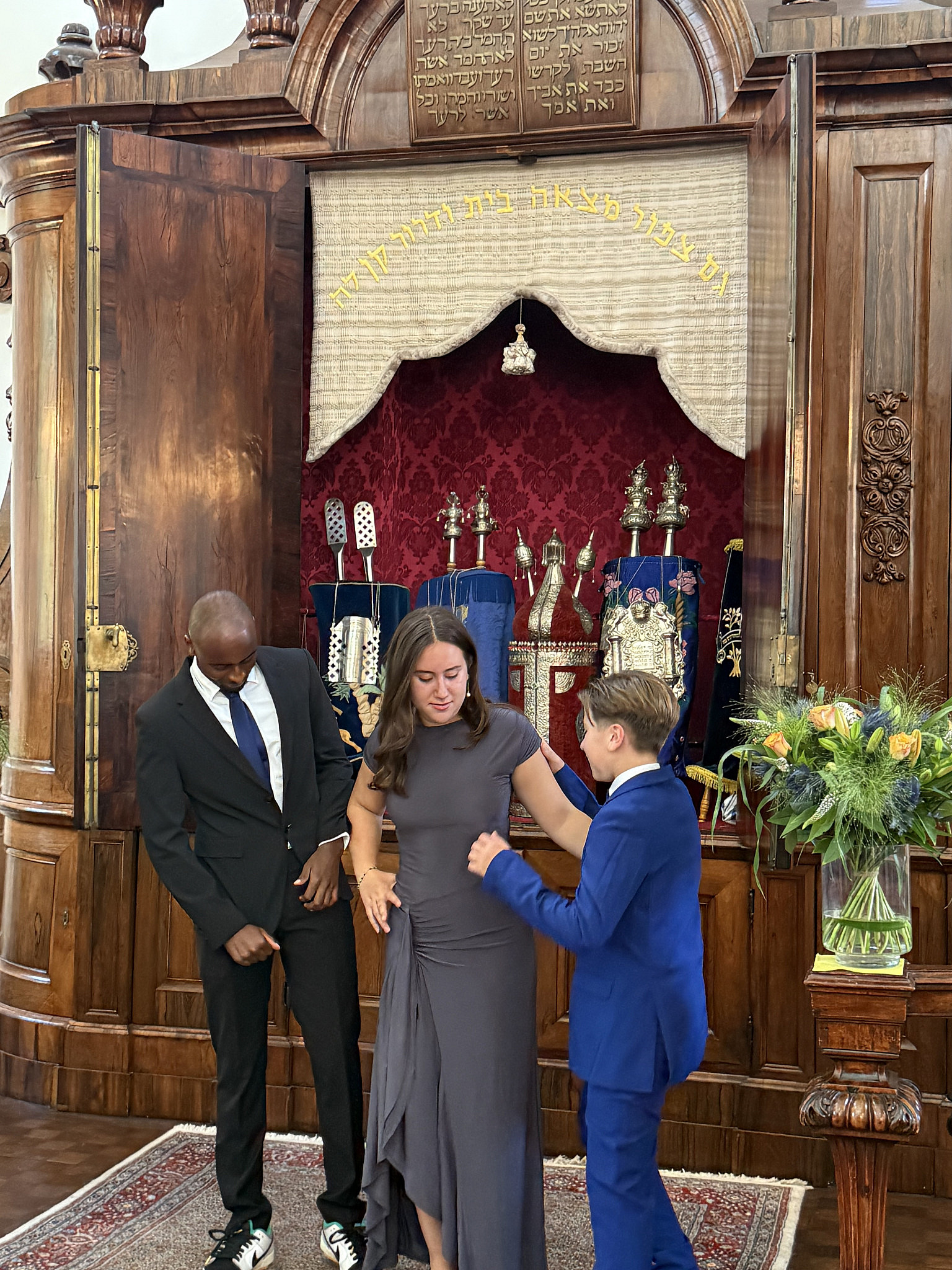
This summer, Sharon and I had the chance to spend some time in the Netherlands. A friend’s son was celebrating his Bar Mitzvah at their synagogue in The Hague, and we wanted to be there to support the family and the community.
Now, this wasn’t just any synagogue. It’s a liberal, egalitarian congregation housed in a 300-year-old building.
Think about that: a Jewish building, three centuries of history, standing through the darkest period of our history.
I wanted to help this community, so I told them that I was a rabbi and would be happy to give a d’var Torah, teach a class, whatever they needed.
Their response?
“Great, Rabbi. How about reading the whole Torah portion?”
Now — let’s be clear. Reading Torah is holy work.
And I am so grateful to our Torah readers here at Emunah (thank you to Marc Sacks for coordinating, and to our incredible leyners — please, keep reading!).
But I’ll be honest: it was not what I had in mind for my vacation.
Yet there I was, chanting every last word.
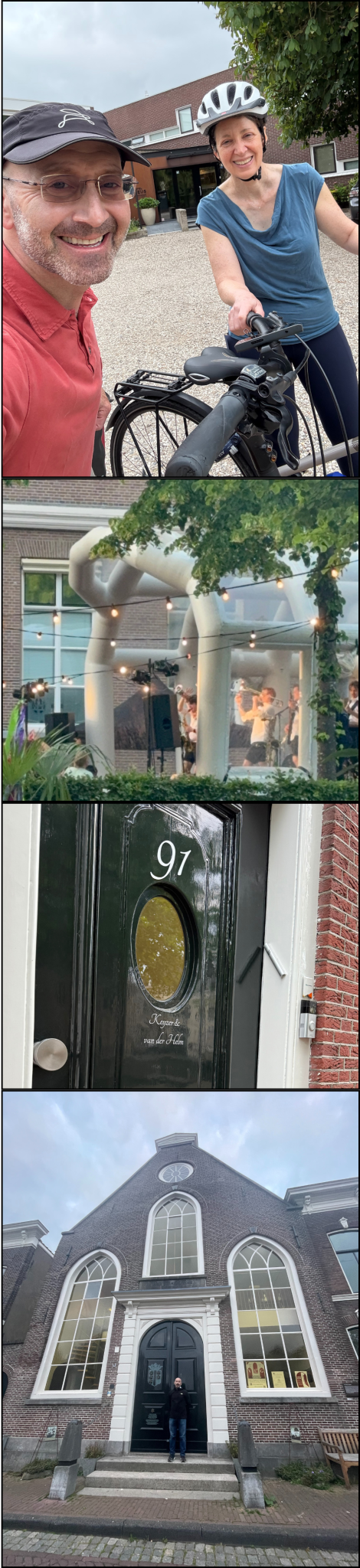
Between the two Shabbatot we were there, Sharon and I explored the Netherlands in the most Dutch way possible: on bikes.
It’s the most bike-friendly country in the world — bike lanes, bike paths, even bike highways between cities.
And it’s pretty much totally flat.
We stumbled into all kinds of moments.
In Leiden, we found ourselves next to a law school party on a canal.
And what was the music? Klezmer.
A full klezmer band!
Dancing, clarinets, accordion.
But…not an actual Jew in sight.
In Gouda, we were walking along the canals when Sharon suddenly exclaimed with delight: “Look — a mezuzah!”
We couldn’t tell if it was old, or if Jews still lived there, but we were thrilled to spot it.
A little Jewish spark.
Then, a few streets later, we found an old synagogue.
Beautiful building; today?
An evangelical church.
Another Jewish community gone.
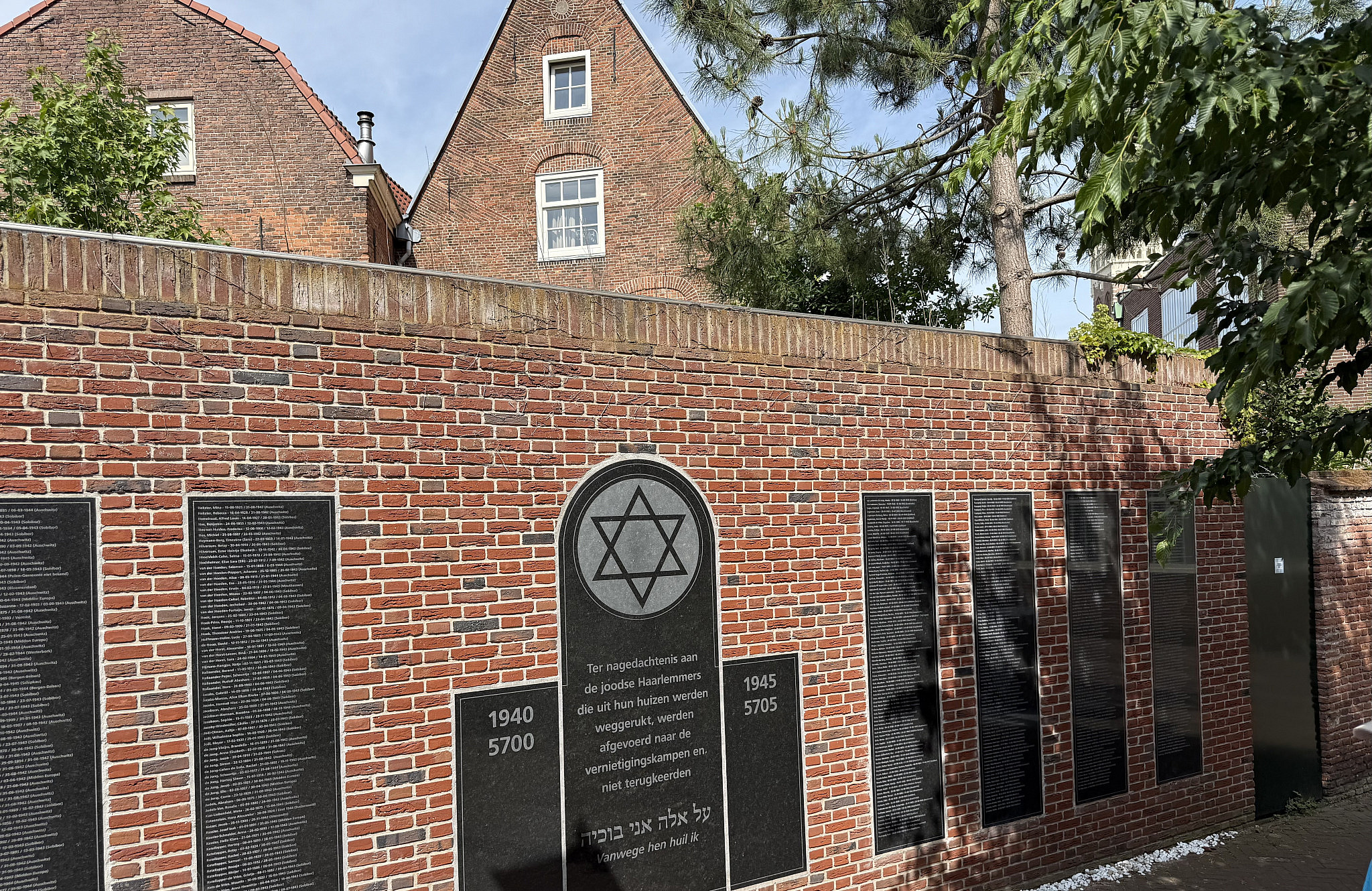
And in Haarlem, we stood before a large memorial for the Jewish Victims of the Holocaust. Four hundred and fifty names. Each with their birth date, deportation date, the transport camp and the camp where they were murdered — Auschwitz, Sobibor, etc., and the date of the murder.
It was meticulous, moving, overwhelming.
Europe does memory well. And yet…while we were there, Dutch friends told me: Don’t wear your kippah in public.
It’s not safe.
That stung. I saw plenty of Muslims wearing hijabs openly.
But I, a Jew, was told not to be visibly Jewish.
And I thought: Right.
People love dead Jews.
Memorials, stepping stones with the names of murdered Jews in the sidewalks, museums — all beautifully done.
People love dead Jews.
But living Jews? That’s harder.
* * *
In her powerful book People Love Dead Jews, Dara Horn claims bluntly that the world reveres Jews when we are victims, when we are gone, when we can serve as symbols.
But the world resists, ignores, or even despises us when we are alive, messy, vibrant, inconvenient…
Her point is provocative and simple: people love Jews as symbols of tragedy.
But living Jews — Jews who are here, now, with needs, complexities, and claims — that’s a harder sell.
* * *
There is a psalm we say almost every day — Mizmor L’Todah, the psalm of thanksgiving.
Its second line says simply: Ivdu et Adonai b’simḥah — “Serve God with joy.”
That is supposed to be the core of our religious life: gratitude, gladness, joy.
But here’s the thing — we don’t say it on the day before Yom Kippur.
Why not?
Perhaps, as we approach Yom Kippur, we are too burdened, too weighed down, too anxious about judgment.
Our tradition recognizes that we are not yet in the place of gratitude.
We are stuck in fear.
It’s the lachrymose view of Jewish history — focusing on our tears, our losses, our punishments, our grief.
But Yom Kippur itself flips that on its head.
The Mishnah tells us it was one of the two most joyful days of the year.
Why?
Because it was the day of forgiveness, the day of renewal, the day when young people would go out into the fields and find partners.
Yom Kippur is not just about guilt. It is a wedding day — the day we, the Jewish people, commit ourselves to God again.
And what could be more joyful than a wedding?
When the shofar sounds at the end of Ne’ilah, when we sing, when we dance, that is our Mizmor L’Todah, our song of gratitude. Even if we don’t recite it in our prayers, we live it in our bodies and souls.
Friends, to be a Jew is not to be defined by fear or tragedy. To be a Jew is to live ivdu et Adonai b’simḥah — to serve God with joy.
That’s why the most moving part of my trip wasn’t the memorials, as powerful as they were.
It was those Shabbatot in The Hague — kids running around, families gathering, a community coming back to life, the joy of a Bar Mitzvah, energy, and vibrancy.
New life.
Friends, that is our sacred work.
Not to stand still like monuments.
But to be a living synagogue. To be a place where Judaism is not just remembered, but lived joyfully.
Serve God with joy – Ivdu et Adonai B’Simḥah!
In America, Judaism is a personal choice. We can all spend our time doing other things, such as playing pickleball, streaming TV, and exercising.
Our kids have numerous options, including soccer, ballet, music, and more.
All wonderful!
But.
What I pray is that they become engaged Jews.
Let’s dance on Friday nights, sing our wordless niggunim, celebrate with the band on Simḥat Torah, schmooze with friends at Café Emunah and come, even JFK – just for Kiddush!
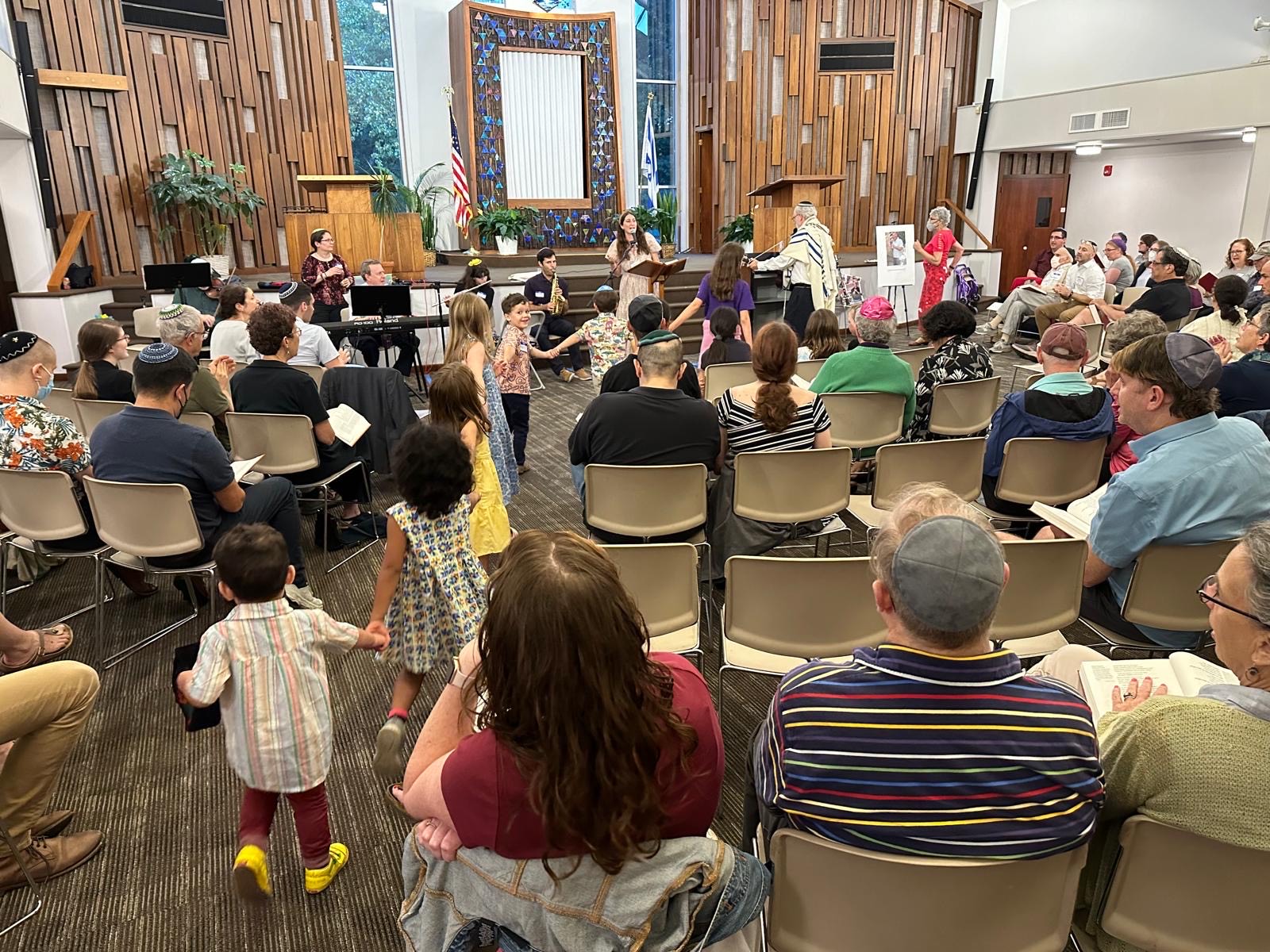 Welcome everyone in the words of our great sage, Shammai – heveih mekabel et kol-ha’adam b’seiver panim yafot – greet every person with a cheerful smile.
* * *
Because, as Dara Horn reminds us, people may love dead Jews.
But God — and Torah — call us to love living Jews. And to love living joyful Judaism.
Ivdu et Adonai b’simḥah.
May this year be a year of joyful Judaism — serving God with gladness, celebrating not only our past, but our living covenant, together.