
A Liberal Atheist Who Supports and Studies Israel
Featured Post
Sorry, Mr. Chomsky, I no longer agree: My journey out of anti-Zionism
The more I learned, the more I realized I couldn’t accept the way my leftist intellectual heroes relate to Jews and Israel
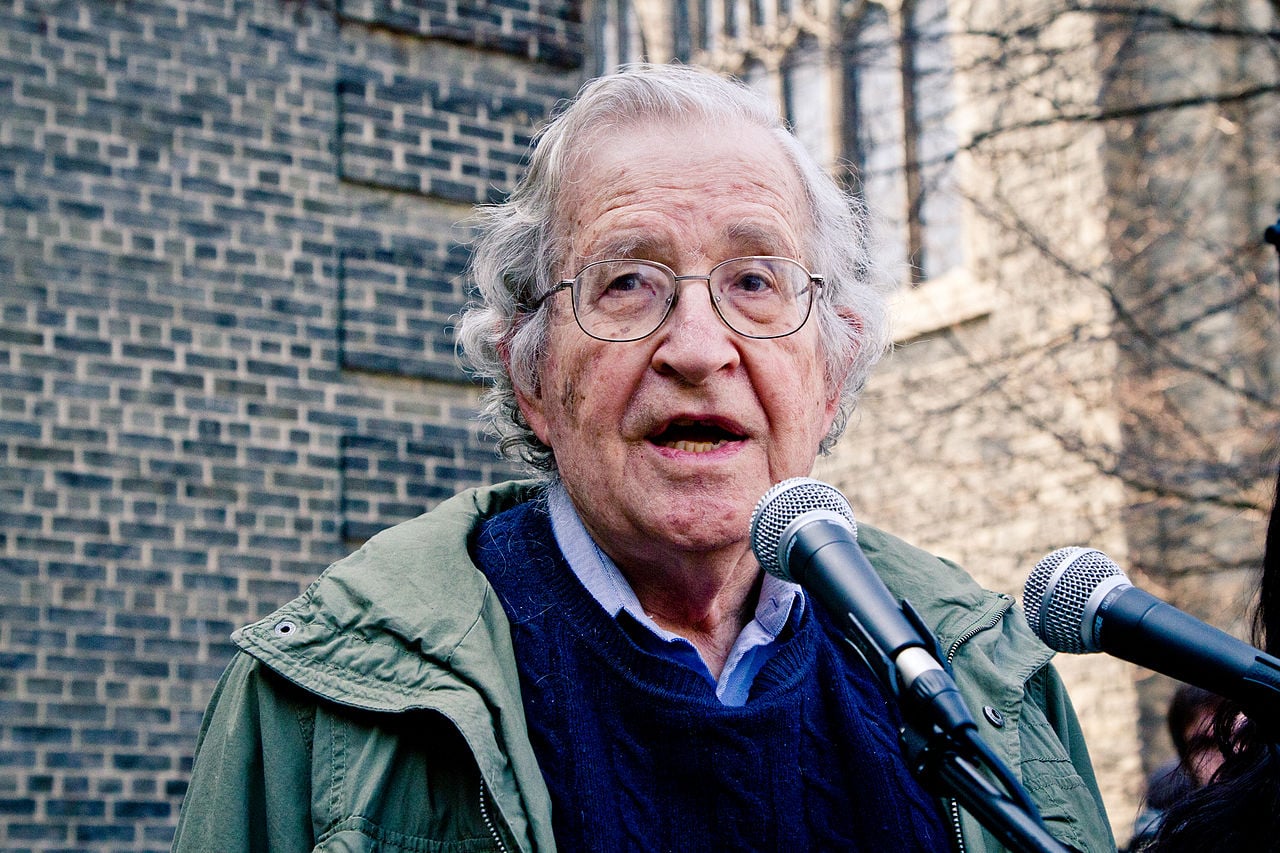
Noam Chomsky (Wikipedia/Author Andrew Rusk from Toronto, Canada/ Attribution 2.0 Generic (CC BY 2.0) https://creativecommons.org/licenses/by/2.0/legalcode)
I was once an anti-Zionist. My political views were shaped by leftist academics during my time doing graduate work at Boston University. I had immersed myself in Marxist theory, sure I was on the righteous path of my political forebears. I was studying the work of Noam Chomsky at the time, enamored by his anarcho-syndicalism, ideas on propaganda, and takes on the Middle East. As you may know, Chomsky is a very prominent anti-Zionist.
When I met him, he had CNN reporters waiting for their interview ahead of me. He came out and told them to wait so we could meet. I was a humble student at the time, and I got to sit and talk about philosophy and politics for 30 minutes with my hero. We discussed liberation theology in South America, the assassination of Bishop Oscar Romero, the legendary philosopher Bertrand Russell, and how much we both disliked Sam Harris. It was the zenith of my political development, I thought. I was on a leftist high and felt certain I would stay a leftist forever.
Life has changed, and I just have to say sorry, Mr. Chomsky, I no longer agree.
So, I dug further. I read everything by Karl Marx, Friedrich Engels, the Frankfurt School, and philosophers like Foucault, Sartre, and Althusser — the basic canon of leftism. Many of my professors taught from a Marxist or post-colonial perspective, which meant I became proficient in these ways of interpreting the world. Politically, I moved through communism and socialism — romanticizing liberation movements from the Zapatistas of Chiapas to the IRA in Belfast. I read Rashid Khalidi, Fayez Sayegh, Homi Bhabha, and Frantz Fanon, absorbing concepts like colonialism, hybridity, indigeneity, and “othering.” I would use these concepts and theories to interpret the world. It was my mental tool-bag, and the world was in disrepair.
The problem is that many of these tools don’t fit the nuts and bolts of different situations. With post-colonialism, it was oppressor vs. oppressed, colonizer vs. colonized, settler vs. native, and occupation vs. liberation; with Marxism, it was the proletariat vs. bourgeoisie, capitalism vs. communism, and theory vs. practice. And while many post-colonial thinkers had the sophistication and nuance to admit their limitations, these theories can instill in you a way of splitting up the world. Binaries are painfully limiting, and when something doesn’t fit, we don’t want to be Procrustean. We can’t lob off that part, chop off this part, and make it fit our bed. We have to accept it as is, which means we have to sometimes let our tools go and find better ones.
What my old self and the Left fail to see is how often these categories implode when applied to Jews and Israel. Not only can they transmit, and often create, antisemitism, but they usually render Jewish peoplehood and self-determination illegitimate. When you apply terms like “colonizer,” “oppressor,” and “Imperialist” to a persecuted diaspora of indigenous tribes and cultures, you end up misreading history.
The gathering of exiled Jews to their homeland after facing persecution almost everywhere turns into “European Colonization” and “settler colonialism.” Jews are refashioned and theorized into an archetype that is Eurocentric and “white,” which translates their “return” to Israel into a foreign immigration at best, settler colonialism at worst. Of course, within post-colonial discourse, “Zionism” is the moral equivalent to “Nazi,” which I knew hearkened to Holocaust inversion, a clear tell of antisemites world round.
Anti-Zionism is the most socially acceptable way to express antisemitism.
When you view Israel as a genocidal monolith, a bloodthirsty creation of Western interests, and not the formation of an indigenous people’s right to political protection, you cannot view Jewish history, lived experience, tradition, or statehood as natural or legitimate. If the origin story of Israel is thought of as manufactured, and thus arbitrary and exogenous, it’s hard to legitimize anything about it. You begin to “other” the very people these theories were meant to fight for.
When I reached this point, I no longer could accept these tools, because they only lent themselves to seeing the Jewish relation to Israel as nefarious. The post-colonial critique and kit, along with Marxist lenses, does not accept what the vast majority of Jews believe. It doesn’t allow for a healthy, honest, and genuine Zionist Jew. You can only say Jews are either deliberately evil, willfully ignorant, magically deceived, or entirely dumb.
Insert those awkward discussions in which Gentile anti-Zionists do their best to act like they are pro-Jew and simply expressing a political opinion. That’s all. But don’t these ideas seem rather grand and cosmic for something as meek as a political expression? As Rosenberg points out, anti-Zionism “is not merely a politicized critique. It is a moral-political system in which Jewish sovereignty is rendered inherently eliminatory, and its destruction morally redemptive.” He describes anti-Zionism, not as a political debate but as a regime—one sustained by repeated libels, such as colonizer, apartheid, and genocide, treated as settled truths rather than contestable claims.
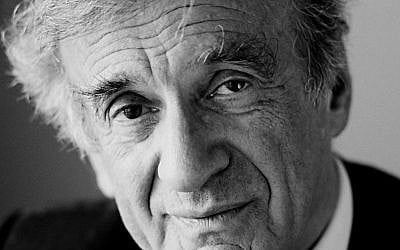
Acting like calling for the end of a country is normal “political critique” is absurd and disingenuous. Calling for the death of Israel is totalitarian and better fitting in a terrorist charter, or in the mouth of an ayatollah, than within sane political discourse. Elie Wiesel, a professor from my old school (you may have heard his name), said the worry these days wasn’t like the Holocaust he went through. It was fear that the only Jewish homeland and state would be destroyed. He said that one does “not speak of genocide, one envisages the end of Israel.” After which he poetically says, “A Jew may be Jewish far from Jerusalem; but not without Jerusalem.”
I will mention this again, but listening to Jewish voices means knowing that roughly 80% of American Jews report that caring about Israel is an important part of their Jewish identity. Approximately 70–80% feel emotionally attached to Israel, including those who strongly oppose Israel’s policies. 84% of American Jews believe “Israel has no right to exist” is antisemitic, which goes up to 89% among British Jews. Taking all of the statistics available, 80-90% of Jewish people are Zionist, and only 1-7% are anti-Zionist. Statistically, they aren’t even a slice of the pizza.
So how did I get out of anti-Zionism?
I arrived at Zionism when history, evidence, and Jewish voices converged — and frameworks I once trusted failed to account for Jewish continuity, history, and the legitimacy of their self-determination.
I came to Zionism through study, not sentiment. Well, not all sentiment. Reading Jewish history — the continuity of presence, the Diaspora, the Aliyahs — made clear that Zionism was a necessary and reasonable project for the protection and flourishing of persecuted and stateless Jews spread throughout the world, now living among nation-states, in a land where their ancestors were colonized by successive conquests more than other place on earth, surrounded by countries that expelled Jews, who had origins no more valid than Israel’s.
After October 7th, I started researching Hamas and the Palestinian Authority on their own terms — their charters, rhetoric, governance, and record — not with post-colonial or Marxist glasses on. I noticed the Left’s deafening silence about Hamas and October 7th. When a leftist did speak of October 7th, they always brought up claims of genocide, apartheid, and colonialism. They were repeated endlessly.
When slogans, taglines, and rhetorical devices — especially words like colonizer — are repeated often enough, they begin to win not because they are true, but because of their endless repetition.
I watched the American Left fail Jews. The excusing of violence in the name of liberation, a classic Marxist error, and the repeated indictments and libels that were used against Jews, was shocking to see overtly displayed by the “champion of minorities.” These terms were repeated and amplified until Jewish voices no longer counted. What passed as “critique” revived old libels. Holocaust inversion became genocide, Jews depicted as white European settlers became apartheid, and a return to a native homeland became colonization. When it comes down to it, you believe in Jewish self-determination, or you don’t. When you don’t, you’ve used a double standard that you would never apply to other indigenous peoples.
All of this had me thinking: where do Marxist theory and post-colonial critique take you when you assess the state of Israel? They take you to anti-Zionism.
How would they respond to the massacre on October 7th? They would view Hamas as freedom fighters, and Israel as deserving.
I couldn’t accept that.
I noticed that after October 7th, self-righteous certainty replaced judgment so completely that people calling themselves “anti-fascist” became openly antisemitic, convinced they were on the right side of history, and somehow felt fine regurgitating what Hamas might say. I remember thinking, cynically, that a week earlier, many of the same “From the River to the Sea” voices were sharing anti-Nazi Inglourious Basterds memes. That was when it became clear to me that Jews and the American Left were headed for rupture, and I knew I had to speak plainly about anti-Zionism.
I also had a sneaking suspicion that much of white leftist theatrics, a savior-complex of its own pathology, stemmed from white guilt. Israel became a target for this guilt. As Rosenberg said, speaking on writers who apply the “settler colonial” frame to Israel: “Their work channeled unresolved white guilt into a new moral language, one that displaced that guilt onto Israel, allowing it to function as the symbolic receptacle for the crimes of Western colonialism.”
In my humble experience, Jewish people see right through all of this and know that while Israel and Jews may not be identical, they’re inseparable.
According to reporting based on FBI hate-crime data, Jews remain the most targeted group in the United States, despite comprising roughly 2% of the population. On campuses, Hillel International’s incident tracking shows a sharp rise in harassment, intimidation, and exclusion since October 7th, much of it tied to anti-Zionist activism. In parallel, post–October 7th polling, progressives were significantly more likely to assign blame to Israel, even when asked directly about Hamas’s actions. Let me repeat that: even when asked directly about Hamas’s actions.
To hear of a massacre of civilians and respond with “but Israel…” is the problem. “When more than 1,200 innocent Israelis were killed, raped, and tortured, and taken hostage by openly genocidal antisemites,” Mara Lee Grayson notes how “so many students—and faculty—who believed themselves to be advocates for social justice not only refused to condemn the violence but framed it as a justified act of resistance.” Grayson connects this to the “racialization” of Jews, where Jews are considered “white” and not included in DEI work or other cultural studies because of the complexities they pose. She believes this exclusion is due to the “dominant narratives of Jews as colonizers, rather than an indigenous population.”
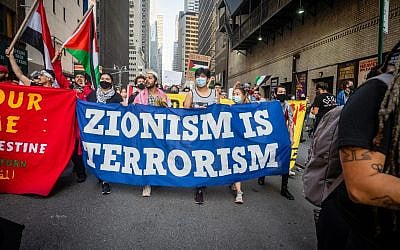
If we take these libels seriously, and the Left is correct, it means the majority of Jews are complicit and morally culpable of heinous evils. It’s no wonder that antisemitic crimes escalated. American Jews have adjusted accordingly. They are not worried about the right as much as they are worried about the Left. And with beliefs like these, they’re not wrong.
This is why I need to call out anti-Zionism.
Anti-Zionism denies Jewish peoplehood while insisting it is merely voicing a political take. However, no other claim to self-determination is treated as inherently illegitimate. It rebrands the origins of Zionism as colonial, even though early Jewish immigrants during the Aliyahs had no empire backing them, no metropole (i.e. “Mother Country”), no extraction economy, no colonial army—and they were returning to a land to which they are indigenous and had a continuous presence in. And they are still colonizers.
Jewish distrust of left-leaning people like me is not from a lapse in judgment — it’s from understanding. The question is whether people like me are willing to change our toolkit when the tools no longer work. If we do that, and listen to the overwhelming majority of Jewish voices—not only as authentic, but deserving of consideration—perhaps more of us can realize that while post-colonial analysis may have helped in understanding South Africa or Algeria, and Marxist critiques may have been poignant in answering robber-barons and laissez-faire capitalism, neither of them contributes to understanding Jews and Israel.
In fact, they misconstrue Jewish history and voices, employ double standards, and harm people. This is more than enough reason for me to write this, and say that I hope the Left, a group in which I once found identity, stops siding with hate groups and terrorists in the name of defending the marginalized. I hope they see the irony of using tools meant to better understand indigenous voices, only to recast a rooted people, and their State, as foreigners/ These are some reasons why I say:
Sorry, Mr. Chomsky, I no longer agree.
Related Topics
Related Posts