
South Korea is arming the Mideast. Will it mitigate risks for Israel?
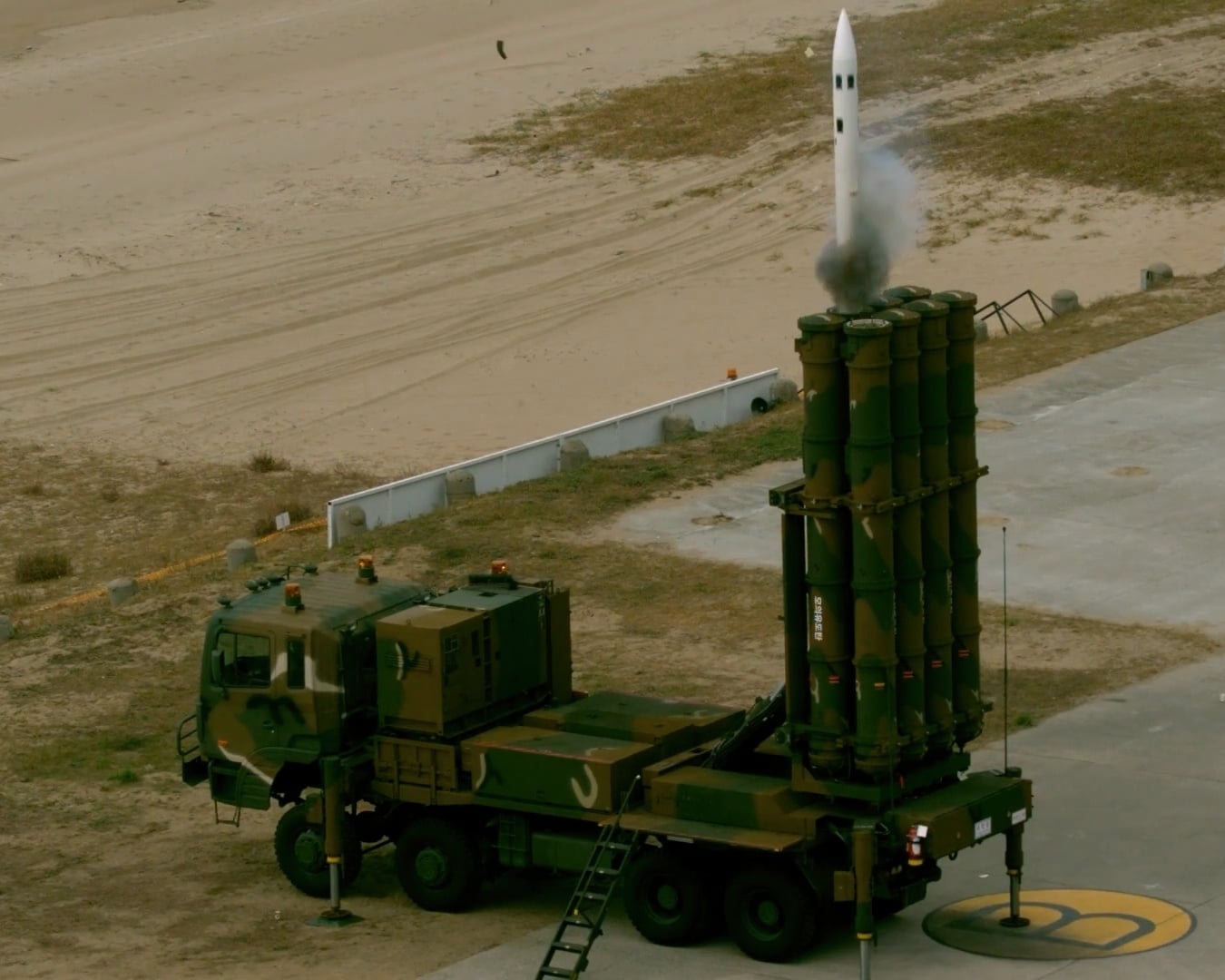
South Korea’s rise as a major arms supplier in the Middle East has been one of the region’s silent strategic developments. For the past few years, Seoul has secured multibillion-dollar deals with Egypt, the UAE, Saudi Arabia, and, most recently, Iraq, transforming South Korea’s defense industry into a central pillar of its global diplomacy.
Currently, Cairo is assembling South Korea’s K9 howitzers under a local production partnership, while the UAE has signed a $3.5 billion deal to introduce the Cheongung-II (KM-SAM) air-defense system. Baghdad and Riyadh soon followed with their acquisitions, making the KM-SAM one of the most rapidly spreading air-defense platforms in the Middle East.
For Seoul, this is an economic and geopolitical success. This enables the diversification of South Korea’s export market, strengthens its industrial base, and consolidates the image of a high-tech defense producer. However, such success accompanies new dilemmas – which have direct strategic implications for Israel. As South Korean military hardware proliferates in a region where multiple rivalry structures overlap, Seoul is faced with a growing risk that its weapons systems could one day complicate the operations of US military, Israeli fighter pilots, or partners aligned with both.
Such risk is especially notable in Iraq. The recent decision of Baghdad to procure the Cheongung-II (KM-SAM) comes at a moment when Iraq and Iran were deepening their security cooperation. The August 11 memorandum on co-protecting their airspaces, coupled with Iraq’s repeated complaints about Israeli overflights, places Iraq in a delicate position; pressured by Iran yet sensitive to sovereign issues domestically, while reliant on Western arms suppliers. If Israeli fighter jets again overfly the Iraqi airspace in a future conflict with Iran, those jets might encounter South Korean KM-SAM batteries. Even if Iraq has no intention of aiming at Israeli jets, the very existence of those weapons would alter deterrence calculations and could constrain the operational freedom of Israel in a critical moment.
Acting as a responsible arms supplier
This scenario reveals a broader truth. South Korea has entered into a field – arms exports are not a mere transactional deal but an instrument that shapes geopolitical order – that has long been dominated by the United States and Europe. As South Korea’s footprint grows in the region, Seoul needs to establish a clear principle that prevents its weapons from being used – either directly or indirectly – against South Korea’s allies or close partners.
The introduction of such a principle would not necessarily restrict South Korea’s emerging role as an arms supplier. Instead, it would demonstrate Seoul’s maturity as a global defense player. Export agreements should contain firm end-use assurances stating that South Korean weapons should not be used against specific strategic partners, including the US and Israel. In addition, when an arms importer joins a new security framework, just as Iraq and Iran did, Seoul should strengthen its end-use monitoring procedures so that Seoul can reevaluate risk before it materializes. If necessary, regular yet low-profile consultations with Washington and Jerusalem would be helpful in figuring out in advance how specific weapons transfers would impact the region as well as crisis scenarios.
Technological measures could complement political ones. South Korean defense companies already possess substantial influence through software updates, life-cycle maintenance, and training programs. Emphasizing defensive doctrines, setting engagement parameters, and coordinating identification-of-friend-or-foe standards would lower the probability of South Korean weapons being used to hamper allied operations.
As Israel faces more South Korean military hardware in the region — from Egyptian artillery to air-defense systems in the Gulf – the need for predictability is increasing. However, acting as a responsible arms supplier means recognizing that advanced air-defense missile systems shape more than national sovereignty. They could also reshape the operational environment of the allies that are interconnected with South Korean security.
South Korea is fully aware that deterrence is determined by clarity, reliability, and coordination. Emerging as a major weapons exporter, South Korea should follow the same logic. If Seoul can set a clear red line now, enlarging defense partnerships in the region would contribute to reinforcing the stability of the Middle East, preventing the creation of new unpredictability for countries that are dependent on South Korean weapons.