NAnews - Nikk.Agency Israel News
Soviet Dissident, Israeli Politician Natan Sharansky: Ukraine Is Europe’s Shield
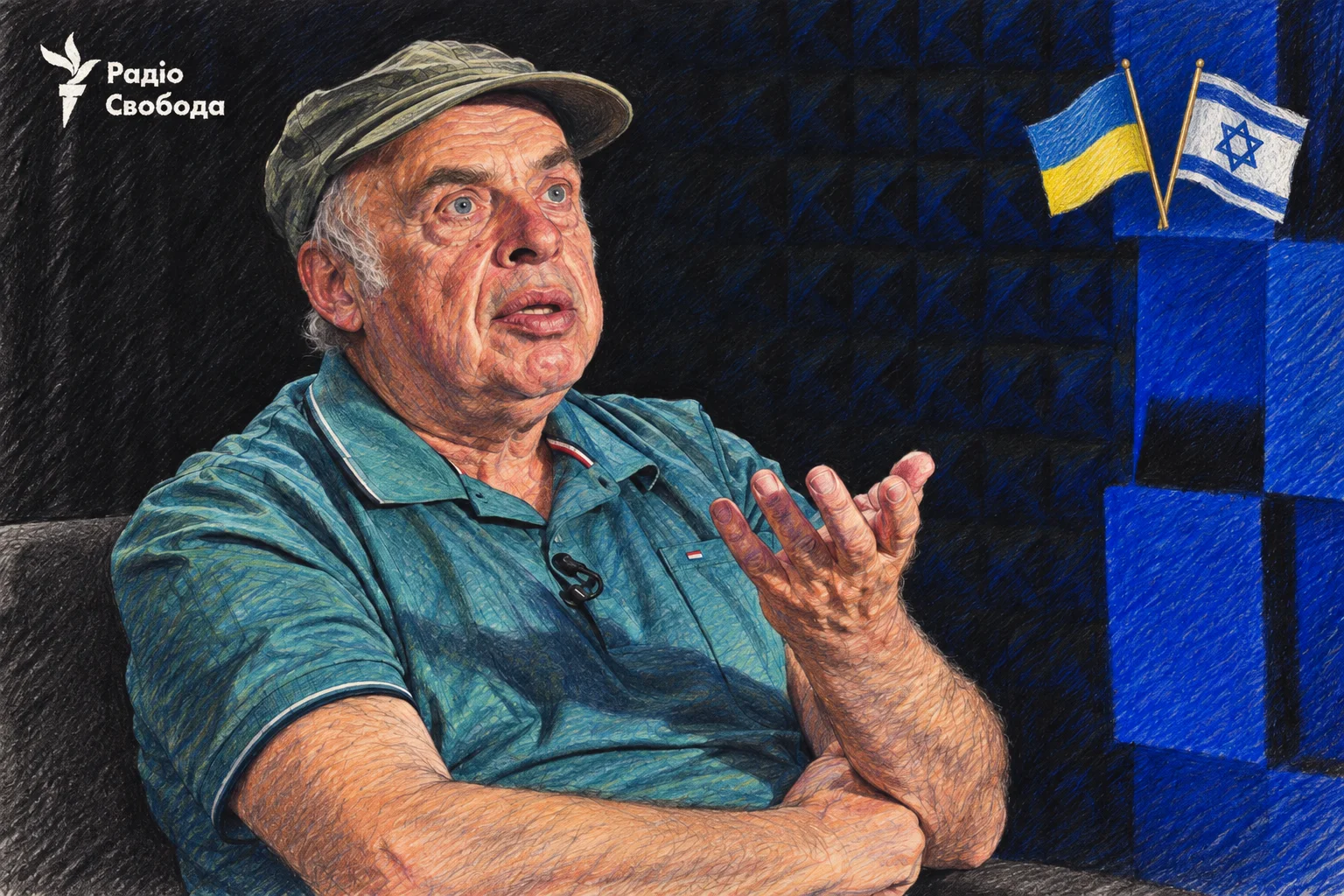
Soviet Dissident, Israeli Politician Natan Sharansky: Ukraine Is Europe’s Shield - The image was created using AI.
“And so I want to say to the Ukrainian people, who are going through such a difficult time right now, but every day of your struggle you are free people, and you live a full life, and it is very important, of course, to win, but no matter how hard this life is, life in a voluntary annexation to Russia will be much worse.”
Natan Sharansky is one of those figures whose biography gives unusual weight to a discussion about freedom, dictatorship and Ukraine. Born in Donetsk in 1948, he became a Soviet dissident and human-rights activist, spent nine years in Soviet prisons and labor camps, was released in a 1986 spy exchange and moved to Israel. He later served in senior Israeli government posts and headed the Jewish Agency.
That background makes his new interview with Radio Free Europe/Radio Liberty (September 6, 2026) especially relevant now. Sharansky speaks not only as a former Soviet prisoner, but as someone who personally met Vladimir Putin several times and later concluded that the Russian president had become, in his eyes, a war criminal. We covered the conversation in detail at NAnews — Nikk.Agency Israel News.
Why Sharansky thinks Putin is becoming weaker
Sharansky’s central argument is that the war is gradually damaging the political foundation on which Putin’s rule depends.
Russian military and economic elites, he says, could tolerate much as long as they believed Putin was a strong leader who could protect their position. A prolonged war changes that calculation. The longer Russia fails to achieve a decisive result in Ukraine, the more that image of strength is eroded.
Sharansky connects the tightening of repression inside Russia to that same weakness. In his view, a dictatorship that has to control more information, more political activity and more private behavior is not necessarily becoming stronger. It may be compensating for declining confidence.
His formula is simple: “A weak dictator cannot survive.” For a system built on fear, the perception that the ruler is losing control can become more dangerous than public criticism itself.
This is why Sharansky believes the Russian elites matter. He does not predict an imminent coup, but he argues that military and economic groups have more reason to question Putin with every month in which the war continues without the victory they were promised.
“We are most likely in the last year of the war”
The most quoted line from the interview is also the one that requires the most caution.
Asked how much longer Russian elites might tolerate the current situation, Sharansky said he believes “we are most likely in the last year of the war.” He immediately added that this could simply be wishful thinking.
That distinction matters. Sharansky is not offering intelligence about negotiations or a timetable for a peace agreement. His forecast rests on an internal political mechanism: the longer Ukraine successfully resists, the more expensive the war becomes for Putin’s authority.
A general mobilization could accelerate that pressure. Sharansky believes Putin would probably have expanded mobilization much more aggressively already if he were not afraid of the public reaction. A war fought by contract soldiers, prisoners and recruits from distant regions can remain psychologically remote for many Russians. A summons delivered to one’s own family is different.
That is why he expects the Kremlin to continue broadening hidden forms of mobilization. At the same time, he warns that a weakened ruler can be more dangerous, describing Putin as a “wounded animal.”
The Putin-Sharansky meet — and the imperial idea
Sharansky says he met Putin several times, first in 1999 and later after Putin became president. His last meeting with him was in 2005. After that, Sharansky decided that continuing such contacts was no longer appropriate.
In the early years, he recalls, Putin wanted recognition from the West and wanted Russia returned to the club of great powers. Sharansky believes that changed when Putin concluded that democratic leaders would come and go while he himself could remain in power indefinitely.
From that point, Sharansky argues, Putin increasingly saw his role in imperial rather than ideological terms. He does not believe Putin is trying to restore communism. He believes Putin wants to restore Russian imperial space — and sees Ukraine as central to that project.
Sharansky also believes Putin badly miscalculated Ukraine. He underestimated the strength of Ukrainian national identity, overestimated the Russian army and failed to anticipate sustained Western support.
Why Donetsk matters in Sharansky’s argument
Sharansky was born in what was then Stalino, today’s Donetsk. Russian was the dominant language around him, but Ukrainian was part of his childhood too. That is why he rejects the Kremlin claim that eastern Ukrainian cities are somehow proof that Ukraine is not a real nation.
He calls that argument nonsense and describes Donbas as part of Ukrainian history. His own life, in other words, contradicts the idea that Russian language automatically means Russian political identity.
For readers following Israel news, this is an important part of the interview. Sharansky’s connection to Ukraine is not recent political positioning. It runs through Donetsk, Soviet repression, Jewish history and his later life in Israel.
Israel and Ukraine should become strategic partners
The most important section for Israel is Sharansky’s argument that relations with Ukraine should no longer be understood as a one-way flow of assistance.
Ukraine has developed extraordinary battlefield expertise in drones and rapid military adaptation. Israel has deep experience in missile defense and countering ballistic threats. In Sharansky’s view, both countries now have something the other needs.
He says this cooperation is already developing and adds that not everything is public. He also refers to Israeli-origin Patriot systems transferred to Ukraine through the United States and notes the growing problem of interceptor shortages after years of unexpectedly long wars.
The strategic logic is increasingly clear. Iran is Israel’s principal enemy; Russia is Ukraine’s principal enemy; Moscow and Tehran cooperate. Sharansky therefore believes the old Israeli caution toward Russia, driven largely by the Russian military presence in Syria, should give way to a more direct partnership with Kyiv.
That is why our Ukraine coverage increasingly treats Israel-Ukraine relations as a two-way security story, not simply as a debate about what Israel should provide.
“The shield of Europe”
Sharansky’s most powerful description of Ukraine is broader than any prediction about the war’s end.
He recalls that Soviet dissidents once believed an independent Ukraine would become one of Europe’s major states. Independence did not immediately fulfill that expectation. But today, he says, Ukraine is becoming perhaps “one of the greatest nations in Europe” and the “shield of Europe.”
The Hebrew version of our report carries the same core idea. Sharansky is not describing Ukraine as a country that should simply be pitied or rescued. He is describing it as a state whose military experience, political resilience and insistence on remaining free now matter far beyond its borders.
His final message comes from his own nine years in Soviet captivity: freedom is not only about physical security. He says that once survival at any price becomes the only goal, the jailer gains complete control. Remaining free means refusing to surrender the right to choose one’s own future.
For NAnews – Nikk.Agency Israel News, that may be the most important Israeli takeaway from the interview: Israel and Ukraine are not identical countries, but both have learned that sovereignty, security and freedom cannot be separated for long.
Related Topics
Related Posts