Standing at the edge of the sea
Faith feels exceptionally close to the surface for me right now.
This week, Torah has felt alive and immediate. Written for this moment — when the war feels unresolved, when every body is brought home from Gaza, and we are waiting: to see who will govern, how they will politic, if there will be more war with Iran, more reckoning of the last two years. The air itself feels tense and heavy.
This very week that we brought home the body of Ran Gvili z”l, the last hostage in Gaza, the weekly Torah portion, Beshalach, calls out to us directly — by mentioning bringing Yosef’s bones home to the land of Israel on their way out of Egypt. It continues in the next breath to mention that for the Children of Israel in the Torah, were “moving on from Sukkot” — which in the text has one meaning (literally, their next stop in the wilderness was a place called “Sukkot”), but rereading it this week gave that line a whole other meaning, as we finally have a small step of closure from the fateful Sukkot that was capped not by the usual rejoicing of Simchat Torah, but October 7, 2023.
The Exodus story that Parshat Beshalach narrates for us has actually been on my mind for months, as I have been working on producing a new Haggadah. I have been immersed in the text, reflecting on the Israelites’ escape from Egypt and slavery.
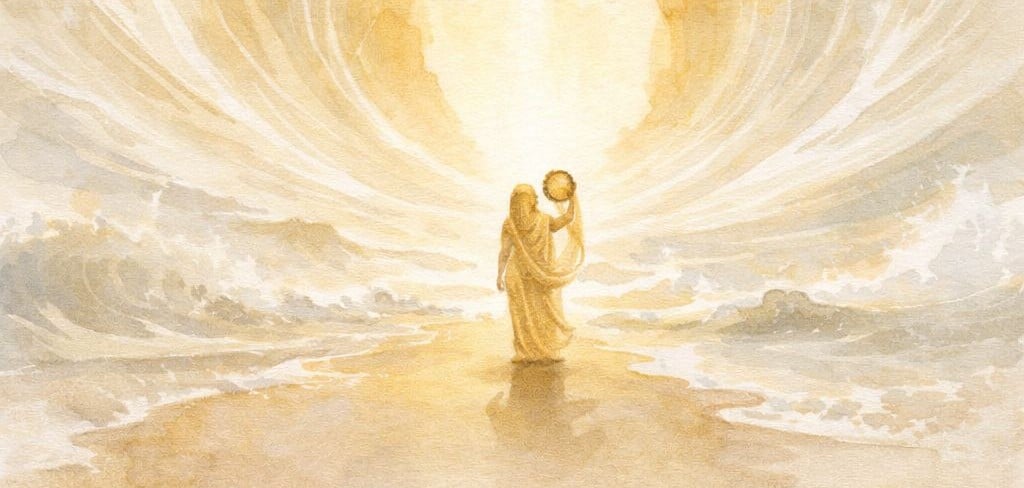
I often imagine the dramatic scene: having been finally set free by Pharaoh, they were chased all the way down to the edge of the Red Sea, surrounded by blazing fire and mystical clouds. Thinking they were close to death and at a dead end, in the last moment, the sea miraculously split, and they walked between tall walls of water until they reached the other side, all the while being chased by Egyptian chariots.
When every last Israelite reached the other side, they looked through the walls of the sea and saw that their enemies were hot on their trail. And suddenly, the walls collapsed, washing away their former masters, drowning them as the Israelites watched on.
And then there is that moment — that heartbeat — when they could still feel the waters rushing, but the land they stood upon was still. There was silence — in horror, in awe, in burgeoning awareness of their escape. There were those first few seconds of freedom — that first deep breath, the smell of the brine of the sea, the sound of the waves settling back into their natural course.
In those few seconds, everything changed. Perhaps, they didn’t even know what to think, so wonderstruck, so overcome. And then Miriam the prophetess, the sister of their leader, lifted her arm into the air, and in her hand was a timbrel. They heard the first few quivers of her fingers trembling in the instrument, and then she opened her lips, and a song poured out.
A song of gratitude. A song that transformed the trauma of the moment into transcendence.
The people tipped their heads back and opened their throats and picked up their drums, and the nation vibrated with faith, and they all joined her in song.
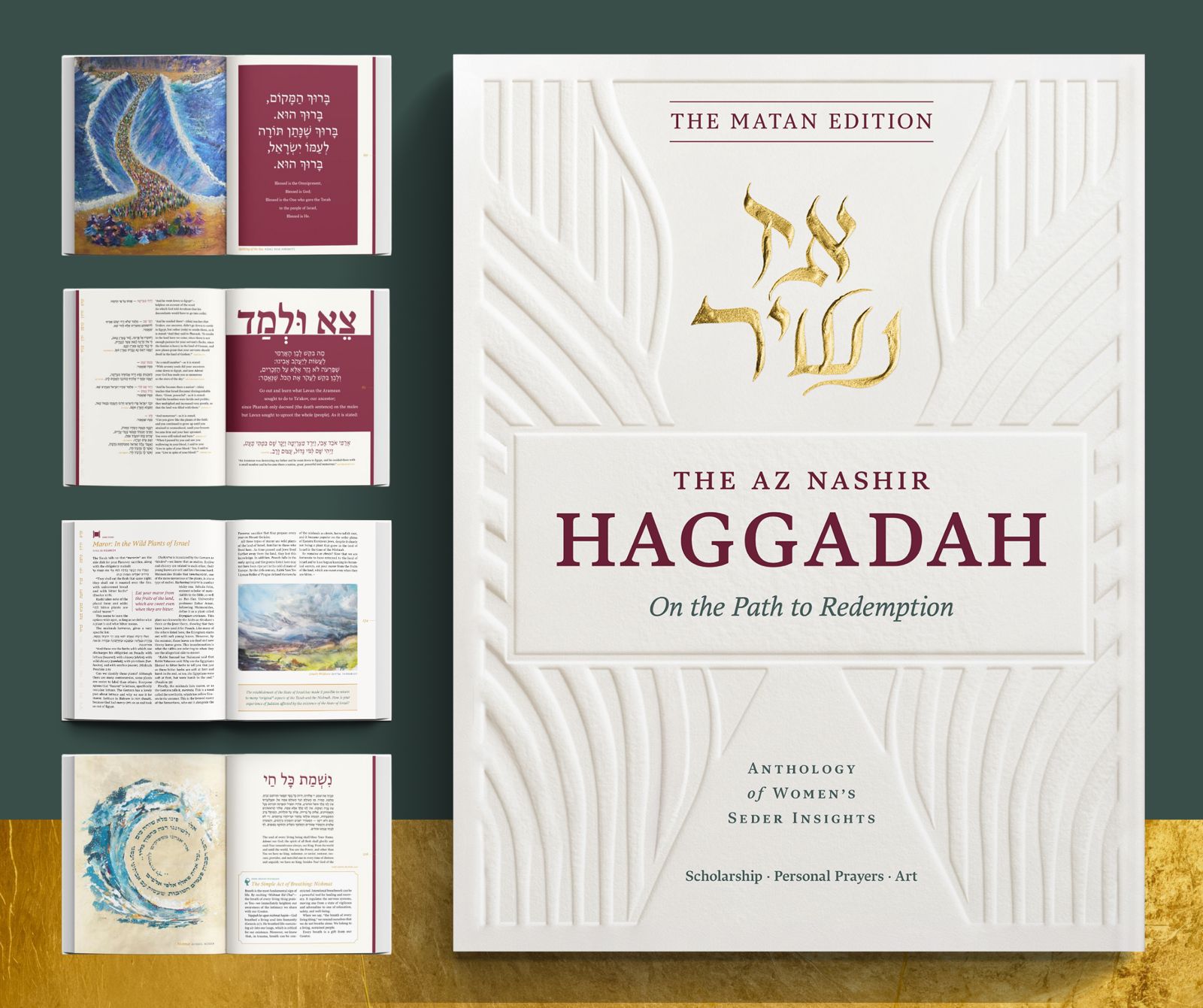
The Torah preserves the words of Moshe’s song, but not that of his sister. Still, the Torah introduces hers too, and this scene and the others described in our parsha have stayed with me as I, alongside my co-editors, contributors, and our institutional partner, Matan Women’s Institute for Torah Studies, have been steeped in the work of bringing the new “Az Nashir Haggadah: On the Path to Redemption” to publication. This Haggadah was first conceived to answer a question. How is it that we can walk the path toward redemption in our own generation? And I have been deep in the writings and commentaries of Israeli female scholars, teachers, writers, therapists, artists, and poets who have written commentaries and essays, tehinot as personal prayers, psychological, educational, and storycrafting insights, and artwork as contemporary commentary, all in the service of answering that question.
Emerging slowly from the depths of the suffering of the last two years, I have been overwhelmed by how current the messages were when I reflected on the Seder and the Haggadah that guides it. The text is rooted in a narrative that is thousands of years old and describes our lives with striking accuracy. Delving into the ancient texts made me realize how remarkably contemporary they are: Persecution. Crisis. Waiting. Crossing. Singing anyway.
There was a moment this week when I think many of us were transported back to that biblical moment described above, the moment after, when we all felt breathless as if we were standing again on that fateful shore.
Shocked at the miracle of bringing all our living hostages and all our deceased home. So many of us had despaired at the thought that it could never happen.
I watched countless videos of people taking off their hostage pins, yellow ribbon signs, necklaces, and bracelets — the trappings that we took upon ourselves to wear the struggle on our hearts. This week, I kept hearing, “This chapter is over.” We have healing to do that will take decades, generations. Grief and losses that will never leave us. But the emergency, as it were, is over.
And I can feel our people standing at the edge of the sea, spray in our faces, feeling that stillness of the ground — the seconds when we wonder whether we are heading into trauma or transcendence.
The moment before the next chapter begins.
We all know the rumblings: our newsfeeds, newscasters, buzzing WhatsApp groups. If people aren’t preparing for war, they are certainly still talking about it.
I like to think that we have a choice in this exact moment, just like the ancient Israelites.
We can choose how we move forward as a nation. What steps do we take to heal ourselves, protect each other, and reckon with what we have experienced? How do we move into this next chapter with faith and with gratitude? How do we make meaning of all that we have seen and all we have left to do? How do we walk down the path towards redemption?
And so every day this week, I have woken up and said, Iran will either attack or it won’t.
There will be escalation, or there won’t.
Living in this in-between state — the liminal, suspended, subliminally alert, exhausted, fog — is hard.
And honestly? Mostly, it’s just annoying.
You can’t fully prepare (because you don’t know what you are preparing for), and you can’t fully relax (you know, just in case).
And yet, we are an ancient people with a long memory, and we live inside a story that is still being written. We have survived empires, exiles, attempts to annihilate us, and moments when it would have been easier to fade into history. I know that we are part of a larger destiny, and I am grateful that this Shabbat we will reread this story again. We can look at it as a moment of national deja vu, an opportunity to reflect on the cycles of our history, of the choices we make about who we are and what we believe.
This week calls us to revisit a foundational moment of our faith — Miriam’s arm lifting boldly in the air, the timbrel beginning to tremble, and a call for an entire people to come together to face what is next, together.
—
The Az Nashir Haggadah: On the Path to Redemption is currently available for pre-order here.