
Standing with Israel’s Protectors
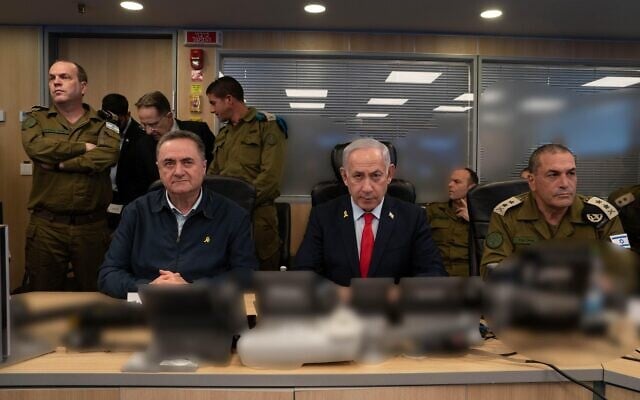
Israel’s new support for reservists and career soldiers is more than a budget line – it is a promise kept to those who keep the nation safe
A few months ago, when the Israeli cabinet approved a sweeping package for IDF reservists – roughly 3 billion shekels – I caught myself whispering, “Now let it be the turn of the career soldiers.” The reservists needed it, deserved it, and earned it a hundred times over. But so did the regulars – the backbone, the glue, the steady heartbeat of the IDF in routine and in war.
This week, that promise landed: a 3.25 billion shekel package for career soldiers and conscripts, on top of the reservists’ plan, bringing the combined commitment to around 6.25 billion shekels. In a season of austerity and arguments about every shekel, this is not a token. It is a statement.
I’m relieved. Grateful. Proud, even. Because this is not about politics; it is about priorities. It is about saying, clearly, that the men and women who carry Israel’s security on their shoulders should not also carry financial precarity on their backs. It is about building resilience and renewal not only in tech parks and classrooms, but in the kitchens and living rooms of the families who have been living with packed duffel bags by the door for nearly two years straight.
The details matter, because details are dignity. For reservists, the plan included tax credit points pegged to days served; grants for commanders; a digital wallet for welfare and recreation expenses; support for employers and small businesses; preference in certain housing programs; and priority access to government services. It was not merely symbolic, it tried to thread the needle between immediate relief and long-term recognition, between the frontline and the home front.
Now, the career soldiers’ package adds a complementary set of supports: compensation for lost spousal income when caregiving knocks a family’s second earner off the payroll; expanded assistance funds; housing benefits and dedicated solutions through the Israel Land Authority; academic grants and accommodations for studies disrupted by service; bonuses and incentives to make long-term service sustainable; and, yes, a personal “digital wallet” to help with fees, welfare, and recreation – small but human acknowledgments that life is more than the uniform. There is also a national day of appreciation for service members and priority for combat soldiers in receiving services during emergencies. It is not charity; it is overdue fairness.
If you are reading this and thinking of Psalm 121 – “He who watches over Israel will neither slumber nor sleep” – you are not alone. The past two years have felt like one long night watch. With this 6.25 billion shekel commitment, the message is that those who have kept that watch should neither slumber nor worry about how to pay the rent, the summer camp, or the tuition bill.
That may sound simple. It is not. Ask any reservist who stepped away from a business that withered while they crawled through tunnels in Gaza; ask any spouse who reduced hours to solo-parent through repeated call-ups; ask the career officer whose partner’s job evaporated because caregiving swallowed their schedule.
The truth is, Israel has absorbed hard lessons since October 7. It relearned that readiness rests not only on iron and ingenuity, but on the personal economies of those who serve. It saw how the burden of service can break a balance sheet – and a marriage – unless the state shows up, and keeps showing up, with smart support.
And it learned, painfully, that trauma does not end with a demobilization order. Mental health care, rehabilitation, and community must be funded and staffed as true national priorities. The recent doubling of state support for organizations serving disabled veterans and victims of hostilities is an important piece of that puzzle. So is the growing recognition that Israeli reservists and regulars need more than applause; they need a system that can prevent despair.
None of this lets Israel off the hook for doing better. There are thoughtful critiques of the tax-credit design for reservists that risked favoring higher earners over students or lower-income soldiers. There are perpetual tensions between the Treasury and the Defense Ministry over efficiency, deployment, and the shape of a sustainable security budget. Good. Democracies argue; democracies adjust.
If Israel aims to be a country that is constantly innovating its future, then it has to innovate its support systems, too – make them more equitable, more data-driven, more responsive to lived realities. The goal is simple: ensure that no reservist at the Knesset has to say again, “My refrigerator is empty,” while their flak jacket still smells of dust and smoke.
These packages also send a signal to the next generation. Look closely and you will see the contours of a social covenant: your service matters, your family matters, your future matters. Housing benefits recognize that you need a home to come home to. Academic grants and accommodations say your interrupted studies were not a detour, but a delay the nation will help you bridge.
The digital wallet may seem small, but it acknowledges emotional welfare as part of readiness. And the priority in government services during emergency recognizes a basic truth: when the state leans on you, the state should also lean in for you.
There is a deeper logic, too. National strength is not only measured in brigades and brigades’ budgets. It is measured in the confidence of the people who serve, confidence that the state has their back, that their employers will not discard them, that their businesses will not be left to die while they stand a post, that their spouses will not be invisible in Israel’s policy math.
When Israel weaves that confidence into the fabric of service, it does not just retain talent; it lifts morale, sharpens readiness, and keeps the pipeline flowing with the best of its society. That is resilience and renewal in the most literal sense: renewing the ranks by sustaining the people.
And because this is Israel, there is always another thread: security policy and economic policy braided into the country’s innovative DNA. There is no firewall between the field and the factory floor; the same reservist who calibrates optics by day may co-found a robotics startup by night.
When Israel stabilizes the lives of those who serve, it shores up a large share of its growth engine. It does not only defend its borders, it safeguards the future companies, patents, and breakthroughs forged by the grit and clarity that service hones. Supporting soldiers is both just and generative: it is a bet on the people who will keep innovating the future of Israel long after the sirens fall silent.
Of course, money alone will not fix everything. Israel still has to share the burden of service more fairly. It has to cut through red tape so a reservist on rotation is not trapped between forms and deadlines no one in uniform could meet. It has to expand PTSD and trauma care, bring clinician-to-patient ratios down to humane levels, and place mental health at the center, not the margins. It has to watch its own rhetoric, so politics never makes soldiers and their families feel like pawns in a budget chess match. And it has to keep employers close – i.e. reward those who stand by their reservists, deter those who do not, and make it simple to do the right thing.
Yet for all the work ahead, I want to pause on what this moment signals. It says Israel is learning. That the state can move from praise to policy, from banners to benefits. It says that in the hardest stretch of its modern history, it is choosing to build – not only defenses, but dignity. It says that the circle of care is widening to include spouses, children, classrooms, bosses, landlords, and loan officers. It says, in plain language, that service will not be a private financial hazard.
There will be those who argue that the sums are too large in a time of deficit, or too small compared to the sacrifice, or too imperfect in design. They may all be partially right. But I know this much: when a country tells its defenders, “You give everything for us – we will give you the strength to win and to live,” it is the sound of a society choosing adulthood. It is the sound of a home front that understands what the front line has carried.
“He who watches over Israel will neither slumber nor sleep.” The verse comforts because it promises constancy. These packages, in their own earthly way, promise something similar: a steady hand – not only when the siren sounds, but when the rent is due; not only in the fog of combat, but in the fog of bureaucracy; not only for the soldier, but for the family who soldiers on.
If Israel keeps moving in this direction – refining the tools, repairing the gaps, widening the circle of care – it will one day look back on this period not only as the time of tunnels and drones, but as the moment it strengthened the spine of those who stood for it. That is how nations mature. That is how a people turn gratitude into governance. That is how Israel transforms resilience and renewal from slogans into systems.
And that is how a nation stands – together – with those who stand for it.