
State Governance and Abuse of Power – New Guardrails for Israeli Democracy
The next Israeli government must draw a line. What happened cannot happen again — and the reforms needed to prevent it cost nothing and require no constitutional revolution. New laws to constrain abuse of power should be the first act of a new government.
Israel has lived through the most serious democratic crisis in its history. A government whose prime minister faced criminal charges attempted to remove the Supreme Court’s power to strike down legislation — the last constitutional check on a parliamentary majority. It tore the country apart, shook Israel’s standing among democratic allies, and exposed two simultaneous crises: a crisis of governmental legitimacy and a crisis of state governance. Both must be addressed before anything else.
Milton Friedman argued a principle that applies here with full force: emancipation comes before markets. Economic liberty matters only if your basic rights and freedoms are secure. Who cares about market efficiency when the rule of law is under attack and state power can be weaponised against citizens? Civil and democratic rights must be protected first. Economic reform, social policy, the conscription debate — all of it follows from that foundation. A government that skips the foundation and rushes to the policy agenda is building on sand.
The conventional response treats this as a story about one government. It is not. It is a story about structural failure — guardrails that were never built and accountability mechanisms that existed only as suggestions. The lesson is not to hope that future leaders will be better. It is to build architecture that makes it harder for any leader of any party to abuse the power entrusted to them.
The first legislation a new government passes should not be about policy. It should be about power: who holds it, under what constraints, and what happens when those constraints are breached. These reforms cost nothing — no new institutions, no new spending. They require only political courage. In enacting them, the new government delivers something no economic reform can: restored credibility, a democratic fresh start, and a clear signal that the country is starting over on new terms.
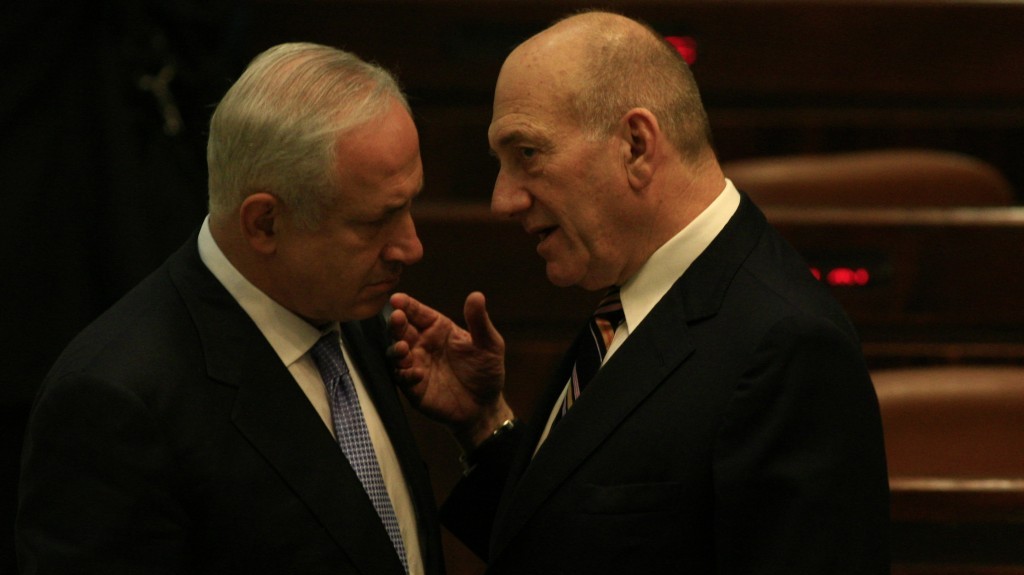
The blueprint already exists. In 2006, as criminal allegations reached the President and the Prime Minister, the government appointed a public committee under former Supreme Court President Meir Shamgar to draft an ethics code for ministers. It reported in 2008. Both men were later convicted. The army already holds its officers to a higher standard. Officers are expected to show integrity (אמינות) and set a personal example (דוגמה אישית). They may not accept gifts connected with their service, and can be suspended while still under investigation. A Prime Minister need not leave office until a final conviction. Successive governments have left the committee’s recommendations unadopted for eighteen years. The cost of that neglect is now visible to every Israeli.
Six reforms are needed.
The first is a term limit on Prime Ministerial tenure: eight consecutive years, two full terms. The longer power is concentrated in one person, the more institutional structures bend to serve continued tenure rather than the public interest.
The second is a rule requiring ministers — and the Prime Minister — to step aside upon indictment for offences of dishonesty or moral turpitude. Since 1993, the Supreme Court’s Deri principle has established this norm for ministers. Yet Israeli law still allows a Prime Minister to serve through trial, conviction, and appeal. This gap must be closed.
The third is a permanent bar on convicted politicians returning to office. At present they are barred for seven years. After that they can return. This should be removed. No person convicted of an offence involving dishonesty or moral turpitude should be eligible to serve as a member of the Knesset or as a minister or Prime Minister.
The fourth is to establish and entrench the Supreme Court’s independence.
The fifth is an ethics code with teeth: full financial disclosure published online, a complete ban on gifts of any value, and an independent ethics enforcement body with real investigative powers and real consequences.
The sixth is to codify in statute the Supreme Court’s accumulated jurisprudence on public trust. Professor Asa Kasher has argued for decades that public trust is a legal test, not a popularity contest. It is time to make that standard explicit in statute. Over thirty years, across the Eisenberg, Deri, Rochberger, and Movement for Quality Government cases, the Court built Israel’s accountability architecture judgment by judgment: good character as a condition of office; public trust as a higher standard than individual rights; democratic legitimacy as granting the right to serve, not the right to serve without integrity; and a public interest test that examines the full pattern of conduct, not merely technical legality. These principles live in case law, vulnerable to future political challenge. Codifying them in statute closes the gap that has allowed “I have not yet been convicted” to serve as a complete defence against accountability.
Most importantly, all of these reforms should be enacted not as ordinary legislation but as Basic Laws — requiring a supermajority of 80 Knesset members to amend in the future. That single structural choice is what separates guardrails from suggestions. Requiring 80 Knesset votes to amend any of these accountability reforms entrenches them more firmly. This is the lesson 2023 teaches most clearly: guardrails built by ordinary legislation can be dismantled by ordinary legislation. A bare majority of 61 is enough to tear down in a single session what took decades to build. Switzerland cannot change its constitution without both a national majority and a majority of cantons. Germany’s Basic Law places certain principles entirely beyond amendment. Israel’s accountability architecture needs the same protection. Requiring 80 votes — two-thirds of the Knesset — means any future government seeking to dismantle the last guardrail must first build genuine cross-party consensus. That is a very different political task from the one attempted in 2023.
Two objections will come. The first: these reforms are politically motivated. This objection proves the point. Accountability reforms that can be dismissed as partisan tell us how far the accountability deficit has been normalised. These six reforms apply to every leader of every party. The guardrails do not ask what party you belong to. The second: these reforms are insufficient without a written constitution. True — but a written constitution is a generational project. These six reforms can be enacted in weeks, at zero cost. Enacted as Basic Laws requiring 80 votes to amend, they have near-constitutional permanence without waiting for the full constitutional project to mature.
James Madison wrote in Federalist No. 47 that the accumulation of legislative, executive, and judicial power in the same hands is the very definition of tyranny. Israel’s courts, civil society, and citizens held that line in 2023. The next government must build the structure permanently — in Basic Law, requiring 80 votes to change, so the line never has to be held again.
The guardrails do not build themselves. The moment to build them is the moment before they are needed. That moment, for Israel, is now.
This article was first published in Hebrew in Zman Yisrael on 26 October, 2026.
Simon Fink is the author of Freedom and Democracy in Israel (forthcoming).