
Middle East Analyst
Strategic Implications of the Imminent Iran Deal
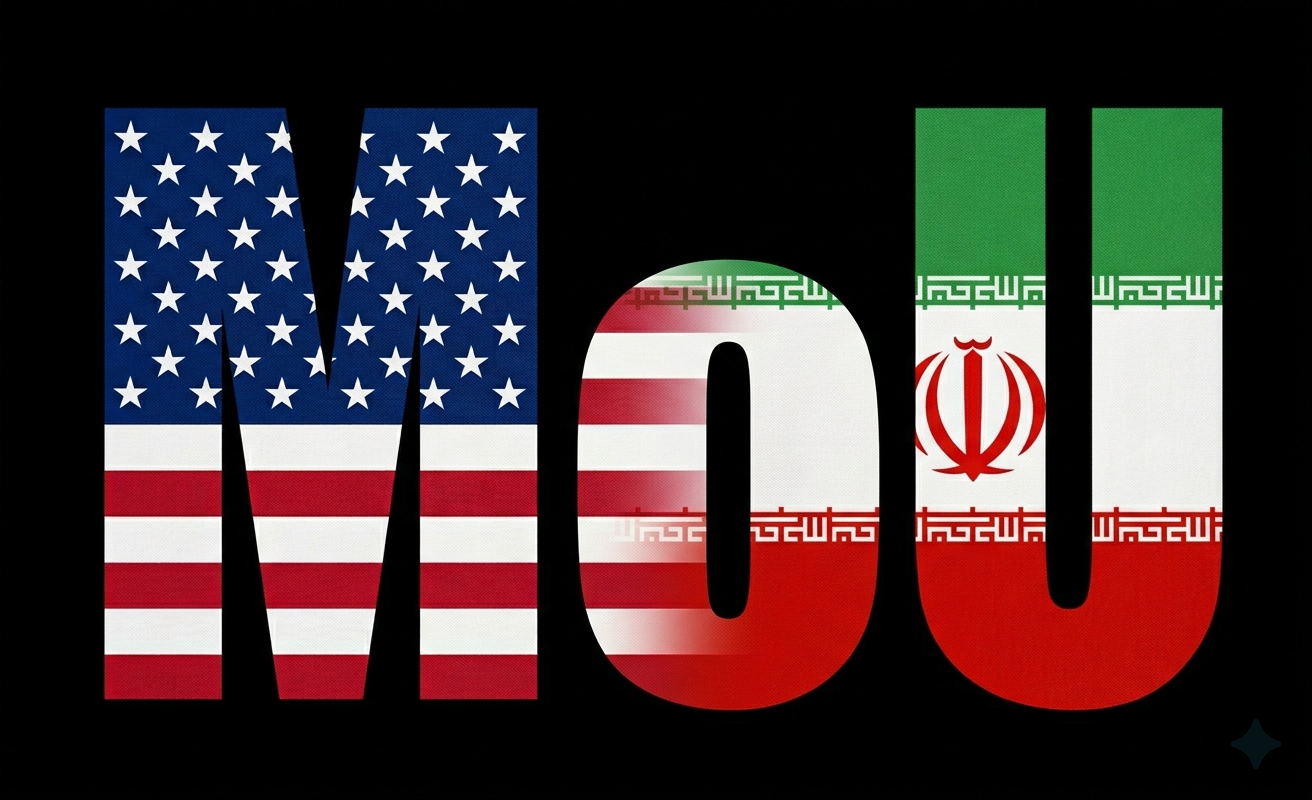
by author (AI)
A Stalemate Wrapped in a Deal
The Memorandum of Understanding expected to be agreed upon by Iran and the United States in the coming days will effectively halt large-scale hostilities and set a timetable to reopen the Strait of Hormuz, while deferring the most contentious issues — Iran’s nuclear program, ballistic missiles, and proxy network — is architecture familiar from recent regional diplomacy in Gaza: Phase I secures an immediate cessation of fighting and restores critical flow of oil and natural gas through the Strait of Hormuz, while Phase II leaves politically toxic and technically complex questions to be negotiated over time. The immediate payoff is tangible and market-sensitive; oil prices eased on the news as traders priced in the prospect of resumed shipping through the strait.
Strategic Assessment
Seen from a strategic vantage, the Iran War of 2026 ends in a stalemate. The MoU accomplishes a narrow but important objective: it creates breathing room for diplomacy and prevents further immediate escalation. Yet it will not resolve the underlying contest over Iran’s strategic capabilities or its regional posture. The agreement’s deferral of nuclear and missile questions signals that the core strategic competition will now be waged in negotiation rooms rather than on battlefields — a shift in venue, not a resolution of stakes.
For the United States and Israel, the outcome is stark: the central aim of reshaping the regional order through calibrated military force has not been realized. That conclusion is consistent with long-standing public skepticism in the United States about large-scale regime change and nation-building in the Middle East. Institutional lessons from earlier conflicts had already tempered expectations about what military power alone can achieve. The 2026 campaign’s inability to translate military operations into a sustainable political settlement therefore reflects both historical precedent and contemporary operational limits.
Why the Plan Failed
The strategy advanced by Prime Minister Netanyahu and President Trump rested on a set of interlocking assumptions that proved fragile under contact with reality.
One assumption held that a decisive, pre-emptive strike — one that decapitated Iran’s leadership and degraded the Islamic Revolutionary Guard Corps — would so weaken Tehran that it could not threaten the Strait of Hormuz. That premise underestimated the regime’s organizational resilience and its capacity to disperse command authority and economic leverage under pressure. Despite Operation Epic Fury on February 28 targeting IRGC headquarters, ballistic missile sites, naval vessels, and air defense infrastructure — with CENTCOM reporting the destruction of at least seventeen Iranian ships — the Khatam al-Anbiya Central Headquarters remained operationally functional, issuing closure orders through June. The IRGC was degraded, not decapitated. The U.S. and Israel achieved overwhelming conventional military superiority, however that was matched by Iranian asymmetric leverage and innovation.
A second assumption expected that a weakened regime would catalyze a popular uprising that outside powers could nurture into a friendly successor government. That view misread the depth and distribution of anti-regime sentiment, the risks ordinary Iranians would accept against a ruthless security apparatus, and the degree of popular distrust toward foreign powers perceived as meddling in domestic affairs for their own strategic objectives. Regime vulnerability and regime collapse are not the same variable.
Planners also misjudged regional dynamics. Expectations that Kurdish forces might intervene or that other local actors would align decisively with external patrons ignored the memory of past betrayals and the realpolitik calculations of regional leaders who prioritize survival and autonomy.
Finally, the campaign overestimated the credibility of American promises of post-conflict reconstruction. The Gaza Board of Peace, held up as a model for what comes after — reconstruction, governance, a new political order — had stalled entirely, with expected donations to the fund it created at zero despite billions in pledged commitments. A visible symbol that American pledges of rebuilding were not yet persuasive. Without demonstrable prior success in reconstruction and institution-building, the case for using force to remake Iran lacked a credible follow-through. More fundamentally, no serious plan existed for occupying and rebuilding a post-revolutionary Iranian state beyond the vague expectation that a suitably moderate former insider could be found to manage the transition. No serious consideration was given to how the United States would militarily or financially sustain a long-term occupation of a country the size of Iran.
Domestic Reactions
In the United States, the reaction is largely one of weary resignation. Many Americans view the campaign’s end as confirmation of what they had already concluded during earlier interventions: that external powers struggle to build stable, legitimate governance in the Middle East by force. Economic relief from the deal — including lower energy prices as markets anticipate restored shipping through the strait — will be welcomed, but it does not erase the political and fiscal costs of a protracted conflict. The administration’s public framing emphasizes the immediate benefits of reopened commerce and an extended ceasefire; critics will focus on the unresolved strategic questions deferred to Phase II. Both framings are partially correct, which is itself a measure of how ambiguous this outcome is.
Israeli public sentiment is more volatile. For many Israelis, the war was framed as existential, and the expectation of a decisive strategic payoff was correspondingly high. The MoU’s expected compromises leave those expectations unmet and raise difficult questions about future deterrence and security guarantees. Political fallout in Jerusalem will likely be intense, as leaders who advocated for military solutions must now justify the gap between declared aims and achieved outcomes. A notable faction of Israeli public opinion appears to be insisting that Israel could have achieved its military objectives independently, absent U.S. constraints — a claim that inverts the operational reality of a campaign that could not reach its stated endpoints even with the combined military weight of the world’s preeminent superpower. Going it alone — and undermining the Iran deal — might also jeopardize the long-term viability of the U.S.-Israeli strategic partnership. Fierce independence may be a good political narrative; however, it may not be responsible statecraft.
Regional Consequences
The deal’s immediate regional effect — reopening the Strait of Hormuz and lifting the U.S. blockade of Iranian ports on a set timetable — will ease a major economic pressure point and reduce the risk of a wider global energy shock. Yet the deeper strategic contest remains. Iran has signaled it intends to maintain leverage over the waterway and to collect “service fees” — not tolls, in Tehran’s preferred framing — for passage. The semantic distinction is thin; the strategic implication is that Iran will seek to convert its wartime leverage into durable economic and political gains. How that leverage is managed in the sixty-day negotiating window will be among the most consequential questions of Phase II.
The agreement reportedly also addresses fighting in Lebanon and the role of Hezbollah. Enforcing a ceasefire against non-state actors with independent agendas will test the durability of any peace. The success of Phase I in halting immediate violence is necessary but not sufficient to produce a stable regional order. Durable peace will require credible monitoring, enforcement mechanisms, and incentives that alter the cost-benefit calculus for armed groups whose interests are not fully aligned with either signatory.
Bottom Line:
The Iran War of 2026 appears to be over in the narrow sense: the guns will be largely quiet once the deal is signed. The strategic competition it was meant to resolve is likely to continue. However, both sides now appear to have concluded that continued fighting was unlikely to break the stalemate and would only increase the economic damage done to each side and the international community. A bad deal will likely be better than more of a bad war.
Related Topics
Related Posts