Director of Diplomacy, Representative to UN Geneva & UNESCO, World Jewish Congress
Strengthening Dialogue Between Muslims and Jews Amid Turbulent Geopolitics
One tested way to repair a fractured world marked by geopolitical strife and tension is that of interfaith dialogue. In the face of growing conflict and instability, religious leaders hold a unique capacity to bridge divides, counter extremist narratives, and foster human rights rooted in mutual respect and shared human dignity. After all, religion has the unique power to transcend geopolitical divides and promote a common language of respect between all people.
This is even more urgent in the realm of Muslim-Jewish dialogue. Both religious groups are seen to be engulfed in a never-ending conflict, with the Middle East issues at its core and its effects felt all around the globe. October 7 exacerbated this reality and made it harder for representatives of these two Abrahamic religions to sit down together.
To counter these perceptions and to foster genuine dialogue, the World Jewish Congress invited the Muslim-Jewish Leadership Council (MJLC) to an event at the United Nations in Geneva, during the ongoing session of the UN Human Rights Council. The MJLC serves as a vital platform dedicated to defending the rights of religious minorities, combating discrimination, and promoting social cohesion across Europe and beyond.
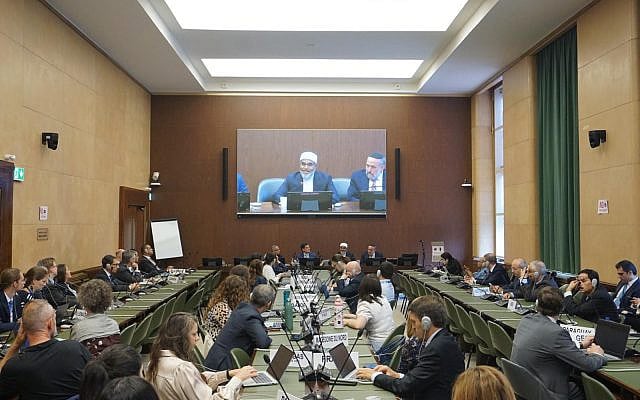
Mufti Said Mohammed Faid of London’s Central Mosque and Chief Rabbi Michael Schudrich of Poland, discussed in a room of UN ambassadors and diplomats how dialogue can advance human rights and promote peaceful coexistence, building social cohesion across religious and regional lines. Both stressed the teachings of their respective religions that emphasize human dignity, as every person on earth is one’s brother or sister. As such, division and hostility run counter to the divine path, which is rooted in cooperation and social harmony.
In the post-October 7 world, convening events centered on Jewish-Muslim dialogue has become increasing difficult—almost impossible. That is why our conversation in Geneva was so important.
The mere existence of the MJLC was tested and it was not immediately clear whether the organization would be able to continue its work in this difficult and emotional period. Through extraordinary leadership, its members chose to keep going and maintain the space to enable further exchanges and reduce frictions. Preserving dialogue during crisis serves as a critical example of a stabilizing force, helping to prevent localized religious tensions and violence, and counter extremist forces on the global stage.
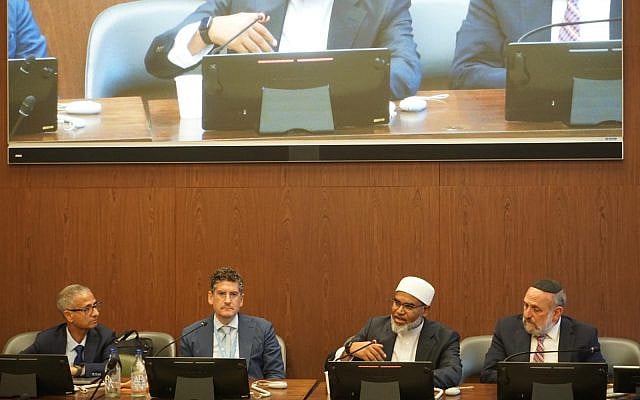
As religious intolerance and hate speech are rising around the world, interfaith cooperation is key to countering misconceptions motivated by latent anti-Muslim and anti-Jewish bigotry. Both Rabbi Schudrich and Mufi Faid stressed how dialogue can help dubunk stereotypes and ignorance while creating a common front that fosters mutual respect and a united stand against religious hatred.
Another theme that emerged was the relation between faith and human rights. Both leaders stressed that these are not antithetical, but rather, human rights principles enshrined in the Universal Declaration of Human Rights found their inspiration in the centuries-old religious teachings on the value and dignity of every human being. Thus, religion and human rights are not opposing forces but ones that can reinforce each other.
Lastly, Mufti Faid and Chief Rabbi Schudrich spoke about ongoing youth programs connecting Muslins and Jews. These help younger generations to break down inherited prejudice and build lasting bridges of empathy. They both stressed the need to expand such projects and to work within one’s community to facilitate such encounters.
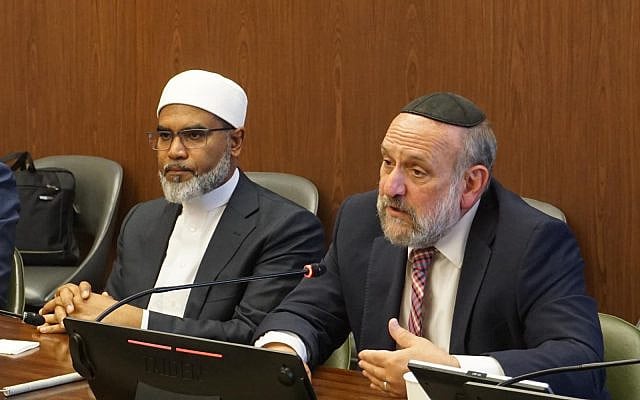
The event made a lasting impression on the participating ambassadors and diplomats, offering an optimistic note in an otherwise troubling geopolitical context. It highlighted the transformative power of dialogue in advancing human rights and peaceful coexistence as well as the power of religion to protect a lasting partnership between different faiths.
The WJC will never stop working with religious leaders from all faiths to promote this urgently needed sustained interfaith dialogue in key international hubs such as Geneva, Brussels, New York, and beyond. We showcase strong initiatives like this public platform, highlighting how religious leaders can transcend geopolitical divides to defend the dignity of all people. This, in turn, strengthens social cohesion, by enabling grassroots faith partnerships to build resilient communities and mitigate societal conflict.
To watch the full event, click here.
Related Posts