
Sudan’s Chemical Weapons and the New Red Sea Security Order
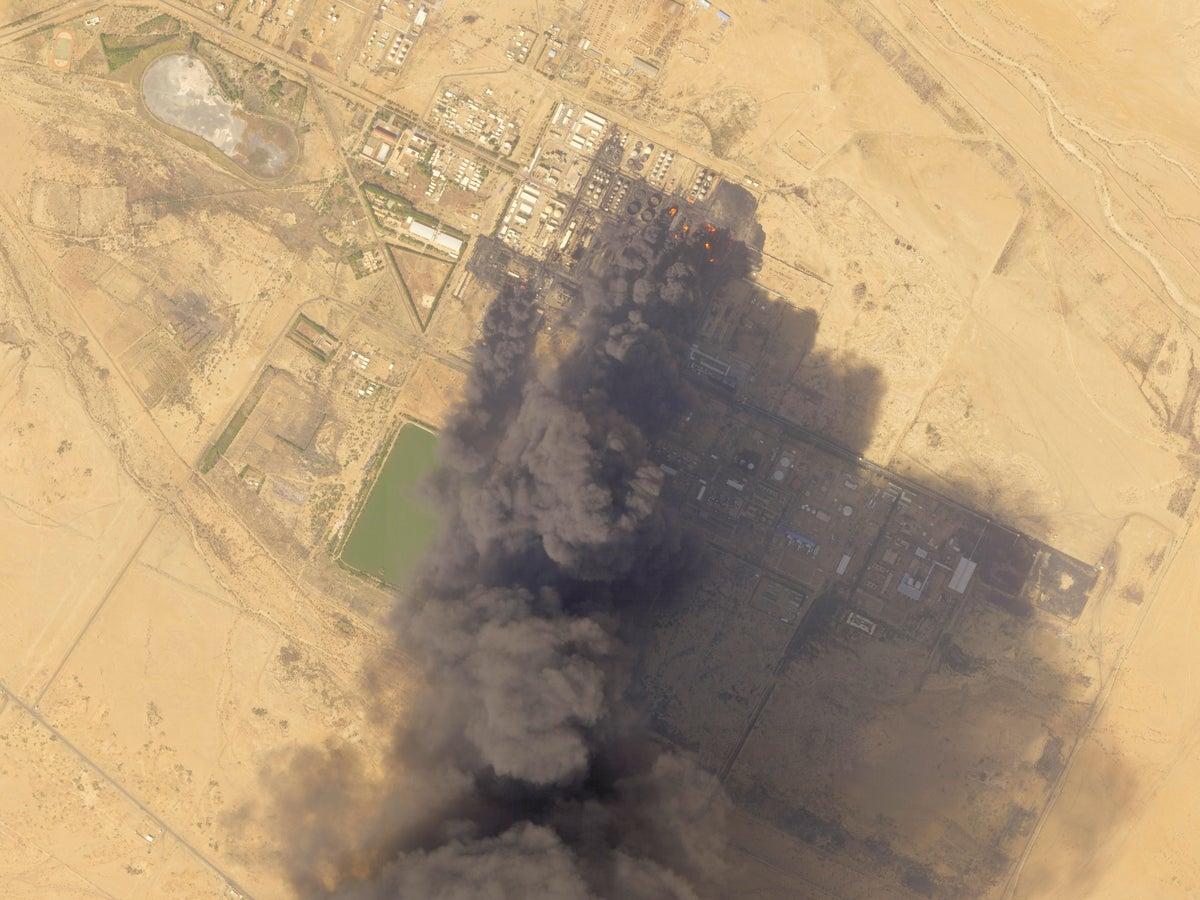
The latest revelations about Sudan’s alleged chemical weapons program expose more than another escalation in a war already defined by atrocities. They show how foreign military relationships are becoming embedded in Sudan’s security system and why the consequences extend beyond its borders.
Documents reviewed separately by The New York Times and The Washington Post describe an alleged Sudanese military program to develop, test and stockpile chlorine-filled munitions in 2024. The material includes photographs, videos, voice notes and thousands of text messages apparently taken from the phones of senior officers.
The Washington Post reported that more than two dozen intelligence officials, chemical weapons inspectors and experts it consulted considered the material credible, while cautioning that a conclusive assessment would require access to suspected sites and witnesses. While the documents do not establish every allegation, they add weight to a finding the United States had already made. In May 2025, the US government determined that the Sudanese military had used chemical weapons and imposed sanctions, disclosing little evidence at the time.
The new reporting describes an effort to produce chlorine munitions, test them in the desert and deploy them against Rapid Support Forces (RSF) positions as the Sudanese Armed Forces (SAF) struggled to dislodge the RSF from Khartoum. Brig. Gen. Tariq Hussain is identified as a central figure and messages indicate dozens of munitions may have been used, although where and when remains unclear.
The findings also suggest chlorine intended for water treatment was diverted, although UNICEF said it had no record of its supplies being misused. That allegation illustrates a defining danger of the war: civilian infrastructure, supply chains and humanitarian systems becoming entangled with military operations.
The people at the other end of that entanglement are civilians. The chlorine UNICEF supplied went to six water-treatment plants serving Khartoum, so every cylinder that reached a bomb line was one not treating drinking water in a city where the war had already left much of the population without a safe supply. The alleged strike on the RSF-held Al-Jaili refinery in September 2024 was followed by an account from a man in the surrounding district, who described seeing five people on the ground struggling to breathe.
The New York Times’s dossier also includes a message reading “Your cooking”, sent to an officer alongside a video showing a victim with blackened skin. The message appears to describe the injuries inflicted on the man in the video, a reference to the effects of the alleged chemical attack. These are among the documented cases. But messages indicating that dozens of munitions were used offer little sense of the human toll.
The broader significance of the allegations lies in the environment in which the escalation is occurring. Sudan sits between North Africa, the Horn and the Sahel, with a long Red Sea coastline, and its borders connect the conflict to Egypt, Libya, Chad, South Sudan, Ethiopia and Eritrea. Looking at Sudan from the Red Sea rather than from Khartoum changes the strategic picture.
The Red Sea security problem
For Israel, Sudan’s importance begins with geography. Its coastline sits opposite Saudi Arabia on the corridor linking the Suez Canal and Bab el-Mandeb, which is already heavily contested. The Houthi attacks on shipping have shown how armed groups far from Israel’s borders can disrupt maritime traffic and trigger international military responses. Sudan presents a different problem: a large state with a fractured security apparatus, multiple armed actors and growing foreign military involvement on the same corridor.
The concern here is not that Sudan’s chlorine weapons program will be extended into other territories, it is that the barriers which normally keep dangerous capabilities out of a fractured state’s security system are deteriorating. Prohibited weapons, foreign military assistance, weak institutional controls and contested territory together create a problem that cannot be assessed through the lens of Sudan’s civil war alone.
UN investigators have found foreign weapons, drones, personnel and contractors sustaining the conflict. Turkey and Pakistan have become increasingly important to the SAF through equipment and drone supplies, Iran and Egypt remain political and security partners, while Saudi Arabia has played a central diplomatic role in mediation attempts.
Three of those partners have now bound themselves together. On 7 August, Saudi Arabia, Turkey and Pakistan signed a mutual defense agreement in Mecca under which an attack on any one is treated as an attack on all, with Turkish drone and missile production, Pakistani manufacturing and Saudi capital as its industrial core. The text does not mention Sudan, but Le Monde has described the Sudanese war as the pact’s first front, with Riyadh financing the army’s purchases of Turkish drones and a reported $1.5 billion Pakistani arms package.
For Israel the implication is awkward. The state whose normalization it most wants is now formally tied to the two suppliers most responsible for the SAF’s strike capability, so any pressure on Sudan’s army over the chemical weapons file runs through Riyadh.
The strategic problem is the propensity of these relationships to survive the war that created them. Defense companies establish markets, personnel develop ties that persist after a ceasefire and armed groups grow accustomed to external supply chains, until temporary partnerships become the foundations of a future regional security order.
My reading of the Israeli dilemma is therefore slightly different from the conventional question of which Sudanese faction best serves Israeli interests. The more important question is what kind of Sudan emerges when the fighting stops. The central Israeli interest should be preventing a Sudan in which armed factions, foreign patrons and illicit procurement networks become permanent features of the Red Sea.
The diplomatic challenge and lifeline
If the allegations withstand further investigation, pressure is likely to increase on governments close to Sudan’s army. That will not necessarily produce a rupture, since regional powers have interests in Sudan beyond this war, but it could change the terms of engagement through demands for accountability, tighter monitoring of military supplies and stronger enforcement on dual-use materials. The objective for Israel should not be to insert itself into Sudan’s war but to ensure that its assessments of Red Sea security incorporate developments inside Sudan before they become maritime crises.
While a direct military response would add another layer to an already internationalized conflict, a narrower strategy would be more useful. The first element lies in Israel’s intelligence coordination with the United States and regional partners to track weapons networks in Sudan and around the Red Sea, including drone transfers, procurement channels and dual-use materials.
Sudan’s coastline must now be viewed and treated as part of the wider Red Sea picture through intelligence-sharing with existing regional mechanisms, without a conspicuous expansion of Israeli military activity. Adequate support should be invested in international monitoring of chemical and dual-use materials entering Sudan, without obstructing humanitarian supplies and closer engagement with African and Arab initiatives to end the war, since Sudan’s neighbors have relationships that these foreign security actors cannot replicate.
The longer-term objective should be to preserve space for a civilian settlement, since Sudan had been moving toward normalization with Israel before the war and a civilian-led government could offer a chance to rebuild that relationship.
In all, the recent revelations matter not only because Sudan’s army may have crossed another line, but because the boundaries of the war are becoming harder to define. A conflict that began between the SAF and RSF has now accumulated foreign weapons, external patrons, drone warfare, cross-border attacks and now an alleged chemical weapons programme. Together, these are producing a new security environment along the Red Sea, and the price of it is being paid inside Sudan.
Michael Waltz and Massad Boulos wrote in Foreign Policy last week that at least 150,000 people are dead, almost nine million have been driven from their homes, 4.5 million have left the country and 19.5 million face acute hunger. For Israel, the priority should consequently be less about choosing a Sudanese winner than about preventing the war from hardening into a permanent regional security architecture built around armed factions, foreign military networks and weakened state institutions, with the Sudanese themselves as its permanent casualties.