Sukkot 5786: Dwelling in a Sukkah and Living with Joy
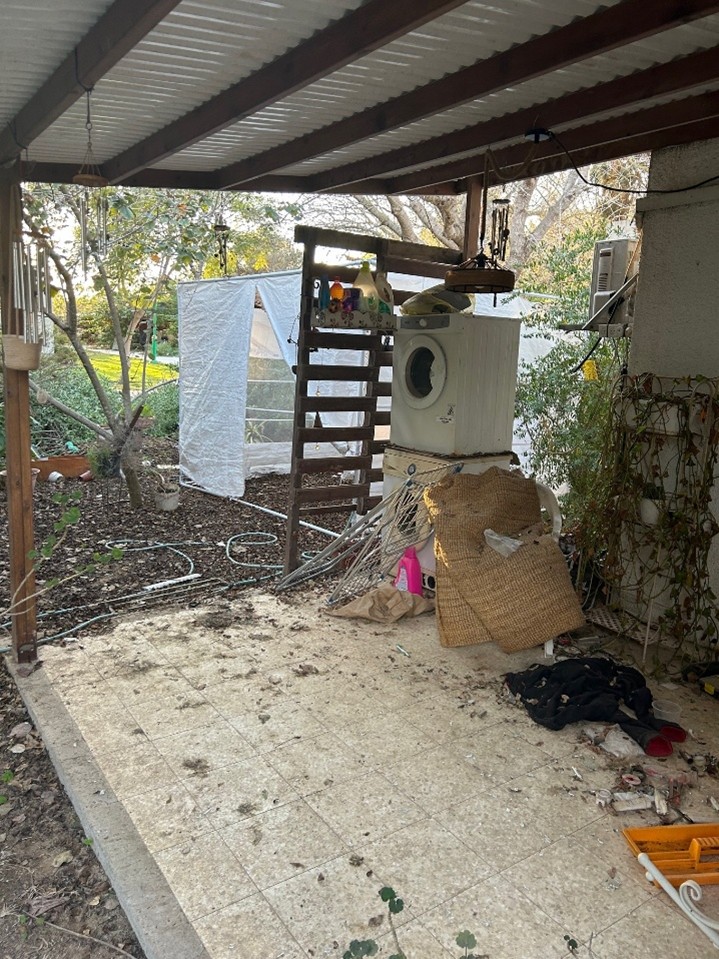
One of the images that will stay with me forever was walking through Kfar Aza, a number of months after the beginning of the war. A burned out home stood next to the remains of the sukkah. In this image, I felt the sense of violation that so many of us did. I felt deep anger and rage, but also an overwhelming grief, seeing so many hopes and dreams for us and our people destroyed. The joy of the holiday of sukkot and simchat Torah, symbolized by the sukkah was suddenly transformed into a symbol of fragility- or even worse, futility. Now, two years later, as we await the return of the hostages (please God!), perhaps we may look at that image differently.
Indeed, this temporary dwelling contains the key to joy, but a particular type of joy-the key to Jewish eternality.
Consider the ancient world. Every God had a Temple. Zeus in Athens. Marduk in Babylon. Ashur in Nineveh. When one nation conquered another, their Temples were destroyed, proving the impotence of not merely their nations, but even their gods. As their gods ‘went into exile,’ so did the people, never to be seen again. The Jewish people also had a Temple, two Temples in fact. Both were destroyed. The people were exiled, and yet for two thousand years we survived the vicissitudes of fate. We somehow escaped the cyclical nature of nations and empires- a rise, a peak and an inevitable collapse. With the destruction of the Temple, why did the Jewish people not share the same fate? The key to our survival can be found in the meaning of the sukkah.
Strangely, the Torah teaches us we were commanded to live in a temporary sukkah to remember the fact that we dwelled in sukkot when we left the land of Egypt. First of all, why do we have a holiday around that?! That seems rather prosaic. Secondly, and more importantly, we are not told anywhere in the Torah we lived in sukkot! How are we to remember something that is not described in the Torah itself?
The key to this riddle is to understand that in fact there was a sukkah that always traveled with the people in their sojourns through the harsh wilderness. It was a sukkah we built, but not for ourselves. The Jewish people as a whole did collectively live under a sukkah- God’s Tabernacle which we built and disassembled throughout our long journey in the wilderness. The Torah tells us that God’s glory descended upon this ramshackle structure in the desert in the form of a cloud, providing protection. When the clouds of glory lifted from above the Tabernacle, it was time to travel, and the Tabernacle was disassembled. When the cloud rested at a certain place, the people then reassembled the structure. For hundreds of years after the Jewish people entered into the land of Israel, they continued to go to this same Tabernacle, which resided in various places, most notably Shiloh. In other words, building our own sukkot is really a reminder that we dwelled together with God in a sukkah that we built as well. We are reminded that we traveled through the wilderness, and throughout our lives, with the Divine amongst us. In building our own sukkot, we reenact the initial building of the Tabernacle, when we invited God into our community and our lives. In this temporary dwelling, here today and gone tomorrow, the Eternal resides. When each of us build a sukkah, we are testifying that our homes, our families and our communities are the loci of the Divine presence. Not in some far-off Temple!
To say this is a bold theological statement. It is to say that God is with us at all times and in all places, in spite of our fragile, limited and finite existence. Our lives are eternally important not because things are physically permanent. They are not. Rather, we direct our lives and our values to dwell under the Divine shelter, and those values are Eternal. In this sense, our own lives gain ultimate meaning.
It is true that God ultimately had a Temple built, but it is also true that God never really dwelled exclusively in a Temple, was not limited by the geographical walls of a place! Solomon already knew this, when he exclaimed in his dedication, “Behold, even the heavens cannot contain you.” (1 Kings 8:27) While one might think building a massive artifice is reflective of the honor due to the Divine, that in fact is something humans do for themselves. In truth, those structures ironically constitute a diminution of the Divine. God exclaims, “The heaven is My throne and the earth is My footstool. Where is this house that you may build to Me? And where is the place that may be My resting-place?” ( Is. 66:1) The answer is clear. Nowhere. Similarly, when David decides he has his own beautiful palace and now wants to build one for God, one would have thought God to be happy, but God is not initially. God speaks through his prophet Natan, “Wherever I have walked among all the Children of Israel, have I spoken a word with any of the rulers of Israel whom I commanded to shepherd My people Israel, saying, ‘Why have you not built Me a house of cedar?’” (2 Samuel, 7:7)
Thus, even if in later history God was built a permanent structure by Solomon, the Torah points to this temporary dwelling as the idea embodiment of God’s providential protection, and not this grand structure. God’s home is in a ‘tent and a tabernacle’, with and amongst the people. It is for this reason, that a name of the Temple (invoked in the Birkat HaMazon for the holiday), is the “sukkah of David;” no matter how big and embellished the Temple was, what the tradition wants us to remember is that it is a mere structure.
Now here is the interesting thing: the gods were housed in the temples, so when those temples were destroyed, so were the gods. With the Tabernacle, and by extension the Temple, God Divine presence ‘descended’ upon it but did not reside there. How could God be contained in the walls of such a structure? Thus, if the Tabernacle/Temple was destroyed, the story was not over. God was not destroyed. Indeed, the building was mere wood and stone. We build limited palaces, but God builds infinite universes. The Infinite and Eternal can never be destroyed. And so it is with God’s eternal people.
The great empires, amassing power and control, housed their gods in the Temple. The tried to control their fate by housing the God in a structure that was indestructible, an empire that would never falter. But indeed, that Temple and that empire indeed, did falter. Their vision was limited.
The Jewish God and the Jewish vision was never limited. A tabernacle indeed might fall, but it can be reconstructed. What is important about the Tabernacle was not building the home for God, but the Jewish people’s will to create a space in the world for God’s presence in our lives. To go out into the sukkah is an act of faith, realigning ourselves to the truth that we find Eternality not in the structure of brick and stone we build, but rather through building our own little tabernacles, welcoming the Divine into our midst and into our lives. Our identity, our sense of purpose, was never linked inextricably to a certain moment or place but our ongoing relationship with God. That Divine spirit which resides amongst us gives us strength every day. For this reason, to dwell in the sukkah is seen by the mystics to dwell under the ‘shadow of faith’, the tzela dehemnuta.
Joy is to know we live our lives in light of eternal values that transcend the particular moments in which we face. It is this spirit that helps us to find hope in the dark places of our individual and collective lives. Like the fallen sukkah that is set aright, we too will rebuild during these critical times. We can have moments of despair, but we dare not succumb to the flood of hatred we have experienced. The end of the Jewish story in the end is not a tragedy, but an epic narrative that ends with the messianic age, the redemption of the world. Our ongoing faith in that reality is what helps us to overcome the despair we might feel at the present moment.
May we use these days to internalize the daily prayer, which has become in many circles a standard song on Simchat Torah. Ashreinu mah tov chelkeinu, umah naim goraleinu. “Happy are we! How goodly is our portion, and how pleasant is our lot, and how beautiful our heritage!” With this meditation in mind, we truly will overcome the challenges we face.
Chag Sameach