


Sukkot is Summer Camp for the Soul
As I reflect on the 2026 High Holiday season, which recently concluded, I cannot help but think about the joys of Sukkot and why it remains my favorite holiday of the fall season. While Rosh Hashanah and Yom Kippur are beautiful, deeply reflective Yamim Tovim (festivals; good days), Sukkot is the festival that truly brings everything home.
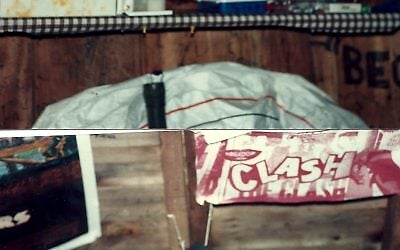
Because we spend a fair amount of time in our Sukkahs—weather permitting, of course—the experience always transports me back to my days sleeping in a lean-to at summer camp. Throughout my teenage years, that three-walled wooden structure was my home. We decorated it. Later, when I joined the camp staff, our leanto was like a high-end hotel suite: we had electricity, a small fridge, posters plastered on the walls, a plastic vampire bat, and a boombox my friend named Bertha. My leanto mates and I would play Bertha all day long. Technically, the space belonged to just two of us, but people crashed there 24/7. We spent hours debating whether to play new wave, goth, or classic rock, all while devouring endless meals together. I used to go to the camp’s dining hall, but I only sipped its bug juice.
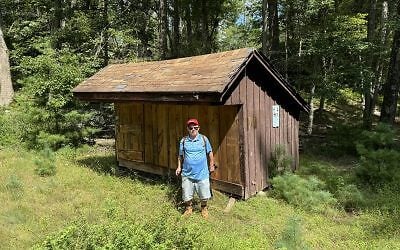
Transitioning from the leanto to the Sukkah, I noticed the striking similarities, though I have never actually slept in a Sukkah. Some people do. Over the years, I have built a few Sukkahs throughout Queens and Staten Island, New York. But for me, the real joy has always been eating in them. We lean into a mix of the contemporary and the traditional, alternating between “Pizza in the Hut,” classic kosher deli, and traditional Shabbat food.
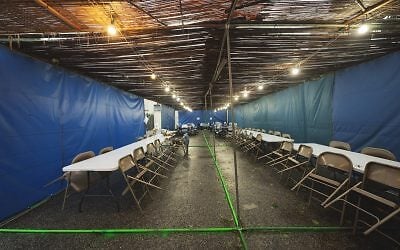
We love to decorate them, too. This year, however, a relentless nor’easter kept us from dining outdoors as much as we would have liked, which meant we scaled back our decorating. We left some walls completely bare because we didn’t want the kids’ beautiful drawings and handmade crafts destroyed by the wind and rain. I heard countless stories from neighbors whose pretty decorations the storm turned into trash.
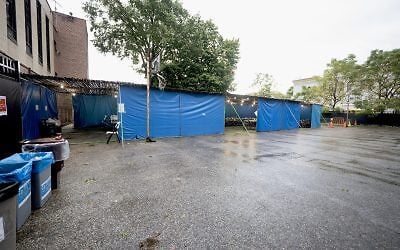
Even with the bad weather, I managed to have some spectacular meals in mine. While some dinners had to be moved indoors, the absolute highlight was a pre-game meal right before the Yankees-Red Sox playoff matchup: a pastrami sandwich from Mr. Broadway, and a bag of Wise potato chips.
To me, nothing feels more intimate or peaceful than enjoying a meal under the stars in the Sukkah. It mirrors those camp staff or pre-staff days when we would sit in the leanto, munch on Freihofer’s chocolate chip cookies, or share a couple of slices from the now shuttered El Monaco’s.
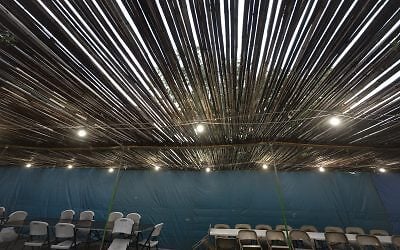
The spiritual connection hits me because neither structure is fully enclosed. A Sukkah has more walls than a leanto, but its schach (roof) must be left open enough so that you can look up and see the stars. Because it is a temporary shelter, it strips away our physical walls, connects us directly to nature, and reminds us that our true protection comes from Hashem. This is how our ancestors lived in the desert before entering Eretz Yisrael, after we left our years of slavery in Mitzrayim (Egypt).
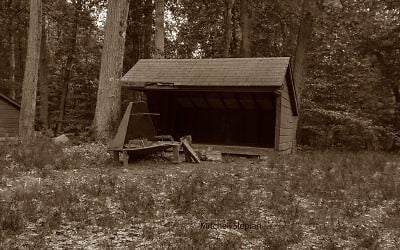
A camp leanto operates on the same vulnerability. The front is entirely open. Even after we built a makeshift deck in front of ours and put up some screening, it didn’t stop the rain from blowing in, nor did it deter the occasional squirrel or chipmunk. They enjoyed our pizza and cookies. Thankfully, Oscar—the camp’s resident pet skunk—usually stayed in his own spot.
Sitting in the Sukkah brings back these beautiful memories, but it also gives me a grounded space to plan for the future. It offers a rare, quiet pocket of time to reflect on life and the collective challenges we are all facing right now. Whether sitting in the Sukkah surrounded by good friends or completely alone under the stars, I hope Hashem hears my thoughts, and I pray we will see brighter days ahead.