
Sukkot, Survival, and Operation Pastorius
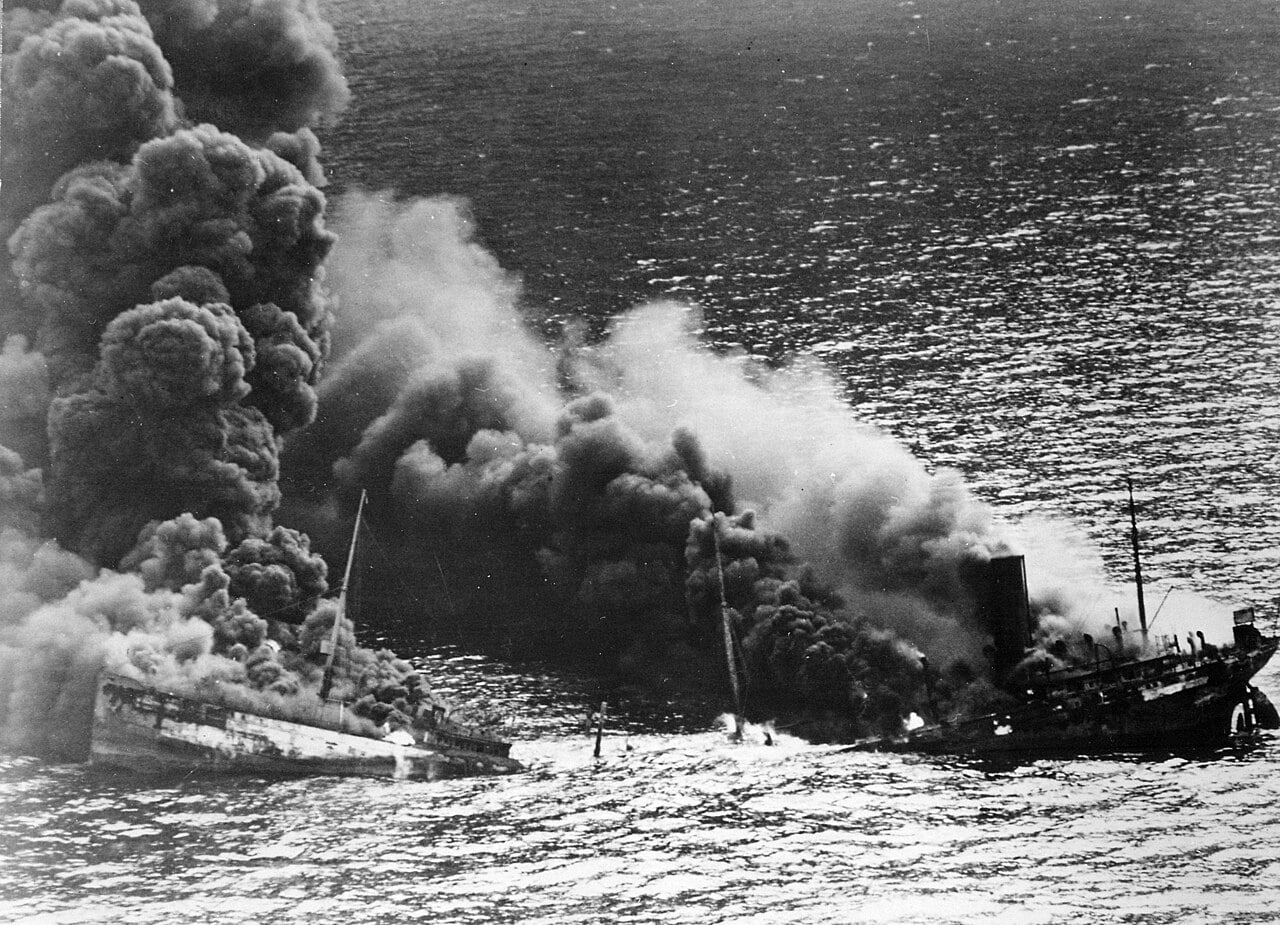
As you look out at the beautiful waters of the Atlantic Ocean off the coast of Long Island, you would never imagine that one of the great battles of WWII is visible from the windows of peaceful Long Island residences. Starting in late 1941 and January of 1942, the German navy began dispatching missions of U-Boats to the American Northeast, sending U-boats to sink merchant ships right off the coast of Long Island.
In January of 1942, U-123, commanded by Reinhard Hardegen, fired 3 torpedoes just 60 miles southeast of Montauk Point and sank a Norwegian merchant ship. Dozens of crew members were saved by the Long Island Coast Guard. 36 hours later, just 20 miles from Suffolk County, a British merchant ship was sunk by German torpedoes and more attacks to follow and was followed. Some of the German boats entered New York Harbor just to catch a glimpse of New York City. As the battle off the coast of Long Island raged, on the quieter shores of Connecticut, at the army base of Ft. Trumbull in New Britain, Columbia University’s Division of War Research operated and developed passive sonar and underwater acoustic technology and the radio sonobuoy, which would message local airplanes when a German U-Boat would arrive. I had the honor of visiting those labs at Fort Trumbell and seeing firsthand the brilliance and courage of the men and women who toiled day and night for those breakthroughs.
Yet all that was not able to stop Germany’s U-202, commanded by Hans Linder, from crossing the Atlantic from German-occupied France and, on the night of June 12–13, 1942, surfacing just 55 yards from Amagansett, Long Island, and dropping off George John Dasch, Ernst Burger, Heinrich Heinck, and Richard Quirin in a rubber boat for a dangerous sabotage mission. The malicious group of Nazi operatives was headed toward New York’s power plants and population centers, carrying explosives, incendiaries, and other equipment meant for their sabotage operation inside America.
At midnight, a young Coast Guard sailor, John Cullen, from Long Island, walked off his shift and noticed a man coming from the beach. The man, George John Dasch, a German American who had abandoned his wife, his child, and his position in the American army to join the Nazi army, threatened Cullen’s life and offered him a bribe of $300, a lot of money at the time. Dasch asked Cullen if he would ever recognize him again, and, in the way only New Yorkers know how to say it, Cullen told Dasch, “I never saw you before. I don’t know you,” and assured him that he would never recognize him again. Dasch let Cullen go and the two parted ways. Cullen ran to the station, alerted the coastguard, who alerted the FBI, and within two weeks the entire team of Germans was apprehended, with another German team caught in Jacksonville, Florida, much due to Cullen’s courage and wit.
The Talmud in Masechet Sukka (11a) famously debates the biblical imperative stated in Vayikra, 23: “You shall dwell in booths for seven days; every native-born Jew shall dwell in Sukkot. So that your generations may know that I had the children of Israel dwell in Sukkot when I brought them out of the land of Egypt. I am the Lord, your God.”
Rabbi Eliezer says that the Sukkas we are commemorating are the clouds of glory that hovered above us in the desert. Rabbi Akiva says the Sukkas we commemorate are actual Sukkas we used when living in the desert.
Rabenu Bachya Ibn Pekuda (1150-1120), one of the greatest Medieval scholars of Spain, comments that the two positions, while arguing with one another, in fact, complement each other. The position of Rabbi Akiva states that these Sukkot were actual Sukkot and follows the Pshat, the simple reading; the position of Rabbi Eliezer, stating that the Sukkot were the clouds of glory, follows the more mystical hidden side of the Torah, or as others put it, Rabbi Akiva focuses on the spiritual aspects we toil and accomplish on our own, while Rabbi Eliezer focuses on the miracles that God does for us.
When we look at preserving and expanding Jewish life in America, like our very own Sukka, we must also keep both perspectives in mind. There is what the brilliant researchers did at Fort Trumble, advancing sonar technologies and the ability to send radio signals from the water to airplanes rushing above head, the secret batteries and guns along the coast of Long Island, and other ways of making sure we are fully ready to take on every challenge we might possibly face. That is the position of Rabbi Akiva, who says we are commemorating the real Sukkot the Israelites sat in in the desert. We must celebrate the miracle of our people partnering with God in the logistical efforts to secure the future of the Jewish people.
Yet despite all of our best efforts, like we have seen in Israel on the fateful morning of October 7th, and in the rise of antisemitism around the world that has followed those horrors, there will be those times we are caught by surprise. There will be times that the real Sukka that we have, the real logistics, the real nuts and bolts, the sonar and radio technology developed in Ft. Trumble, will simply not be enough. There will be times we are caught by surprise. There will be those times we will need God’s miraculous divine presence, the inspiration, the Clouds of Glory, the courage of that guardsman in the dark of the night and the haze of the fog, and the fortitude to rise to the occasion. Sukkot is a time to remember both sides of our survival in the desert: the real Sukkot we built and survived in, with God’s help, and the miraculous clouds of glory God has provided for us.
Chag Same’ach!