Surviving the Flood Is Not Enough

Parashat Noach and the difficult art of rebuilding a broken nation
Three years after October 7, Israel is a nation of survivors. We have survived a massacre, a prolonged war, the agony of captivity, displacement, grief, and the shattering of assumptions we once considered unbreakable. The fighting has diminished, the hostages have returned, and much of the country is trying to resume ordinary life. Yet survival and recovery are two very different things. A nation can survive a catastrophe and remain profoundly broken.
This is precisely where Parashat Noach meets us. The Torah describes a world that God had declared “very good” (Genesis 1:31), only to discover, a few chapters later, that the earth had become filled with violence: “The earth was corrupt before God, and the earth was filled with violence” (Genesis 6:11). The Hebrew word hamas, meaning violence or wrongdoing, carries a particularly chilling resonance for Israeli readers today.
The flood destroys almost everything. Yet God does not simply create another world from scratch. Noah preserves the remnants of the old one, carrying life through destruction into an uncertain future. When the waters finally recede, Noah emerges into a world that must be rebuilt. And here lies the distinction that matters most to us today: The ark was designed for survival. It was never intended to become a permanent home.
For three years, much of Israeli society has been living inside a metaphorical ark, focused on immediate threats, protecting our loved ones, enduring uncertainty, and getting through another day. Such instincts are indispensable during a catastrophe. But the skills that allow a society to survive are not necessarily those that enable it to recover. Survival demands vigilance and endurance. Recovery requires trust, accountability, compassion, and the courage to confront what went wrong.
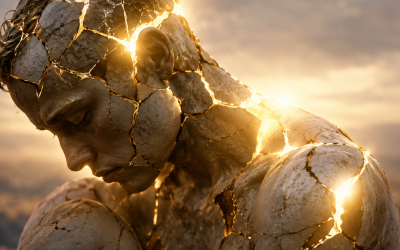
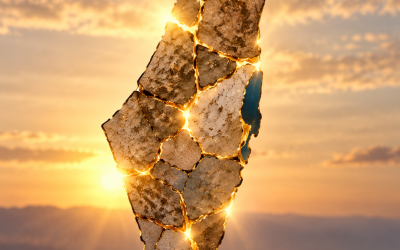
The Japanese art of Kintsugi offers a striking image of this challenge. When a ceramic vessel breaks, its fragments are carefully reassembled using lacquer and gold. The cracks remain visible, becoming part of the vessel’s history rather than defects to be concealed. The repaired object does not pretend that it was never broken.
There is something deeply Jewish about this refusal to erase the evidence of rupture. The Talmud teaches that both the whole Tablets of the Covenant and the shattered fragments of the first tablets were placed in the Ark (Bava Batra 14b). Even the holiest object in Jewish life had room for brokenness. The fragments were preserved alongside the whole.
But we must be careful with this metaphor. There is nothing inherently beautiful about trauma. No bereaved family should be told that its suffering has made it stronger, and no survivor owes the world an inspiring story of resilience. The gold in Kintsugi is not the fracture itself. It is the painstaking human effort invested in repairing it.
That distinction should shape our national conversation. Israel has demonstrated extraordinary resilience. Volunteers, soldiers, medical teams, educators, and ordinary citizens have carried one another through unimaginable circumstances. But resilience must not become an excuse to leave broken systems unrepaired. A society that celebrates its citizens’ ability to endure while failing to address the conditions that made such endurance necessary has misunderstood the meaning of recovery.
We cannot rebuild public trust without confronting failures of leadership and institutions. We cannot heal social divisions while continuing to treat disagreement as disloyalty. We cannot speak seriously about national rehabilitation without investing in those whose lives have been permanently altered by war. And we cannot expect a different future while refusing to examine the decisions, assumptions, and habits that shaped our past.
Parashat Noach offers another remarkable detail. After the flood, God establishes a covenant with humanity, promising never again to destroy all life by flood (Genesis 9:11). The story does not conclude with the restoration of the old world. It concludes with a new commitment about how the future must be different. That is what genuine repair demands: not simply putting the pieces back where they were, but changing the way we live with one another.
Rabbi Jonathan Sacks drew a crucial distinction between optimism and hope. Optimism is the belief that things will improve; hope is the conviction that we can act to improve them (To Heal a Fractured World, 2005). Jewish hope is therefore a moral responsibility, not a comforting prediction.
Three years after October 7, our challenge is no longer only to survive the flood. It is to decide what kind of society we will build when we emerge from it. A society capable of mourning without surrendering to despair, demanding accountability without abandoning solidarity, and transforming collective pain into a deeper commitment to human dignity.
The rainbow that appears at the end of the flood is a symbol of covenant, but a rainbow cannot rebuild a home, restore public trust, or heal a wounded community. That work belongs to us.
The measure of our resilience will not be how much suffering we managed to endure, but what we choose to repair once the waters recede.
May we find the courage to face our brokenness, the honesty to recognize what brought the flood upon us, and the wisdom to learn from our failures. May we find the strength to repair what has been shattered, and may the light that emerges from our cracks illuminate the path toward a more compassionate, just, and hopeful future.
Shabbat Shalom!