"These fragments I have shored against my ruins"
Sweating in the Synagogue: A Building’s Afterlife in Postwar Hungary
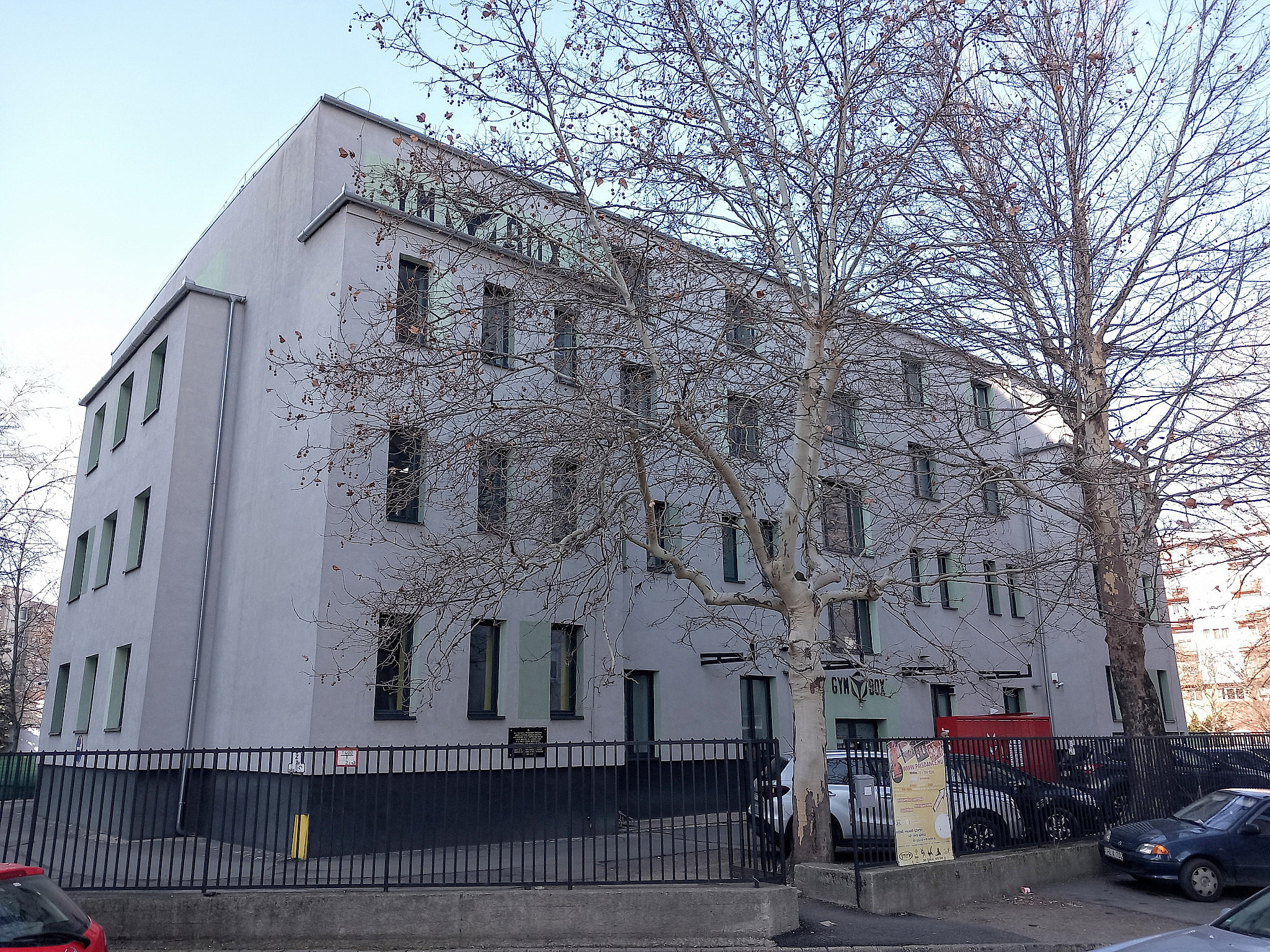
There are places I tend to sidestep. Crowded gyms are one of them; they are too loud, bustling, and lined with mirrors on every wall. I’d rather be outdoors, moving through open air than boxed in by treadmills. Synagogues aren’t spaces I gravitate towards either; I’m shaped more by memory than by ritual. And yet, not long ago, I found myself standing before a building that has been both—caught between the sweat of the present and the ghost of something sacred.
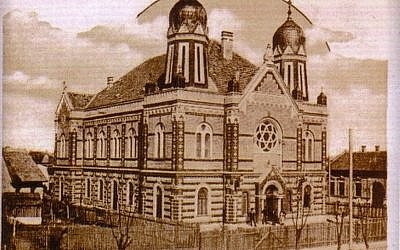
Like many corners of Budapest, my district carries layers of history; some remembered, some paved over. Not long ago, I was on a mundane errand, collecting parcels from a locker outside one of the most popular gyms in my neighbourhood. A place my daughter has her eye on. For most, it’s simply a fitness centre. For me, it’s something else entirely. Behind the thumping music and wall-mounted screens, this building carries the weight of history. Once, it was a synagogue. Not just any synagogue, but one where people I once knew celebrated their lives; weddings, bat mitzvahs, bar mitzvahs, holidays. All gone now, except in memory.
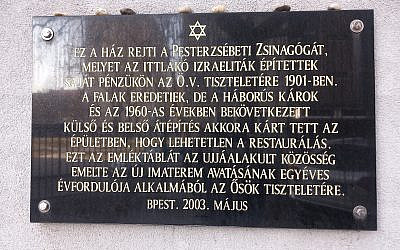 There’s a plaque on the wall, for those who care to read it, noting the building’s former life. It says:
This house hides the Pesterzsébet Synagogue, which the local Israelites built with their own money in honour of the Eternal One in 1901. The walls are original, but war damage and renovations in the 1960s have harmed the building so severely that restoration is impossible. This memorial plaque was placed by the newly re-formed community on the one-year anniversary of the dedication of their new prayer space, in honour of their ancestors.Budapest, May 2003
A quiet declaration. No outrage, no embellishment, just the truth. The building couldn’t be restored, so it became something else entirely.
This isn’t unique. After the war, when Jewish communities across Hungary were shattered, even the buildings that remained often stood empty. Time moved quickly—and pragmatically—here. Under communism, religious life was discouraged; many Jewish sites were simply repurposed. In Budapest alone, dozens of former synagogues were converted into warehouses, offices, fencing halls, even television studios. As these sacred spaces absorbed into the city’s daily life, their spiritual histories were quietly plastered over.
This one first became a workshop for picture frames. And now, a gym—a place of muscles and mirrors, where the echoes of a vanished congregation are drowned out by bass-heavy playlists and the noise of elliptical machines. Certainly not quite what Max Nordau had in mind when envisioning Muskeljudentum.
A place that, like so many others, has forgotten what it once was.
I couldn’t bring myself to go inside. My daughter, however, has no such qualms. For her, it’s simply a modern space with clean machines and protein shakes. And perhaps that’s how it should be; she carries no personal memory of what the space once represented. But for me, it’s impossible not to feel the tension between past and present, between what is remembered and what has been quietly overwritten.
Sometimes, a miracle happens. A former synagogue becomes a museum, a concert hall, or—wonder of wonders—a synagogue once again. But these stories are rare. Many sacred spaces have simply vanished from the communal imagination without a trace.
I pass that building often. I may not walk through its doors, but I visit it in memory in context, in quiet awareness. The gym may no longer resemble the synagogue my family knew, yet the history hasn’t gone anywhere. It lingers, steady and silent. I don’t need to step inside to feel its weight. I may not visit the building, but I visit history.
ווײַל פֿון וואָס איז דער בנין געבויט, דער געבײַ
פֿון ברעקעלעך האָפֿן און גלויבן אַי-אַי
Related Topics