Sylvia Wygoda Changed My Life
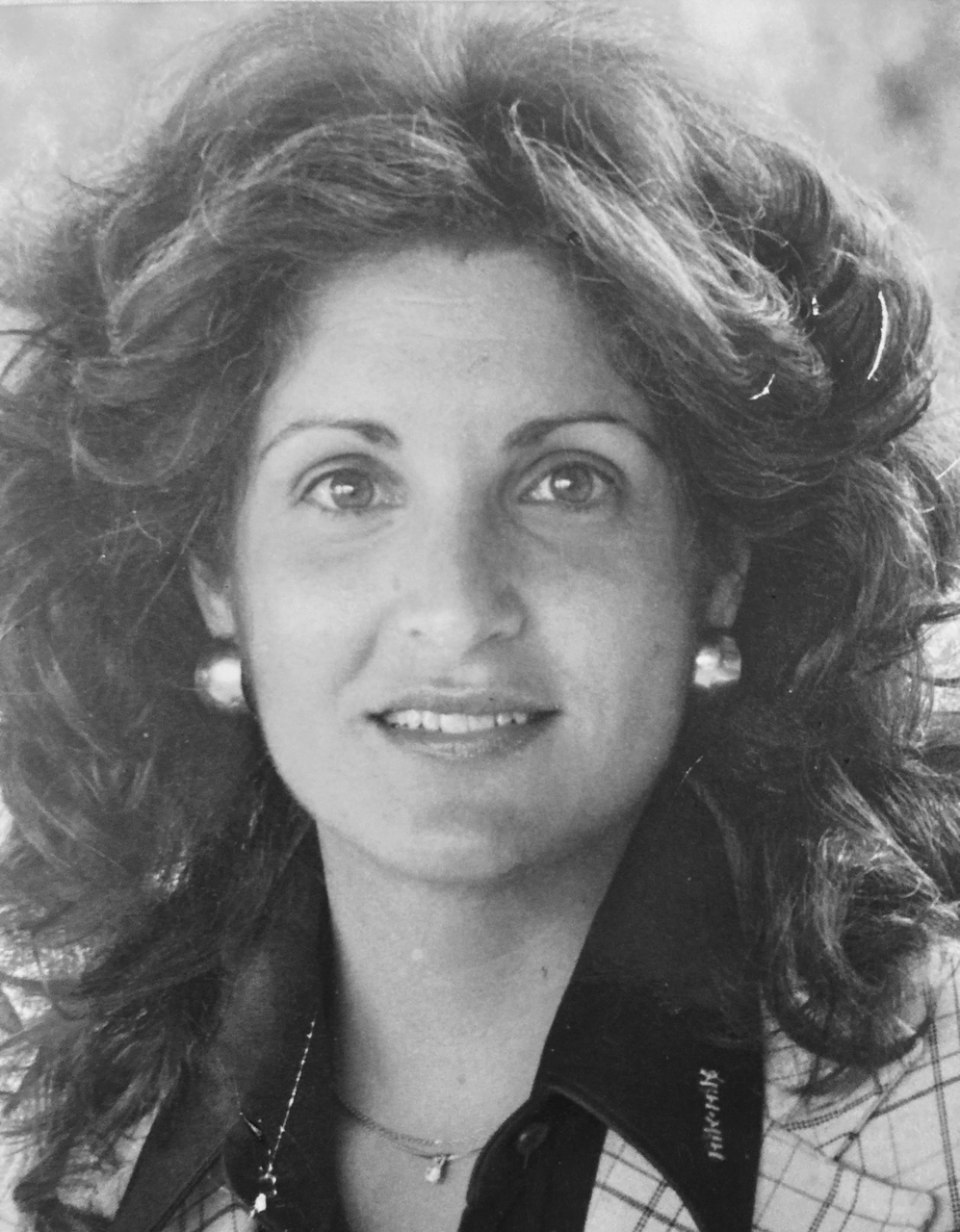
When I think about the people who shaped me, I think about Sylvia Wygoda.
She didn’t hold public office, cure an incurable disease, or win a Nobel Peace Prize. In fact, she never sought the spotlight at all. She spent her life telling the world about one of the darkest chapters in human history, and she did it with dignity, courage, and urgency.
Sylvia was the daughter of a Holocaust survivor, often referred to as a “2G,” for “second generation survivor.” But more than that, she was a steward of memory. She carried her father’s story not like a burden, but like a torch.
Her father, Hermann Wygoda, was born in Germany, raised in Poland, and survived the Holocaust not by hiding, but by resisting. Using forged papers and extraordinary nerve, he smuggled food into the ghettos of Warsaw and Kossow, risking his life to keep others alive. After narrowly escaping arrest, he fled across occupied Europe and joined the Italian resistance, where he eventually became a commander. Under the name “Comandante Enrico,” he commanded thousands of partisans in northern Italy, organizing raids, sabotaging German supply lines, and helping liberate entire cities. He was awarded the Bronze Star by the U.S. Army for valor in combat.
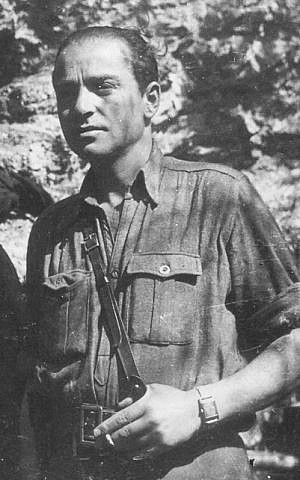
Hermann experienced devastating loss. During the war, his mother Chana, his brother Leon, and his eight-year-old son Samuel — Sylvia’s half-brother — were all murdered at Treblinka. He never saw them again. He rarely spoke of them. And after the war, he immigrated to Chattanooga, Tennessee, where he built homes, raised a family, and lived a quiet life until his death in 1982.
Sylvia and her brother picked up where his silence left off. In 1998, In the Shadow of the Swastika, Hermann Wygoda’s memoir, was published posthumously. He had translated his original Polish words into English himself in 1966, only twenty years after arriving in the United States, and the manuscript was later edited by his son, Mark.
Sylvia became the founding executive director of the Georgia Commission on the Holocaust, organized in 1986 by Governor Joe Frank Harris. Through her work, she spearheaded major educational efforts, directed the Anne Frank in the World exhibit, and produced public programs that reached thousands. But what made Sylvia extraordinary was not just her résumé. It was the way she made history feel human, and connected generations of people to an event that they had only known through school textbooks or films. When she told her father’s story, you didn’t just learn what he did. You felt the human costs of it.
I met Sylvia when I was fourteen years old.
We had just finished reading The Diary of Anne Frank in my eighth-grade English class. I connected to it deeply because I took pride in my Jewish identity. I felt like Anne was speaking directly to me, and I expected my classmates to feel the same way. But many didn’t. Some made jokes. Others shrugged it off. Sure, they were immature middle school kids, of course, but something about their reaction unsettled me.
I wanted them to understand why the Holocaust mattered. I wanted them to understand what it cost six million people.
So, I did what made sense to me at the time. I went home, sat down at the family computer in our den, and Googled “Holocaust survivors in Georgia.” This was 2009. There were more then than there are now. Eventually, I found the name Bert Lewyn, a survivor who had written a memoir called On the Run in Nazi Berlin, chronicling how, while living under a false identity, he was conscripted into forced labor at a gun factory that produced weapons for the German war effort.
I found his phone number and called him. We had a lovely conversation, although he found it difficult to understand my very southern accent at times. He was warm and generous, but too frail to travel. He told me there was someone I needed to meet. Her name was Sylvia Wygoda.
I called Sylvia not knowing what to expect. I was a kid from a small town. She was a statewide leader in Holocaust education, living in Metro Atlanta. She answered my call like I was someone worth talking to and listened to the ramblings of a 14-year-old. “I’d love to come speak at your school,” she said.
And she did.
We gathered every eighth grader into the cafeteria and watched as Sylvia stood at the front of the room and so effortlessly told her father’s very complex story. From his early life in Poland to the smuggling missions in Warsaw, from his flight across Nazi lines to his leadership in the Italian resistance, she told it all with precision and compassion. But what I remember most is what she said about the bystanders. She reminded us that it wasn’t just the Nazis who created the horror. It was the ordinary people who saw what was happening and said nothing. That lesson stayed with me. It still does.
I could see, in real time, how hearing Hermann Wygoda’s story from his daughter changed how the kids around me viewed the atrocities of the Holocaust. But something that day changed me, too. And Sylvia stayed in my life.
We kept in touch. I called often, pestering her with questions. She always answered with patience and honesty. I shared ideas. She encouraged them. She even threw me a bone and let me do a “research internship” with the Holocaust Commission as I was entering high school. I was tasked with creating a database of every synagogue in the state, which was surprisingly tedious for 2009. During my research, I noticed that Georgia recognized Black History Month, Hispanic Heritage Month, and other cultural observances (even Caribbean Heritage Month) but had no official recognition of Jewish heritage.
How could that be?
The first Coca-Cola was sold in a Jewish-owned drugstore in Atlanta. Congregation Mickve Israel in Savannah is the third-oldest Jewish congregation in the United States. A Jewish doctor helped save early Savannah from a deadly epidemic in 1733. Rich’s Department Store became a civic landmark in Atlanta. Jewish leaders stood beside Dr. King at the height of the civil rights movement.
We weren’t a community on the margins of Georgia’s history. We had helped build it.
I brought it to Sylvia’s attention. I told her I wanted to do something about it.
So, I drafted a resolution that would create Jewish Heritage Month in Georgia.
Sylvia didn’t just support the idea. She put it into action. She found legislative sponsors, assembled a multi-faith committee that included religious leaders, community organizers, and diplomats. She met with lawmakers, testified, and advocated. I was still a freshman in high school, but she treated me like a peer, like a colleague.
In February 2011, Jewish Heritage Month became law in Georgia after unanimously passing both chambers of the Georgia General Assembly. Every September, during the High Holy Days, that legacy continues. And it began with a conversation between a 14-year-old and a woman who believed in young people enough to say yes.
At the signing ceremony, I was invited to address the Georgia House of Representatives. I’ll never forget the Israeli Consul General to the Southeast, Opher Aviran, turning to my parents afterward and saying, “Your son is going to be a U.S. Senator someday.” We all laughed. But it meant everything to me. It was the first time I saw how an idea could become a policy. How someone like me could be part of something bigger. And Sylvia made that possible.
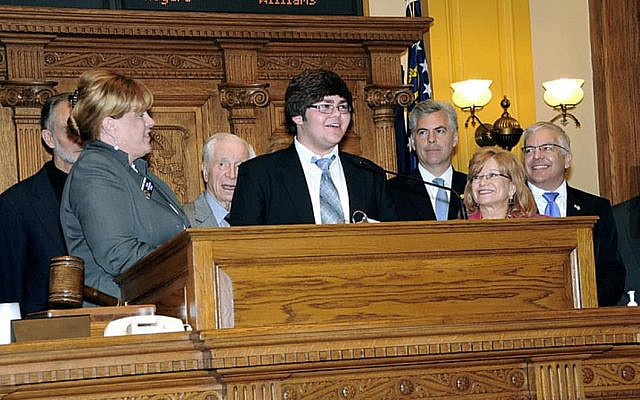
That moment set me on a path that led to years of service in government, work on political campaigns, roles in public affairs, and much more.
And even after she retired and moved to Soddy Daisy, Tennessee, Sylvia remained a voice of wisdom in my life. She talked about her garden, riding her bike, her quiet time, and her deep satisfaction in the work she had done. When she was diagnosed with pancreatic cancer, which progressed rapidly, we spoke less. The last time we spoke, through tears, I told her what she had done for me. Everything she had done. I held nothing back. What she said in return is something I’ve kept for myself.
I followed the remainder of Sylvia’s journey through a page on CaringBridge. She passed away on August 5, 2015, as I began my sophomore year of college.
It’s been more than 15 years since she stood in that cafeteria. More than 15 years since she showed me what it looks like to live with purpose, to teach with integrity, and to mentor with heart.
I still think about her. I think about the fire she lit in me. I think about the way she believed in history as a tool for justice. I often wonder what she would think of who I’ve become, and what I’ve done with the lessons she gave me. I hope she would be proud.
Sylvia Wygoda was not a household name. But she changed the course of my life. She showed me that memory matters, that silence has consequences, and that one person — even a 14-year-old — can make a difference, if someone is willing to listen.
She listened to me. And I will never forget her.
This is for her.