Syria Talks Deadlock: Israel’s Next Moves in Syria
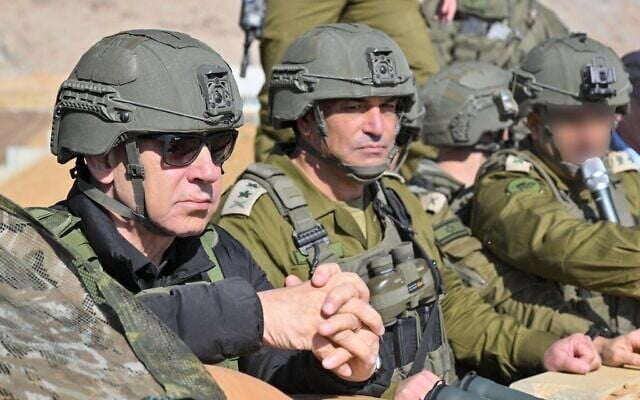
On Tuesday, November 19, Prime Minister Benjamin Netanyahu—flanked by his defense minister, top security officials, and IDF Chief of Staff Lt. Gen. Herzi Halevi—suddenly appeared in southern Syria, touring IDF positions near the Druze village of Hader in a blatant show of force. The very next day, Israeli jets conducted unchallenged overflights as far north as Latakia and looped over Damascus, underscoring Israel’s message: we operate freely here. This wasn’t theater; it was Israel’s immediate response to the deadlock in talks with Syria’s new leadership under Ahmed al-Jolani (now rebranded as al-Sharaa), where Jolani offered only a narrow southern buffer deal while Israel demanded comprehensive terms.
As I argued in my earlier blog post on November 17, “A Israel-Syria Deal Would Be A Hudna At Best: Demand Golan Recognition & More,” Israel should reject limited arrangements and push for irreversible concessions like Golan recognition— a long shot given Jolani’s urgent need to solidify power and deliver aid, but low-risk and high-reward due to Israel’s power asymmetry. The status quo already grants the IDF wide freedom of action, allowing Jerusalem to walk away if Jolani refused, since a narrow security deal would tie Israel’s hands more than the present freedom without offering substantial gains. And that’s exactly what happened: Israel walked, then flexed—and events proved the asymmetry calculus right.
Netanyahu echoed this publicly, stating that “Syria has an interest no less than Israel—perhaps even more—in reaching a security agreement with us.” With negotiations collapsed, Israel will pivot to unilateral actions rooted in its strategic dominance. Here’s how it will likely play out, and why it’s the most probable path forward, incorporating what Israel is already doing on the ground.
Enforcing Demilitarization and Responding to Threats
Israel will continue to strike any HTS (Hay’at Tahrir al-Sham) or Turkish-backed forces that venture south of Damascus, treating the area as an effective A2/AD (anti-access/area denial) zone on land. If Jolani attempts another push into Druze areas like Suwayda, expect swift airstrikes—not regime decapitation, but a calibrated immediate air campaign to degrade HTS columns, depots, and logistics without eliminating Jolani himself. A weakened Jolani is preferable to the alternatives: rival jihadists dreaming of ISIS 2.0 or a new caliphate under a harder-line Baghdadi successor. (Recent reports of Jolani purging HTS upper-level critics who oppose his pragmatic course highlight internal fragility, which could lead to a coup from within rather than an Israeli strike.)
This is driven by Israel’s core strategic priorities: forward defense and depth. Keeping threats 30–50 km from the border denies Jolani or Erdoğan the ability to mass forces near Israel. Both leaders are on record, even in recent years, vowing to “march on Jerusalem” to “liberate” it—rhetoric that hasn’t been forgotten in the Kirya (IDF HQ) or Jerusalem. The power asymmetry makes this enforceable: Israel owns the skies, while Jolani can’t afford a full confrontation amid assassination attempts (Syria admitted two foiled plots against him this month) and internal purges of HTS critics. Israel has already conducted over 500 airstrikes in Syria since the Assad regime’s fall, including in Suwayda, to target threats and exploit the chaos for buffer expansion.
A “Smart” Humanitarian Corridor
Jolani objected to an Israeli humanitarian corridor during talks, citing sovereignty. Expect Israel to create one anyway—but not by seizing land and stationing troops, which would invite attacks and international criticism. Instead, look for regular weekly convoys of aid from Israel to Suwayda, escorted by heavily armed IDF units with real-time air cover (drones and Apaches overhead). Routes will avoid Arab villages in Daraa province to minimize friction, with a clear message to locals: “We leave you alone if you leave us alone; interfere and meet deadly force.”To add carrot-and-stick, Israel will deliver small aid packets (food, medicine, solar panels, fuel) to compliant Daraa communities en route, signaling neutrality buys benefits.
Radical elements—HTS loyalists or ISIS remnants—will still probe occasionally, but responses will be restrained: precise return fire on attackers only, no village-wide strikes to avoid sparking a broader insurgency. This model mirrors Israel’s civil-war-era operations and exploits the asymmetry: Jolani can’t stop the convoys without escalating to a losing war.This is already underway at a smaller scale: Israel has provided humanitarian aid to Druze in southern Syria since at least March 2025, ramping up after July clashes. Recent UN-flagged convoys (e.g., Nov 13 with 201 tons) have reached Suwayda, often with Israeli involvement via proxies or U.S. brokering. A dedicated corridor was proposed in July, and at least one convoy (28 vehicles, ~200 tons) entered amid siege conditions. No full armed escorts reported yet, but airstrikes on Syrian convoys in Suwayda suggest protection for routes.
A Long-Term Logistical Alternative: The Tanf Route
Given the likely continued attacks by radical elements in the Daraa province on convoys to Sweida, long term a smarter play would be to explore alternative routes that minimize friction and exposure. The most viable option is leveraging the existing US logistics pipeline to the al-Tanf base in eastern Syria: convoys enter Syria via the standard Jordanian route to Tanf (US-flagged, with Jordanian escort to the border and US escort inside), then split off 20–30% of the trucks southward/westward through the mostly empty desert (Rutbah–Suwayda track, ~320–380 km of low-population terrain).
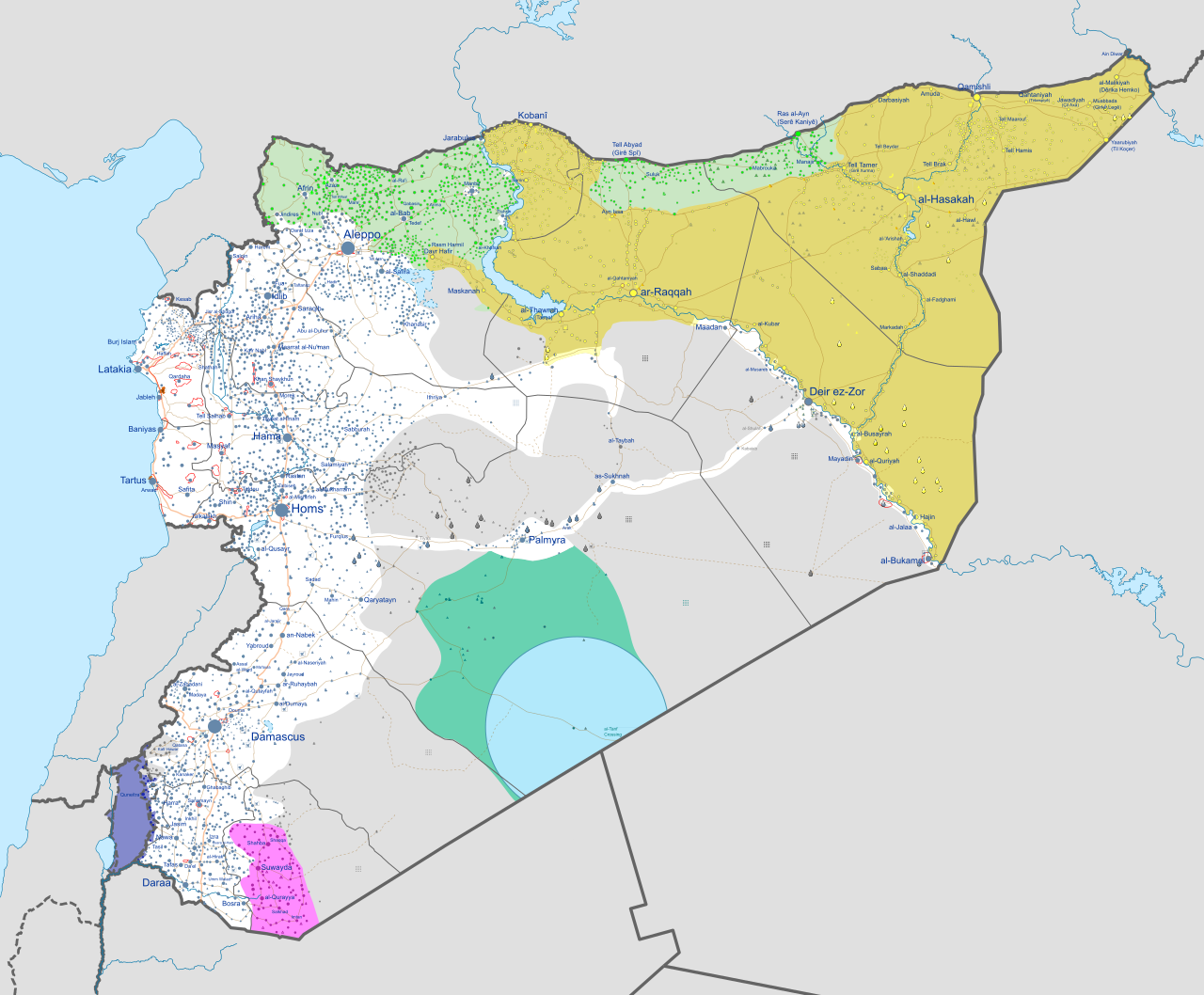
This keeps everything US-branded, reducing traceability to Israel, and exploits air dominance for security—attack risk drops to occasional potshots that drones can spot from afar. Other scenarios have less chance: a direct Jordanian route risks massive domestic backlash from the Muslim Brotherhood/Islamic Action Front (which won big in 2024 elections), fears of Erdoğan/Jolani retaliation, and optics tracing back to Israel—King Abdullah’s margin is too thin amid Palestinian-majority protests, especially since Jordan is only allowing limited border crossing passage currently at its crossing next to Sweida, with it at times completely closed. Even UN/Red Crescent routes are unlikely, as they hide behind “Syrian sovereignty.” The Tanf split is no slam dunk (leak risks remain), but it’s viable for Jordan because it’s “just more US trucks for Tanf,” aligning with their limited/closed crossings next to Sweida. Israel could quietly fund this via US army (CENTCOM), making this a game-changer if Trump leans in—watch for satellite imagery of extra Tanf truck traffic by early 2026.
Incremental Expansion Around Mount Hermon Druze Villages
The IDF is already near villages like Hader. Expect gradual expansion of IDF positions to create kilometers wide “security bubbles” around the 4–6 Druze enclaves adjacent to Mount Hermon, eventually linking them into a contiguous ~100–150 km² zone under de facto Israeli protection but not Israeli rule. Israel’s approach would likely be full Druze self-rule with IDF only offering protection to these Druze villages, and aid offered on a hands-off supporting approach like “how can we help you.”
Given these areas are adjacent to Israel unlike Sweida, it is reasonable to assume Israel aid would go further if Druze villages ask for it as logistics are easy with such an adjacent druze area. It would reasonably extend help to improve basic services like clinics, schools, clean water and solar micro powergrids, maybe even infrastructure like roadworks, internet, water and powergrid. It builds on IDF positions extending ~2 km west of Hader, with outposts on old SAA sites. Netanyahu’s Nov 19 visit toured an IDF post near Hader—directly in southern Syria—emphasizing Druze protection. Broader extensions include Israeli proposals (from September 2025 security talks) for a 2 km deeper buffer into Syrian territory from the 1974 disengagement line, and Mount Hermon remains under firm IDF control, with vows to hold until at least year’s end. While kinship plays a role (Israeli Druze, highly respected for their IDF service, police roles, Knesset seats, and even ministerial positions since Israel’s founding, advocate fiercely for their Syrian kin, as do Golan Druze), this is strategically vital: it extends Israel’s buffer without the optics of occupation.
Likely HTS and Turkish Counter-Moves
Israel’s moves won’t occur in a vacuum—expect vocal opposition from Jolani, who will likely test resolve with renewed attacks directly or through aligned proxies, such as Bedouin groups targeting Sweida Druze or local insurgents probing IDF positions around Hader and the DMZ. This fits Jolani’s pattern, amplified by his recent arms deal with Turkey for heavy weapons and drones, which could embolden further pushing to see how far he can go without full escalation. Jolani remains constrained, however: limited light arms for now, internal challenges (e.g., recent purges of critics), and the need to deliver quick aid and services to populations under HTS control to shore up support.
Turkey, pursuing neo-Ottoman influence, will likely try to continue establishing bases around Homs and T4 Palmyra to expand its military footprint in Israel and get closer to Israel’s border. So far Israel has already prevented this with pre-emptive strikes damaging infrastructure like landing strips. US backing (Trump’s hedging on Jolani) could deter bolder moves, restraining Turkey to indirect support via HTS. If Erdogan persists in his neo ottoman expansionist plans and Israel keeps enforcing a red line on Turkish bases so close to Israel a direct military confrontation might be inevitable. While turkey has the larger army ( NATO’s second biggest army after the US) it has little battle experience, less advanced weapons and it operates in Syria without the cover of NATO protection as NATO protection only covers the territory of member states and NATO mission. Turkish military activities in Syria are neither. Israel has the most battle experience currently in the Middle East, it has a quality edge with more advanced weapons and shorter logistical lines. But while a direct clash wouldn’t put Israel officially in conflict with NATO it would be a diplomatic storm and dilemma for the USA as it pits a prominent Nato member against its closest ally in the region, Israel. So expect Israel to try and avoid direct clashes by striking pre emptively infrastructure,
In Daraa, where many hostile elements remain due to lifelong anti-Israel indoctrination, Jolani might arm local insurgents to harass convoys and make life difficult for the IDF. Israel’s response will need a careful, robust carrot-and-stick approach: avoid ground incursions whenever possible, incentivize local leaders to keep a lid on their people through help, suspend aid for a month or so to a village when attacks occur while increasing peace dividends to peaceful communities to show cooperation pays off, and use deadly force only against direct attackers—no drone strikes on villages, as that could fuel a wider insurgency in the province.
De Facto Autonomy for Suwayda
For the larger Suwayda governorate (~700,000 people), expect de facto full autonomy under an IDF air umbrella. Druze councils and militias handle internal affairs. Israel provides tools if asked—food, water, medicine, arms for retaking the 20–30% of Suwayda still under HTS. If invited, temporary weapon training, liaison officers, and secure comms equipment could follow for coordination and intel sharing.Independence voices have sounded for a while, amplified after this year’s massacres that shattered traditional Druze loyalty to their host nation. Led by Sheikh Hikmat al-Hijri, calls for full secession reflect extreme duress from HTS persecution. As indigenous people in their ancestral land, Druze can also legitimately claim the right to self-determination under international law.
While that right under international law has equal legal weight as existing borders/sovereignty, the international community often chooses to favor existing borders over the right to self-determination. This is a political choice, not a legal one, but yet reality. What further reinforces the case for the Druze is they enjoyed far-reaching autonomy under the French mandate (Jabal al-Druze state, 1921–1936). But international bias favors existing borders (UN Charter Article 2(4)), with rare exceptions like Kosovo requiring superpower backing (U.S./NATO).Trump’s recent moves—meeting al-Sharaa (Jolani) at the White House for a high-level meeting, 180-day sanctions waiver on HTS zones, and removing Jolani’s terrorist designation—signal cautious wait-and-see support for Jolani. Given that, it is unlikely even if Israel would lobby Trump on behalf of the Druze that Trump would currently back Druze secession. Thus, formal independence is a bridge too far. The best achievable now is realistically de facto full autonomy under IDF protection: Syrian in name only, with Druze in the lead and Israel hands-off unless requested.
Why This Path Is Likely: Asymmetry and Drivers Align
Israel’s emerging strategy in southern Syria is firmly rooted in its power asymmetry over Jolani’s fragile regime: the status quo already favors Jerusalem, granting total operational freedom, while Damascus desperately needs reconstruction funds and international legitimacy to stabilize. By walking away from the talks, Israel risked nothing, as Jolani remains constrained by slow-trickling Gulf pledges—donors wary of bankrolling Erdoğan’s proxy influence without real concessions.
Turkey, for its part, invests minimally in HTS zones yet maintains strategic control, a dynamic that suits Erdoğan, but Israel denying Turkey so far the window to establish bases around Homs and T4/Palmyra will be a continuing point of tension—one Erdoğan is unlikely to accept as he seeks to further extend his military footprint in Syria. This could lead to a direct clash between Turkish and Israeli forces in Syria, though Erdoğan prefers proxies to avoid costs, as Israel draws a hard line and enforces the south as a no-go area.
Strategically, this approach creates essential depth against threats, with the genuine kinship toward the Druze providing complementary humanitarian cover without overshadowing the core military calculus.And this path is sustainable in the long term with full autonomy under IDF umbrella likely the ceiling for Druze independence ambitions, as the international community generally favors existing borders over self-determination rights for indigenous peoples under duress. As a scenario like Kosovo’s independence was only possible with superpower backing which the druze lack.
As talks hit a dead end with Syria, it will be interesting to see the fallout for Jolani: if his current domestic needs for aid force him back to the table—which is not impossible given how slow the aid trickles from the Gulf countries while demand for basic services grow as more and more Syrians return to Syria. Israel might just secure that broad agreement with diplomatic recognition of Israeli sovereignty over the Golan, enabling it to get internationally among more countries the “occupied Golan” label removed.
This would be a lasting win even if Jolani later reneges on such an agreement, as with Jolani any deal will likely be just a hudna, the Islamic concept of a temporary truce to rearm and prepare for a future attack given his jihadist ideology. That is the power of being able to walk away from the table, leveraging the power asymmetry in Syria in Israel’s favor. Welcome to the world of realpolitik and power politics.