Talking on the Shore While the Sea Waits
When Freedom Feels Like Too Many Choices
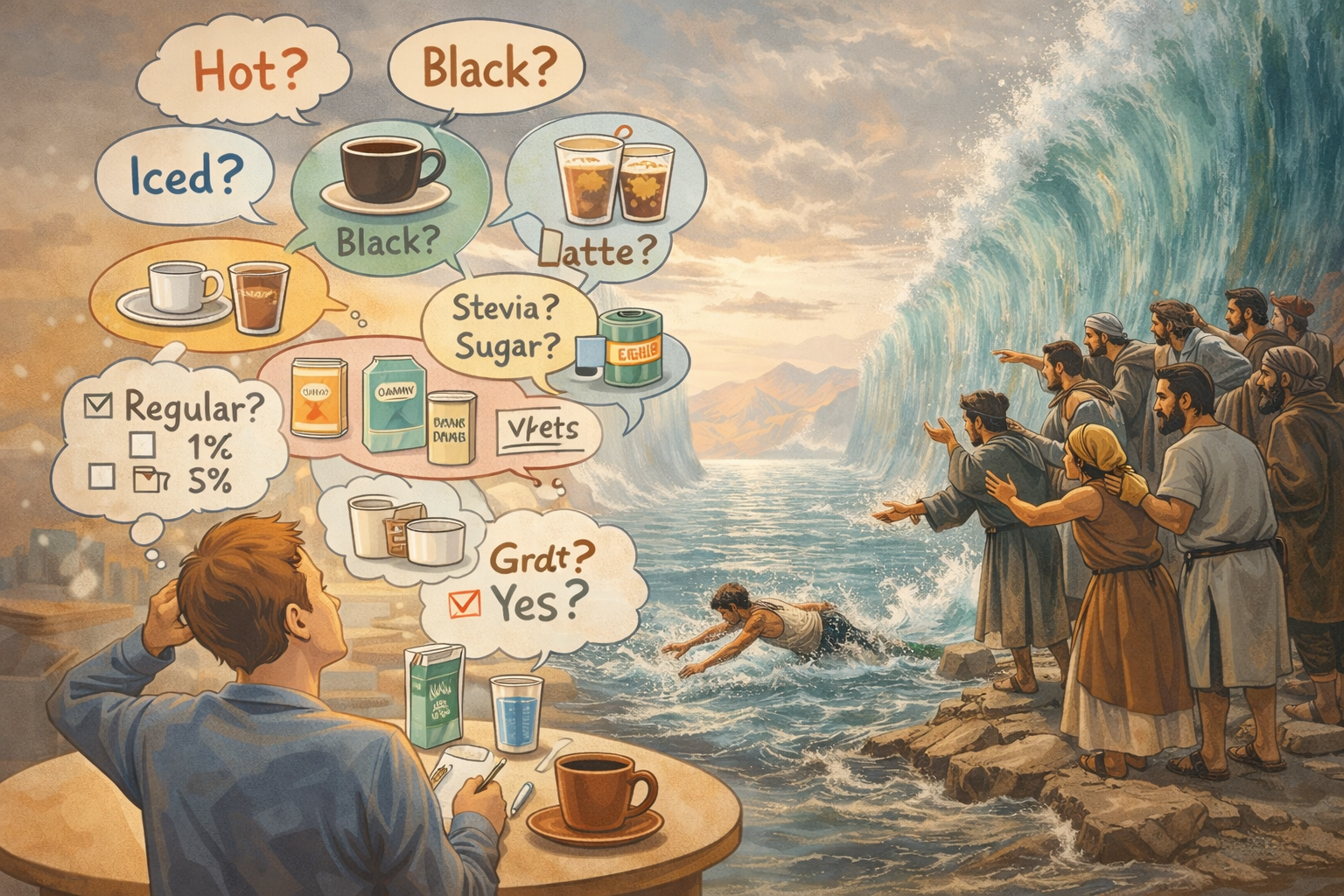
How do you take your coffee?
 Hot or cold?
Black, latte, or instant?
Dairy, oat, soy, almond?
Sugar? Sweetener? Stevia?
Mug or glass?
You’re already tired- and you haven’t even taken a sip.
We laugh because it’s familiar. Before our first cup of coffee, we’ve already made dozens of decisions. And that’s before the real ones begin: whether to stay in a secure job or leave for something uncertain, whether to buy a home or keep waiting, whether to commit, to move, to speak up, to act.
Decision-making is exhausting. And yet, life does not ask whether we have the energy for it.
Every day, we move between small, mundane choices: what to wear, what to eat, whether to bring an umbrella, and decisions with long-term consequences that shape our identities and our futures. Sometimes we move easily. Other times, we freeze. And often, we discover that it’s easiest to decide only when there is no choice left. We stare at a menu until the waiter returns and the table is waiting. Suddenly, we order- not because we’ve reached clarity, but because the moment demands action. We remain in workplaces we know are wrong for us until the situation becomes unbearable. We postpone change until the lease ends, the machine breaks, the deadline arrives.
There is comfort in “no choice.”- When circumstances force our hand, responsibility shifts. We didn’t decide, the world decided for us. The anxiety quiets. The hesitation lifts. But here lies the discomforting truth: the core story of Judaism is the movement from slavery to freedom. And freedom, at its heart, is not comfort. It is responsibility.
Slaves do not choose what to wear or eat. They do not debate options. Prisoners do not browse menus. There is no oat milk or almond milk, no mug or glass, you take what you’re given. And for generations, we prayed for freedom. Yet when freedom finally arrives, it overwhelms us. We complain. We long for someone else to decide. We begin, paradoxically, to miss Egypt, not because it was good, but because it was simple. At this point in the Torah’s unfolding story, the people of Israel find themselves suspended between worlds. Egypt is behind them, the future still unclear before them, and the path forward demands movement without certainty.
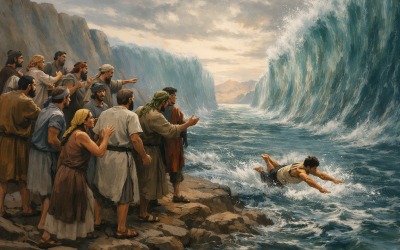 The biblical narrative tells of a moment when the people stand before the sea, immobilized. Tradition often explains this as fear and celebrates one individual who steps forward when others hesitate. But the midrash offers a subtler, more unsettling reading. According to Mekhilta de-Rabbi Yishmael, the paralysis did not stem from terror but from argument. Each tribe insisted, “I will go first.” Each wanted to be the one remembered, the one who led, the one who acted correctly. And while they debated timing, order, and credit- nothing happened. Until one group simply stepped forward.
In this reading, what delayed action was not fear but perfectionism. The desire to do it exactly right. The insistence on the ideal moment. The unwillingness to move without full clarity. We know this pattern well. Fear is only one reason we struggle to act. There are others: fear of failure, and just as often, fear of success. Perfectionism that convinces us nothing is ready yet. Low self-confidence that erodes trust in our judgment. FOMO- Fear of Missing Out- the anxiety that any choice means missing out on something better. And fear of commitment itself, because action closes doors. The English language captures this beautifully. The word decide comes from the Latin decidere– to cut off. It shares a root with -cide, as in homicide or suicide. To decide is to kill alternatives. Every action gives life to one path and ends others. And perhaps that is why freedom feels so heavy: it demands not only choice, but loss.
Standing at the edge of the sea, the people were not facing water alone. They were facing freedom. And freedom, it turns out, is not calm or reassuring. It is demanding. It requires movement without guarantees.
The figure we remember from that moment is not remembered for winning an argument or making a speech, but for stepping forward when others were still talking. And this is where the Torah stops being ancient history and becomes painfully current.
Today, we too stand before a divided sea. Right and left. Religious and secular. Mizrahi and Ashkenazi. Supporters and opponents. In Israel and across Jewish communities worldwide, we debate, analyze, accuse, and wait.
The question the Torah places before us is not who is right, but who is willing to move. Do we remain on the shore, refining positions and waiting for circumstances to force our hand? Or are we prepared to enter turbulent waters without certainty, without applause, without perfection?
Freedom is not an abstract value, and it is not merely a political position. Freedom is tested through action. It is revealed when we stop asking what we believe and start asking what we are doing: Are we showing up? Volunteering? Building bridges? Protecting those pushed to the margins? Taking responsibility for the public space we share?
If we want a democratic, pluralistic, just Israel- and a Jewish future worthy of its values- it will not emerge from hesitation. It will be built through imperfect, risky, committed action. The sea does not part so that we can debate it. It parts only after someone steps in.
And perhaps that is why we remember those who acted. Not because they were the loudest or the most certain- but because, when everyone else was still speaking, they moved.
Shabbat Shalom