
A writer conversant in grief, seeking virtue.
Teaching Encounter Like Martin Buber
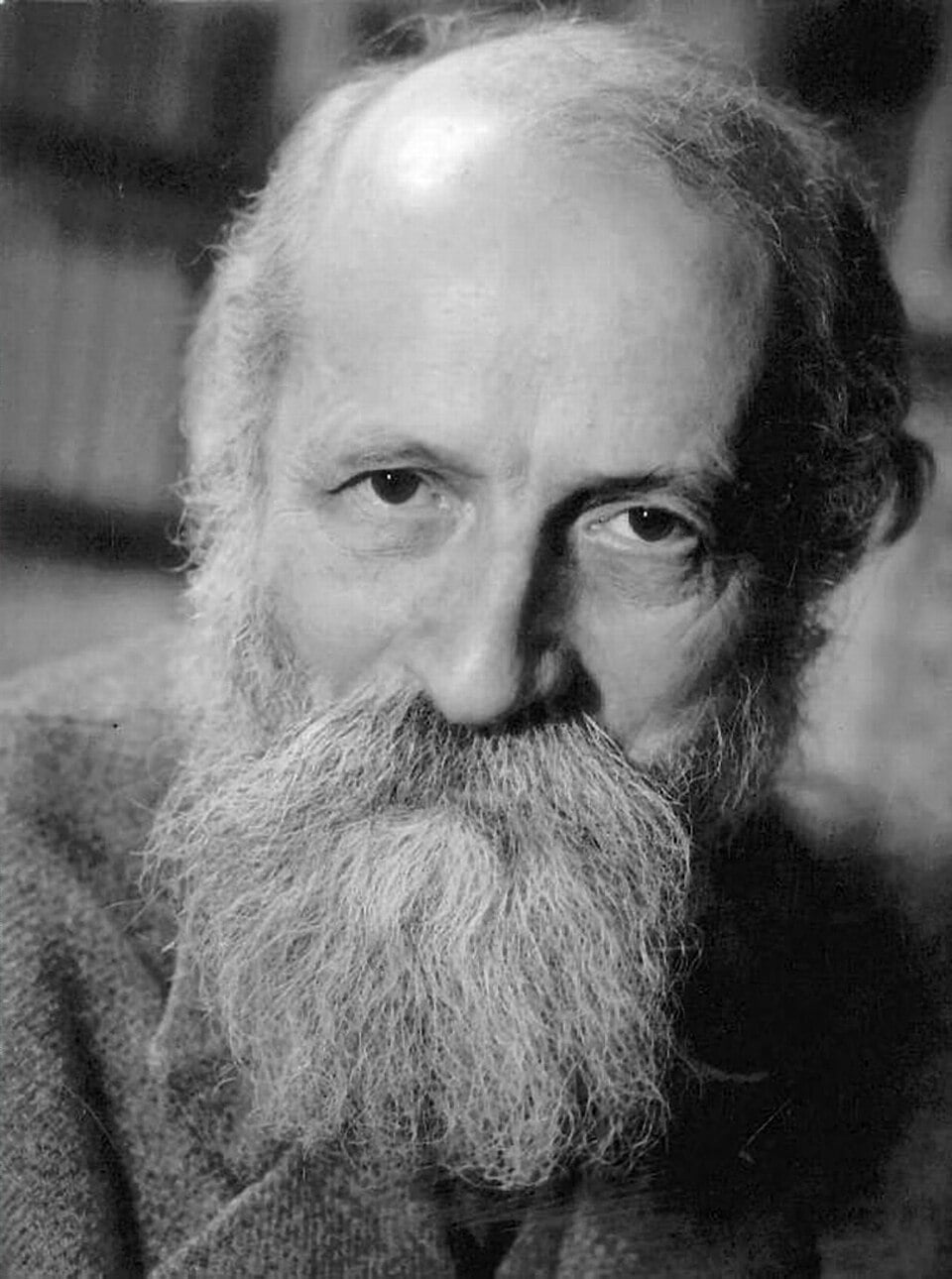
Martin Buber in Israel, 1950, The David B. Keidan Collection of Digital Images from the Central Zionist Archives (via Harvard University Library)
One hundred years ago, Jewish philosopher Martin Buber published “Education” in the inaugural issue of Die Kreatur. He edited the quarterly with Protestant physician Viktor von Weizsäcker and Catholic theologian Joseph Wittig.
Weimar Germany was no nursery of interfaith amity. Yet the editors proposed that people divided by conviction might “go together without coming together.”
Buber called the necessary act encounter.
Under encounter, one person meets another and forfeits the right to treat him as material for a lesson. Knowledge retains its authority. The student stands before a teacher or classmate, summoned to reply.
The centenary of Buber’s “Education” arrives just as universities surrender judgment to AI—a machine incapable of bravery, serving up effortless, unblushing responses to everything.
When competent exposition issues instantly from a student’s screen, why assemble young people on expensive campuses?
Buber offers an answer.
In “Education” and in his masterpiece, I and Thou, Buber gave encounter its philosophical grammar. In an I–It relation, experience becomes an object to classify, manipulate or use.
AI extends this spectacularly, arranging language at inhuman speed. The danger begins when an instrument becomes the university’s model of thought.
Ask a chatbot to impersonate a Marxist or a social conservative. The surrogate appears polished and bloodless. Software can type “I understand” without risking rebuke.
I–Thou begins where another human being escapes the ideological box prepared for him. Agreement may elude us, yet the meeting still binds.
Amid encounter, someone can remain wrong, dangerous even, while exceeding the category under which we placed her. Buber called this confirmation: seeing the person without ratifying the position.
Canada’s new Governor General, Louise Arbour, sounded a distinctly Buberian note in her June installation address. “Extreme polarization is dangerous—but so is extreme consensus,” she warned. Artificial intelligence, she added, increasingly blurs knowledge and belief, truth and falsehood, fact and assumption.
Arbour’s defence of difference deserves more than ceremonial applause. It describes a civic habit Canada badly needs: resistance to tribal fury and the narcotic comfort of consensus.
Universities joust over who may enter their halls. Buber begins once the visitor sits down. What does the audience owe when the speaker begins?
Too often, classification precedes hearing, lest anyone endure minor offence. Attach “reactionary” to an opponent and no rebuttal seems necessary; the label has delivered the verdict. Every faction fancies the tactic once it owns the gate.
Students become adept at tracing a sentence to ideology or status. Useful work, sometimes. Diagnosis turns evasive when it renders the speaker superfluous. AI deepens that retreat by presenting disagreement with the disagreeable person excised.
And so here we are: encyclopedic about opposing views and increasingly unfit to see their holders as equals.
Walter A. Kaufmann, the late Princeton philosopher and polymath whose 1970 translation carried I and Thou to generations of English readers, understood the fate reserved for sages.
“The world exacts a price for calling teachers wise,” he wrote. “It keeps discussing the paths they recommend, but few men follow them.”
Academia knows the tariff. An essay on Orwell gets assigned for Tuesday, converted into commentary and forgotten thereafter. Nobody leaves perturbed.
AI can furnish an argument on command. Universities must still teach students how to answer another human being. To encounter.
Let the model prepare the outline. Then close the laptop. Before rebutting a disputed position, a student should stand and render it in terms its holder recognizes. The exercise ends when that person says: “Yes, you have heard me.”
Oral examinations deserve revival because answers need owners. Evasion looks different when another mind presses back. Professors should pose questions whose destinations remain unknown. A worthy classroom permits the scholar, too, to leave altered.
This will slow pedagogy. Good. Speed has impersonated intelligence long enough. Encounter bruises vanity and makes thought expensive again.
Encounter need not brook cruelty or deceit. It preserves moral judgment while denying contempt the right to turn a neighbour into a specimen.
A century after “Education,” the university risks becoming a museum of thought—open all night, flawlessly indexed and empty of encounter.
Across the seminar table sits its way out: a human being who refuses to be categorized.
Related Topics
Related Posts