Blessings Abound
Tefillin and Tourniquets
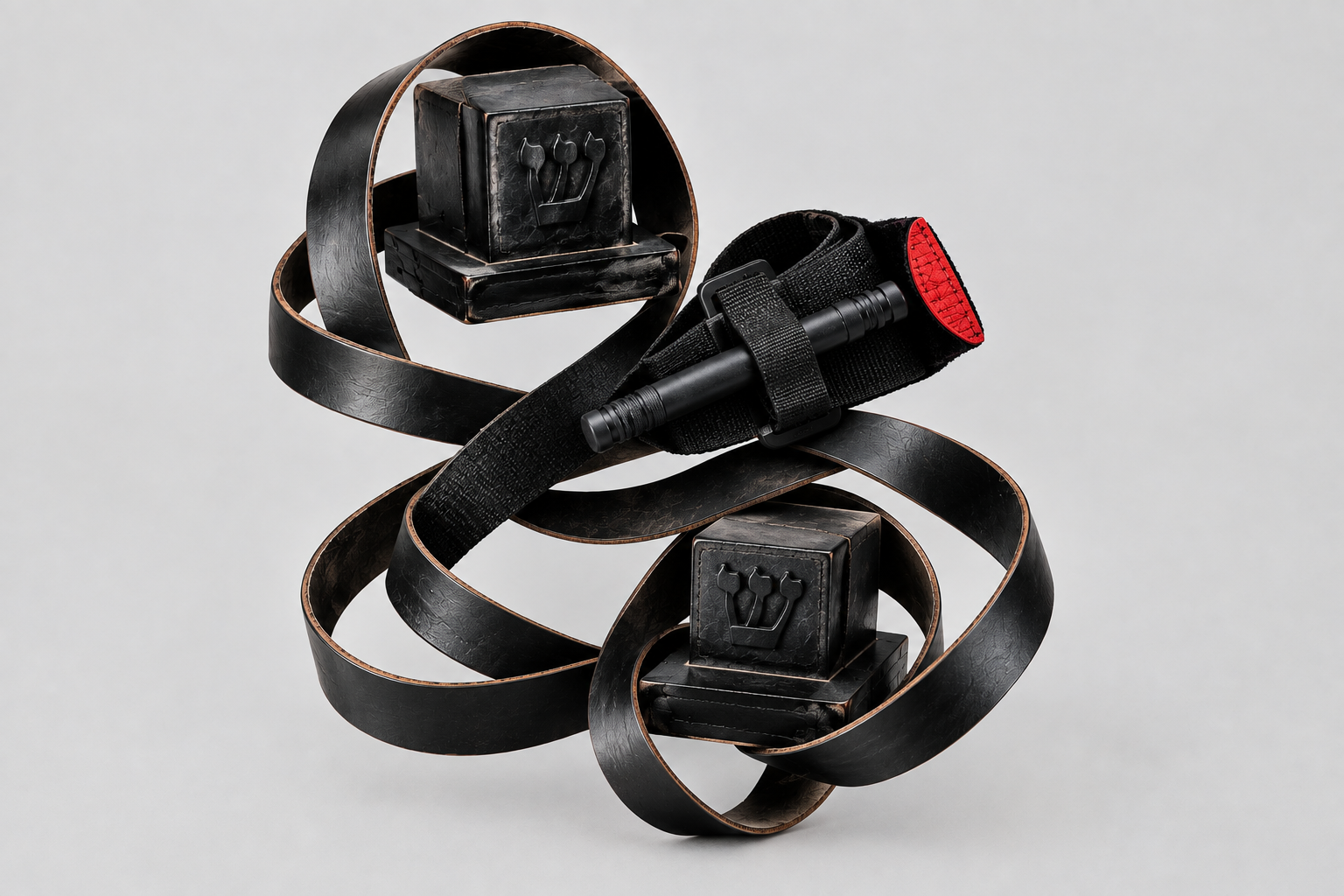
Tefillin and tourniquet image by ChatGPT.
This morning, I wrapped my tefillin particularly tight. I didn’t do it on purpose, I don’t think, but I can’t be sure. I noticed it only on seeing my left hand discolor. Seeing that hand while praying in the Pardes Institute of Jewish Studies Beit Midrash, my thoughts went back to another moment there shortly after October 7th, 2023.
Shock stalked the streets of Jerusalem. Sorrow and dismay, fear and confusion, stalked our hearts. Outside of class, I spent much of my time volunteering. I packed food for soldiers. I joined a crew to paint the inside of a dank, neglected bomb shelter. I helped make tempeh for vegan soldiers. I began a regular practice of agricultural volunteering at farms, orchards, and vineyards. From pineapples to avocados to hot peppers, I harvested and planted. Again and again.
The need for safety and survival skills in the wake of the terror rampage — and the ensuing war — became a key concern in those early days. Less than three weeks after the terror assault, Pardes hosted a medical intervention course, coordinated by one of the students and given by the Magen David Adom (MDA). The idea of the course: providing the skills to keep someone alive until professional help arrived.
I remember the cardiac training and not much else, except this one breathless moment, when the instructor announced: ‘Now we’ll do tourniquets.’ The entire room gasped. The room held its breath. One student, nearly silent but it felt like a trumpet blast, said: ‘Hersh.’ Hersh Goldberg-Polin z’l, whose life was saved by a tourniquet after losing half of his arm, who was (and still is) connected to Pardes through his mother Rachel. A tourniquet transformed into a sign of hope that he would survive.
The moment gave way to quiet tears. Then someone — one of the faculty members, I believe — explained to the MDA instructors the Pardes connection to Hersh and the Goldberg-Polin family. Students, faculty, and staff alike pushed on and learned how to apply a tourniquet.
A tourniquet must be unbearably tight to stop the flow of blood. If the injured party isn’t screaming in agony, the tourniquet is probably too loose to save the person’s life. From the point of applying the tourniquet, the individual will likely lose the remainder of the limb, but their life will be saved.
In the Babylonian Talmud, Berakhot 6a, the Sages teach that God wears tefillin. I wonder, has God wrapped the Divine tefillin too tight? Has the blood of God’s compassion been dammed. Is God’s shel yad so tight that there’s no blood flow left for that strong hand and outstretched arm (Deut. 4:34) to reach out to heal our world? Or perhaps God has cast the Divine tefillin back to earth, as in Lamentations Rabbah 2:1, in sorrow that we have abandoned God’s word.
In my fantasy, we find the Divine tefillin that God has cast off. Surely God misses them. Perhaps we hold them for ransom. Perhaps we keep them for ourselves. Perhaps we shout to the heavens: “Here is the tourniquet which You have cast asunder. Here is the healing that only You can bring. Wrap us, wrap the world, in blessings.”
Related Topics
Related Posts