
Author and Global Affairs Commentator
Tehran’s Biggest Enemy May Be Inside Iran
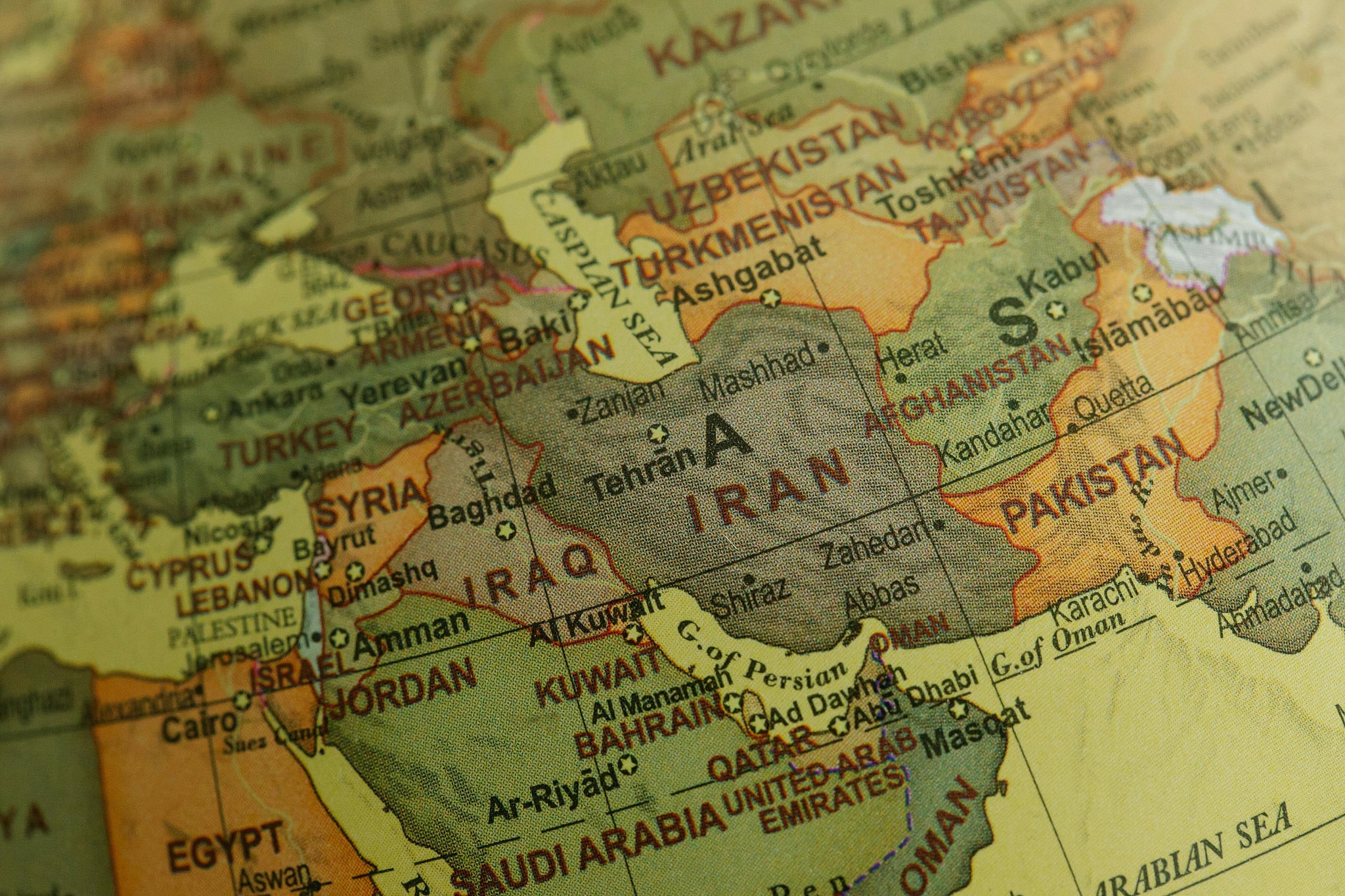
From Iran's major cities to its Kurdish and Baloch peripheries, the regime faces a widening range of threats that increasingly compete for the attention of its security apparatus.
For decades, Iran sought security by pushing conflict beyond its borders, using missiles, militias, and proxies to impose costs on its adversaries while insulating the Islamic Republic from direct pressure. That logic is now under strain. Protests, growing armed resistance on the periphery, and deepening anxiety within the security establishment are forcing Tehran to devote more of its military and intelligence capacity to defending the regime at home. The Islamic Revolutionary Guard Corps remains formidable, but its strategic problem is changing: Iran can still threaten its enemies abroad, yet its own territory is becoming an increasingly demanding front.
A Security State on the Defensive
The warning signs are no longer confined to isolated incidents. From Iran’s major cities to its Kurdish and Baloch peripheries, the regime faces a widening range of threats that increasingly compete for the attention of its security apparatus.
The IRGC retains a substantial missile arsenal, extensive intelligence networks, and the ability to project power across the Middle East. But Tehran’s problem is no longer concentrated on a single front. The territory—and population—it feels compelled to control is expanding, while the financial and political cost of doing so continues to rise.
Recent changes within the security leadership reflect that pressure. In August, Ahmad Vahidi took command of the IRGC, Mostafa Izadi became his deputy, and Hossein Taeb, the former head of IRGC intelligence, returned to lead the Basij. Mohsen Rezaei was appointed secretary of the Supreme National Security Council and the supreme leader’s representative to that body.
These appointments are more than a reshuffling of familiar names. They consolidate the influence of security hard-liners at a moment when the defense of the clerical regime has become inseparable from Iran’s broader military posture.
Taeb’s return is particularly revealing. The Basij remains one of the regime’s principal instruments for monitoring society and suppressing unrest. Having spent years at the center of the IRGC’s intelligence apparatus, Taeb represents the institutional experience Tehran relies upon when protest, dissent, and political opposition become security threats.
Preparing for the Streets
The regime’s concern about renewed unrest is increasingly visible. A recording published in August by the opposition outlet Iran International, purportedly from a closed meeting of the Media and Cyberspace Headquarters, reportedly focused on the possibility of new protests, the Basij’s declining social support, and the expansion of surveillance of opposition activity online.
The political atmosphere surrounding the assassination of Hamidreza Rajabzadeh, a pro-regime religious singer, also exposed a growing sense of insecurity within circles close to power. The circumstances and motives remain disputed, but the episode underscored an uncomfortable development for Tehran: a security establishment designed to intimidate society is becoming increasingly concerned about the vulnerability of its own supporters and officials.
Executions offer a harsher measure of the regime’s anxiety. According to the UN high commissioner for human rights, Iranian authorities have executed at least 56 people on national security charges since March 19, including 27 in cases linked to protests earlier this year, while more than 100 others remain at risk of execution.
Repression does not necessarily indicate imminent collapse. It does, however, reveal the scale of the threat as Tehran perceives it. The regime appears determined to raise the cost of dissent before popular anger can once again develop into a sustained political challenge.
Germany, joined by 31 other countries and the European Union’s high representative, condemned the execution of protesters in August and denounced the use of capital punishment to silence dissent and intimidate Iranian society.
Pressure on the Periphery
Tehran’s concerns extend well beyond the country’s major cities. In Kurdish areas, opposition reports have pointed to IRGC reinforcements and troop movements near the Iraqi border, along with tightened restrictions in sensitive border zones.
The significance lies less in the number of forces deployed than in the demands placed upon the state. Tehran must maintain a substantial security presence along its Kurdish frontier while simultaneously managing external threats and domestic unrest.
The situation in Balochistan may prove even more consequential. The establishment of the People’s Fighters Front in December, following the merger of Jaish al-Adl with other Baloch factions, represented an effort to overcome longstanding divisions and create a more coordinated armed opposition. The group subsequently claimed attacks against security forces and the IRGC around Zahedan and elsewhere.
This does not mean that the new front poses an immediate nationwide challenge to the Islamic Republic. It does mean that Tehran faces a more organized armed opposition on its eastern periphery, imposing a continuing burden on its military, intelligence, and security resources.
For a regime born in revolution, the irony is difficult to ignore. After decades spent promoting and exporting revolutionary influence abroad, the Islamic Republic must now devote an increasing share of its resources to preventing the emergence of revolutionary conditions at home.
The Limits of Strategic Depth
The IRGC was created to protect the revolution. It later became the principal instrument through which Iran projected influence beyond its borders. Tehran built what it called strategic depth across Iraq, Syria, Lebanon, and Yemen, cultivating allied militias and supplying them with money, weapons, training, missiles, and drones.
The advantage was geographic as much as political. Iran could confront adversaries indirectly and push much of the resulting violence beyond its own borders. Others bore the immediate costs.
That equation is becoming less favorable.
Iran is increasingly compelled to devote its own resources to threats within its territory. The IRGC must monitor a restless population, track dissidents, expand digital surveillance, contain armed groups, and protect figures associated with the regime. Each of these demands consumes manpower, money, intelligence capacity, and political attention that might otherwise be directed outward.
This does not mean that Iran has lost its capacity for regional action. The IRGC remains a formidable institution, and the Islamic Republic retains significant missiles, security forces, and regional networks. Nor is the regime necessarily approaching collapse.
But Tehran is confronting a reversal of the strategy that defined much of its rise as a regional power. For years, it compelled its adversaries to spend heavily defending themselves against Iranian pressure. Iran is now being forced to devote an increasing share of its own resources to self-protection.
The critical question, therefore, is not simply how many missiles remain in the IRGC’s arsenal. It is how much manpower, money, institutional capacity, and strategic flexibility Tehran can continue to allocate abroad when the Iranian interior itself is becoming an increasingly important theater of conflict.
The regime’s challenge is no longer merely to project power. It is to preserve enough security at home to continue doing so.
Related Topics
Related Posts