
Iranian American Journalist and Commentator
Tehran’s Thirst: Regime’s Final Exam
The following piece was join authored by Grant Arthur Gochin and Karmel Melamed.
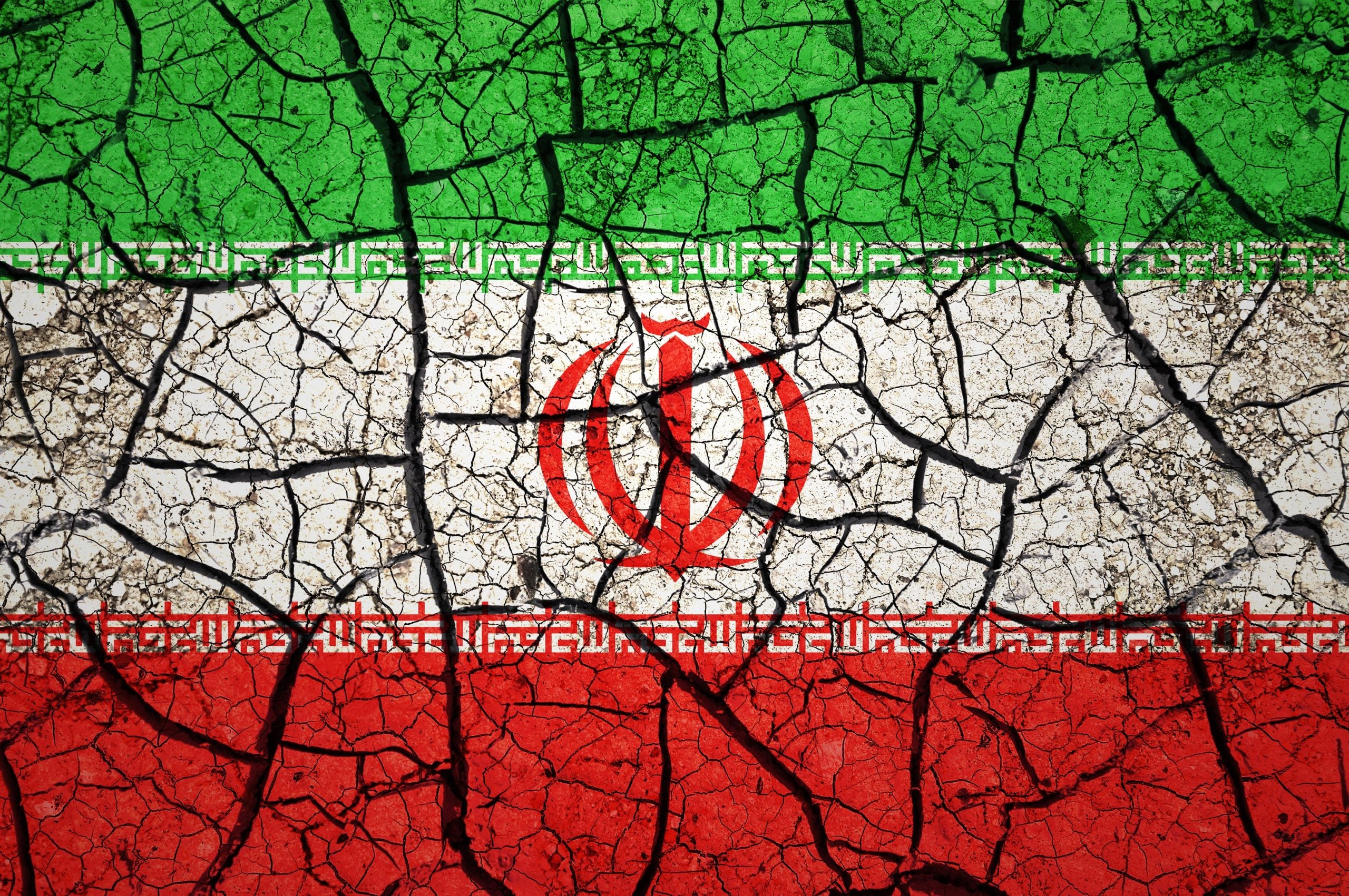
Tehran, November 2025 – The city’s five lifeline dams cling to 11% capacity. In the south, children fill soda bottles from tankers; in the north, black-market water sells for more than gasoline. Over 10 million people in the city proper—and more than 15 million in the wider region, exceeding the population of the Netherlands—wait for rain that forecasts refuse to promise. The regime’s response: a national day of prayer. The people’s response: a silent countdown to December, when the regime’s “President” Pezeshkian warns evacuation may begin.
This is not drought alone. It is the endgame of a kleptocratic theocracy built on hate, ignorance, and financial plunder—a regime that has diverted Iran’s oil wealth to fund global terror networks while its citizens queue for water. Billions flow to Hezbollah, Hamas, and the Houthis; billions more vanish into the offshore accounts of IRGC generals and clerical families. The treasury exports death and division—arming militias, training operatives, and sowing chaos from Beirut to Buenos Aires—while aquifers collapse and pipelines decay at home. It even funnels funds into European and American universities, amplifying student groups that echo its anti-Israel rhetoric, while Iranian students endure blackouts and rationing. Ninety percent of Iran’s water still irrigates politically connected farms; 30% of treated water leaks before reaching a tap. The June 2025 war with Israel damaged a few pylons, but the real fracture is decades in the making—consequences of choices long foretold.
The water crisis is not mere negligence. It is the product of total incompetence and callous indifference to the well-being of Iran’s people. For the last 46 years, the mullah regime has never prioritized human suffering in Iran over its ideological obsessions and elite enrichment. While families ration dwindling supplies, regime insiders enjoy imported luxuries, unmoved by the misery they have engineered.
The mullahs have immolated the nation’s future on the altar of jihadist ideology, sacrificing prosperity for a delusional caliphate. Their corruption is systemic: they siphon from the poor to arm fanatics, preach austerity while flying private jets, and demand sacrifice while their children study in London, Toronto, Los Angeles and Berlin. This is not governance—it is organized plunder cloaked in piety.
Rewind to the 1960s, when Iran faced severe water shortages under the late Shah. Israel emerged as a vital partner, sending engineers to transform Iranian agriculture and infrastructure. They pioneered drip irrigation systems for Iran’s arid regions, conserving water and increasing crop yields by up to 90% in pilot projects. Israeli teams constructed modern water and sewage systems in cities like Tehran and Isfahan, curbing disease and enabling urban expansion. They prospected and drilled deep wells in barren regions like the Dasht-e Kavir, tapping aquifers untouched for centuries and turning deserts into productive land.
By the early 1970’s with Israeli water and agricultural experts as well as technology, some desert regions of Iran, such as Gazvin province, were transformed into Iran’s breadbasket that produced enough agricultural products not only for the country but for export worldwide. Muslim farmers and Jewish engineers labored side by side—Israeli hydrologists training Iranian agronomists, Persian laborers operating rigs alongside kibbutz volunteers—because Israel is a non-racist society that seeks upliftment for all, regardless of faith or origin. The Shah and Israel collaborated on trade, technology, and regional stability, from the Persian Gulf to the Mediterranean. Israel built; the Shah modernized.
In stark contrast, the mullahs’ Iran is a racist, hate-mongering terrorist state that demonizes Jews as a matter of doctrine, exports genocide as policy, and sacrifices its own citizens’ futures to sustain an ideology of annihilation. Upon seizing power in 1979, they severed every tie. They dismantled drip systems, abandoned wells, and allowed infrastructure to crumble, prioritizing ideological purity over national survival. The Iranian people suffer today not for lack of solutions, but for a regime that despises Jews and Israel more than it values its own citizens. Israel stands ready to help again once this theocracy falls: desalination plants, restored irrigation, creating water recycling and reclamation plants, joint ventures to secure Iran’s water future. But the regime’s agenda is destruction; the late Shah’s was construction.
In the West, historically illiterate students march in lockstep with the ideology that would enslave them. They reject the Enlightenment values—reason, liberty, inquiry—that built their universities and democracies. They topple statues of emancipators and replace them with slogans from a regime that executes gays and stones women. They repeat the fatal errors of failed societies, blind to tyranny when it flatters their egos. American youth, in particular, betray the heritage of freedom won through sacrifice, squandering it on causes that echo Tehran’s oppressors. Iranian youth, by contrast, crave the very liberties Western students seek to dismantle.
Iranian youth know the lie intimately. Nearly 94% of those under 30 use VPNs to bypass censorship, accessing forbidden books, uncensored news, and Israeli desalination blueprints while the regime prays for rain. They speak fluent English, code in Python, and dream of a Tehran that exports innovation, not missiles. They are pro-Western by necessity and pro-Israel by logic—recognizing in Tel Aviv’s water miracles the antidote to Tehran’s collapse.
How do we know Iran’s new “Gen Z” are supporters of Israel? They tell and show us directly every day when they post messages and flags of Israel on countless online social media platforms like X, Instagram and Telegram. They see a future Middle Eastern Silicon Valley, built on the proven success of Iranian and Israeli minds already collaborating in California’s tech sector—powering AI, cybersecurity, and biotech startups. This is not fantasy; it is a formula already working.
History is unambiguous: antisemitism signals civilizational decline. Medieval Spain expelled its Jews and stagnated for centuries; Weimar Germany embraced the poison and collapsed within a decade. Today it festers in campus tents and faculty lounges—not moral clarity, but decay. Societies cycle; the West slides toward the trough, mistaking misguided, illiterate, uninformed, and miseducated rage for progress.
Iran, paradoxically, nears ascent—if the regime fractures. Its human capital rivals any nation’s. Underground startups out-engineer sanctioned factories; women outnumber men in STEM graduates. The 20,000 Iranian Jews who fled to Israel post-1979—part of a 60,000–80,000-strong exodus (35,000 to the U.S., 5,000 to Europe)—now drive breakthroughs in quantum computing and biotech at institutions like the Weizmann Institute. Their success hints at a liberated Iran’s potential: Persian ingenuity fused with Israeli precision to desalinate the future. Free this talent from perpetual jihad, and Iran becomes the Middle East’s Silicon Valley—solar farms in Iran’s Sistan and Baluchistan province, desalination pipelines from Bandar Abbas, trade corridors from Mumbai to Munich. The five-million-strong Persian diaspora, with hubs in Los Angeles (~500,000) and Toronto (~100,000), stands ready with capital and networks.
The first dam to break may be concrete, but the one that matters is political. Tehran subsides 30 centimeters yearly; blackouts last six hours nightly. Legitimacy now hinges on rainfall. When reservoirs hit zero, exodus will force the question: Where is the divine intervention promised by four decades of hate? The youth’s answer: pragmatism, partnership, survival over symbolism.
Antisemitism is the canary in the coal mine. Where it sings, decline follows. Where reason silences it, ascent begins. Iran’s youth have chosen the second path. The West’s campuses have chosen the first. The water clock ticks for both—but only one side is building arks.
The late Shah governed a fractious society with vision and progress. Farah Diba embodied that era—museums, universities, women’s rights, cultural renaissance. The mullahs murdered that future and let the rivers run dry to feed their war machine deliberately. When a free, open, independent Iran rises from theocracy’s ashes, its people will taste the liberation, progress, and innovation that privileged Western students—blinded by ideology—cannot fathom, having never paid tyranny’s price.
Grant Arthur Gochin is a diplomat, journalist, and wealth advisor based in California, specializing in historical accountability, Jewish continuity, and advocacy for Israel’s security. He is the author of Malice, Murder and Manipulation and serves as Honorary Consul for the Republic of Togo. Follow him at https://blogs.timesofisrael.com/author/grant-arthur-gochin/
Related Topics
Related Posts