The Ten Commandments are listed twice in the Torah. Once in the book of Exodus, and the other time is found in the book of Deuteronomy this week. We would be wise to look at these commandments as more than rules designed to restrain bad behavior. Rules can tell people what not to do, but freedom demands something deeper: the formation of people capable of responsibility, restraint, relationship, courage, and care. Commandments (mitzvot), in general, seek to cultivate the inner strength required not merely to live without masters, but to live without becoming mastered by fear, appetite, ego, or isolation. And while it’s not even close to Passover, those would appear to be the four prime ingredients for becoming a Pharaoh to others.
That remains the task before men today, and the need is measurable. In the United States, men live nearly five years fewer than women, their suicide rate is almost four times as high, and the National Institute of Mental Health reports that men are less likely than women to receive mental health treatment. A major national friendship survey also found that 15 percent of men reported having no close friends—a fivefold increase since 1990.
These numbers do not tell us that men are inherently broken. They suggest that many men have been taught more successfully how to perform, compete, provide, and endure than how to seek help, nurture friendship, care for their bodies, repair relationships, or speak honestly about what they carry. These commandments are not a final definition of manhood. They are a covenant for becoming healthier, more connected, and more whole.
1. You Shall Not Make an Idol of Success – Your job, income, title, status, strength, and reputation are not your identity. Achievement can be meaningful, but it is a poor god. It will always demand more and never tell you that you are enough. Measure your life not only by what you accomplish, but by the people who feel safer, stronger, and more loved because you were present.
2. You Shall Listen Before You Speak – The Shema, one of our most central prayers, begins with a command to listen. Do not assume that leadership requires having the first answer or the loudest voice. Listen to your partner, your children, your friends, your body, and the quiet truths within you. Listening is not passivity. It is how a man learns what the moment actually requires.
3. You Shall Care for Your Body – Your body is not merely an instrument for labor, competition, pleasure, or protection. You must: sleep, move, and eat with care. See the doctor. Pay attention to pain. Learn the signs of anxiety, depression, exhaustion, and illness. Do not wait for your body to collapse before treating it as worthy of attention.
4. You Shall Not Carry Everything Alone – Self-reliance has limits. Build friendships in which you can speak honestly. Ask for help before a crisis makes the decision for you. Find men who can hear your fear, grief, confusion, and hope without turning them into a joke or a competition. Strength is not the absence of need. It is the courage to name what you need.
5. You Shall Tell the Truth About Your Inner Life – Do not hide every vulnerable feeling behind anger, silence, sarcasm, work, sex, substances, or withdrawal. Learn to say: I am afraid. I am lonely. I am ashamed. I am hurt. I do not know what to do. Emotional honesty does not diminish a man. It prevents your unspoken pain from becoming harm to yourself or others.
6. You Shall Honor Boundaries and Consent – No person’s body, time, affection, labor, or attention belongs to you. Do not confuse desire with entitlement, authority with ownership, or persistence with love. Respect the word “no.” Be attentive to power differences. Let your relationships be shaped by mutuality, compatibility, dignity, and freedom rather than pressure or control.
7. You Shall Practice Repair – You will fail people. You will speak carelessly, withdraw, break promises, and sometimes cause harm. Do not defend yourself so quickly that there is no room left for truth. Apologize clearly. Name what you did. Listen to its impact. Make restitution where possible. Change your behavior. A man’s character is revealed not by never failing, but by how he responds after failure.
8. You Shall Make Time Sacred – You are not a machine. Protect time for rest, prayer, play, family, friendship, learning, and wonder. Stop working long enough to remember why you work and what brings you joy. A life without rest eventually turns every person into an obstacle and every relationship into another obligation.
9. You Shall Teach Through the Life You Live – The Torah commands us to teach our children at home and along the way. Whether or not you are a father, younger people are learning from you. They notice how you treat women, how you speak about other men, how you respond to frustration, and whether your public values resemble your private behavior. Do not only tell the next generation what a good man should be. Let them witness one trying to become better.
10. You Shall Choose Life – Choose the practices, relationships, and responsibilities that make you more alive and help others flourish. Walk away from habits that hollow you out. Reject communities that feed on humiliation, resentment, or domination. Seek a purpose larger than your ego. Love with courage. Serve with humility. Use your strength to protect dignity, create belonging, and leave the world more better than you found it.
These commandments are not fulfilled once.They are not meant to be a pill taken once for overnight success. These commandments must become a practice. They must be remembered in the morning and at night, at home and along the road, in moments of confidence and in seasons of uncertainty.
The goal is not to become a perfect man. The goal is to become a more present one: accountable for his choices, connected to his community, attentive to his body and spirit, capable of love and meaning making, and willing to do the work of repair. Although, I’m curious, what commandments for men would you add or subtract from this list? You only get ten.
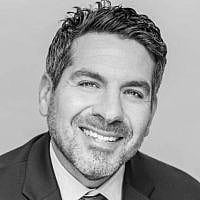
Noam Raucher is an ordained rabbi, educator, and certified divorce coach. His work focuses on pro-social masculinity, spiritual growth, relationships, and divorce.
He was ordained at the Ziegler School of Rabbinic Studies in 2011 and has served in the pulpit at Temple Israel in Charlotte, North Carolina, and at the Pasadena Jewish Temple and Center in Pasadena, California. His background also includes extensive experience supporting individuals as a spiritual guide and through his work as a counselor at Yale Psychiatric Hospital in New Haven, Connecticut.
Noam currently serves as Executive Director of FJMC International—formerly the Federation of Jewish Men’s Clubs, now reimagined around four pillars: Friendship, Judaism, Mentorship, and Community. In this role, he helps build and strengthen communities that support men’s connection, purpose, and growth.