
Thanksgiving: A Stress Test Companies Haven’t Run
Washington says this month’s failures were routine maintenance, not an attack. That should worry business leaders more, not less.
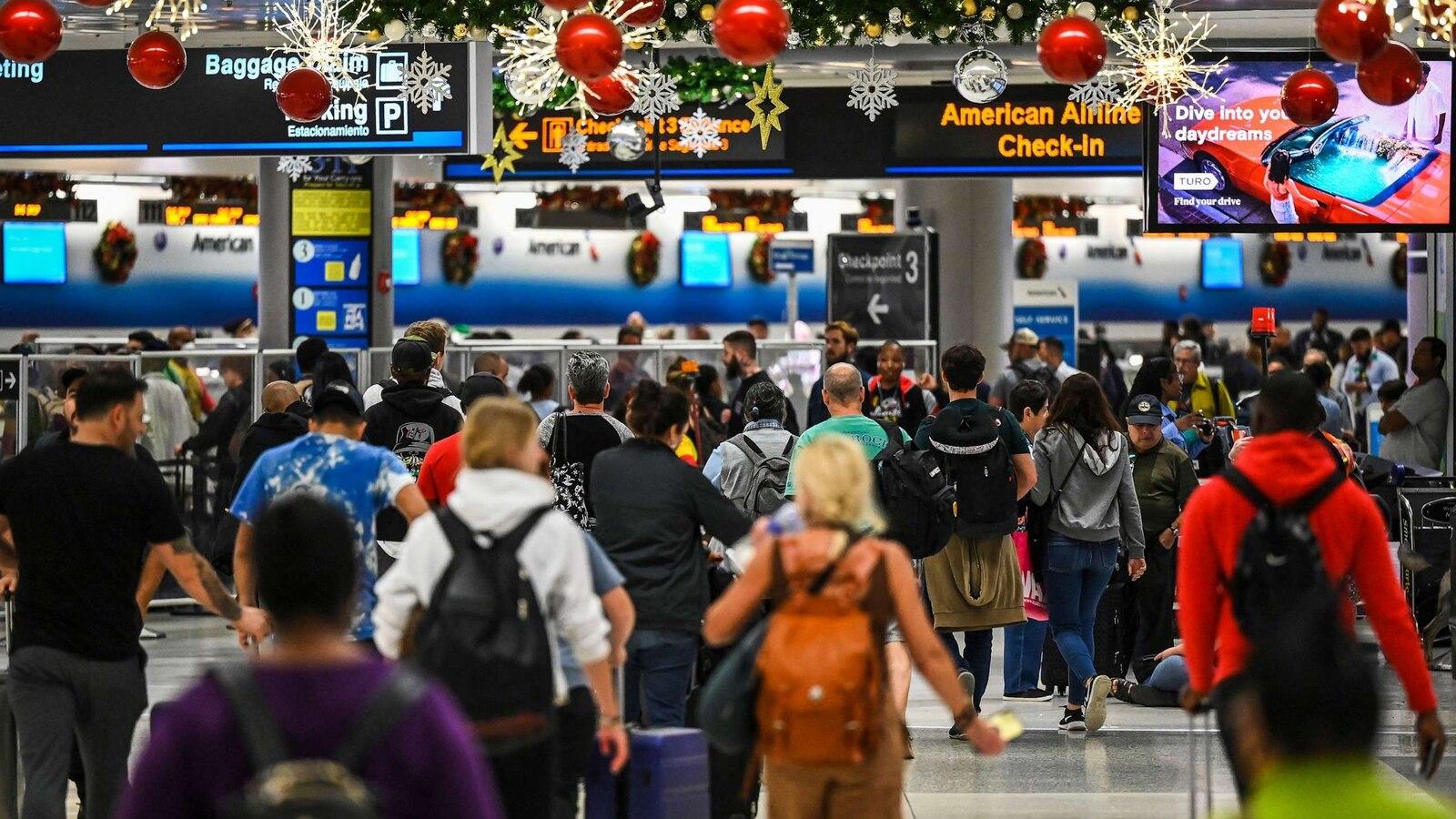
As Americans head out for Thanksgiving this week, plenty of travelers will be wondering whether the system will hold. Two weeks ago, it did not. Within five days, Microsoft Outlook went down in more than 70 countries for over 12 hours. The FAA halted departures nationwide for more than four hours, and some 12,000 flights were canceled. Workday’s HR and payroll platform went dark for roughly 17 hours for some of its customers. United Airlines suffered a systemwide outage, and customers of Chase, Wells Fargo and others struggled to reach their own money.
The explanations are now in. Microsoft’s final report traced its outage to a software defect introduced in July that ran worldwide for more than three months before it brought the system down. Federal investigators focused on a router installed by a contractor during an upgrade. On Nov. 18, the heads of Homeland Security, national intelligence and the FBI told Congress there was no evidence of a coordinated attack. Not everyone is convinced. “If this is all a coincidence,” Sen. Josh Hawley told reporters, “it’s like the greatest coincidence in the history of the world.”
For most people, that debate is beside the point. A traveler stuck at a gate does not care whether a router malfunctioned or a hacker struck. Neither does a small-business owner who cannot run payroll on a Friday. What they remember is that a service they depended on was not there, and that nobody could tell them when it would be back.
That is a strategic business problem, not a technology problem. Every hour offline carries a price: transactions that never happen, employees who cannot work, customers who cannot be served and regulators who start asking questions. Yet staying online is too often treated as plumbing: essential, invisible and someone else’s department. It reaches the leadership agenda only after it breaks. The outage wave showed why that order is backwards. In a digital economy, availability is the product. A bank that customers cannot reach is, for that hour, not a bank.
The pace of change makes this harder. Even the Director of National Intelligence told Congress that the pace of patching and upgrading is increasing. Each change is a chance for something that worked yesterday to stop working today, and the damage can hide for months. Microsoft’s own report found that its load tests ran on older hardware than the servers that failed, which is how a flaw slipped through.
Meanwhile, the deliberate threat keeps growing. An attacker who wants to take a business offline can flood it with so much traffic that real customers cannot get through. This is a distributed denial-of-service, or DDoS, attack, and it is one of the cheapest weapons available. Akamai reports that such attacks on financial firms now last more than eight times longer than they did in 2024. As Brett Goldstein, a former Pentagon technology official, wrote in The Washington Post, “what a contractor did by accident, an adversary will certainly try to do on purpose.”
Downtime is expensive even when nobody is attacking. British lawmakers found that nine of the country’s largest banks and building societies racked up at least 803 hours of IT outages in about two years, more than a month combined. Barclays alone expected to pay between £5 million and £7.5 million in compensation for a single failure. Compensation is the visible cost. The larger bill is trust: customers who decide a rival bank feels safer, travelers who book a different airline next time, employers who start looking at other payroll providers.
So what should leaders do? Three things.
First, put availability on the board agenda as a business risk, measured in revenue and customer confidence, alongside financial and regulatory risk. It deserves the same attention as a liquidity forecast.
Second, assign clear ownership. When technology changes every week, someone at the executive level must be accountable for confirming that the business is still protected after each change, not merely that protection was purchased at some point.
Third, demand proof rather than reassurance. A supplier’s promise or last year’s audit is not evidence that a company can withstand an attack today. Leaders who would never accept an unaudited balance sheet should not accept an unverified claim that their customer-facing services will stay up.
The upside is real. Companies that can show customers, regulators and investors that they stay open under pressure turn reliability into a competitive advantage. When email, flights, payroll and bank accounts all failed in the same week, the businesses that kept working earned something money cannot easily buy: the confidence of people who had just been let down by everyone else. The next outage wave is coming. Leaders can decide now whether their company will spend it explaining or delivering.