That Which Separates Us from Animals and Angels: On Yonah and Yom Kippur
The Book of Jonah is a mainstay of the Yom Kippur liturgy. Years ago, in a class on the topic, Rabbi Yisrael Motzen of Baltimore’s Ner Tamid Synagogue once argued that Jonah does not change or develop in the story, and instead seeks constancy as a way of emulating God’s Truth. This, Rabbi Motzen claimed, is a fallacy in that God’s Attribute of Truth is not meant for humanity.
The class sparked some thoughts in me, and I now return to them as we approach Yom Kippur. As a foundational principle of Judaism, we accept that God’s Truth is Unyielding, Unending, and Unchanging, while humanity is built for change. We must develop over time, whereas God does not. This is the lesson of the Book of Jonah. In a word, we are meant to grow.
To that end, Jonah fails to understand the concept of growth. He understands growth as cause and effect, action and reaction, choice and consequence. To him, it is about sweeping upheavals. You did a thing, and now you deserve to suffer. You failed to do a thing, and now you deserve to suffer. In Jonah’s eyes, this world is all about getting what you deserve, from a divine perspective.
This extremist approach is reminiscent of Rabbi Shimon Bar Yochai, as well as Eliyahu HaNavi, whom Rabbi Motzen also noted in his talk. But linking Jonah to Rabbi Shimon Bar Yochai perhaps links Yom Kippur to Shavuot, both times of spirituality. Food for thought.
In any case, to return to Jonah, he is frustrated by Nineveh’s attempts to repent and its successful effort to stave off annihilation at the hands of God. Jonah views Nineveh’s actions as laughable, and lacking in substance. No better than animals. In his eyes, they do not deserve God’s benevolence.
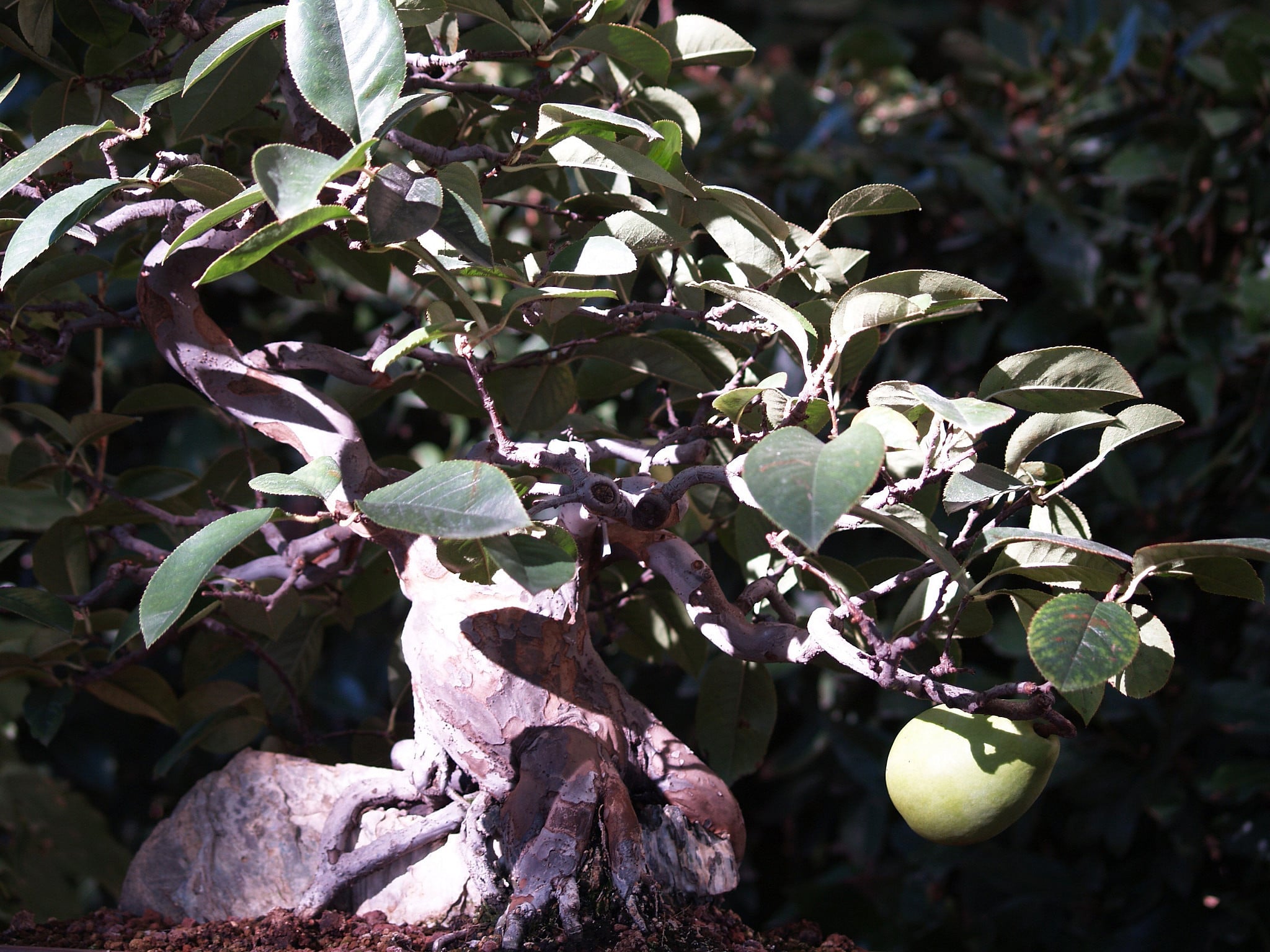
And so he is comforted by the growth of the “kikayon” plant, not because of its shade (he has his sukkah already) but because it represents a return to the logical order of the universe. It makes sense to him. A seed is planted, it receives the right nourishment, and it grows. You input the right thing, and you get the expected output.
Not only does this mentality fail to account for God’s Mercy, but it is also a failure to understand the idea of growth on a personal level. Human growth is incremental. It occurs in steps, and so the growth in Nineveh is small, but meaningful.
It is the start of a long process of seeking divinity, of animal-like men mimicking the righteous, and so transforming themselves into better versions of themselves. From a mindset like animals lacking sensitivity to spirituality, to a mindset of a man at his greatest, which is to say a man who is able to become aware of the divine and to have that spirituality guide his behavior and his physicality.
Note that the word “Ra’ah” (רעה)—which is often associated with the concept of evil but is here translated as “discomfort”—links Jonah’s mentality after he leaves Nineveh to his mentality with the kikayon. It is his affliction from Nineveh that is troubling him, not his troubles from his prior trials at sea. In his disgust upon leaving the city, Yonah fails to see the growth of its people, even if they once behaved like animals.
Moreover, he fails to understand the divine approach to development. Growth does not happen independently. The kikayon did not grow on its own; rather, God grew it. Nineveh did not grow on its own; rather, God grew it. God makes that clear in his question to Jonah at the end of the book, when he asks Jonah if he mourns the kikayon that he did not grow.
In Jonah’s world, trees grow overnight; it’s just simple math. When this divine calculus fails him, when the results are rendered moot by an external force, Jonah asks, “What’s the point? Why bother doing anything if the consequences don’t matter (like the death of the kikayon) or if people don’t get what they deserve (like the people of Nineveh)?”
For the rest of us, we see the growth of trees over the course of generations, and we grow them ourselves. We acknowledge the small changes. We celebrate the sproutlings, and see the first leaves unfurl on the branches. We watch the flowers bud and then bloom. We measure the literal fruits of our labor by the millimeter, waiting until they are at the fullest before declaring them ready for us and for our true purpose for them. I am reminded of the scene in the film “The Martian” in which the main character grows his first crop of potatoes on Mars; it is a similar sense of tenderness toward growth.
When you grow something, you see the incremental developments. Jonah did not see that, but God—who had been growing Nineveh like a farmer that tenderly caresses the first shoots and stalks of his crop—sees the growth in Nineveh. More to the point, he sees the labor that he has put into the city that he has made grow.
And so the Book ends on the idea of growth, of incremental growth, of tender loving growth, of a procession toward the divine that is so precious that each small step is welcomed with joy. This is human growth, outside of God’s Truth.
Expressions of repentance and prayers for redemption, when faced with fear and the risk of catastrophe, may in the future wither on the vine, after the panic has passed and the threat has subsided. But they were nevertheless heartfelt and sincere at the time, and something spiritual, something approaching the divine, started to grow in them.
Through their repentance, as subpar as it may have been, perhaps the people of Nineveh planted seeds in their souls, seeds that had the potential to grow in time. Perhaps in that person, perhaps in their children, perhaps in others who knew them or heard their tale of redemption. But it is this potential for growth that defines the human spirit in Jewish tradition, that which separates us from both animals and angels.
God has his Truth and we have our Growth. Our capacity for change. It is our birthright and our power, even if it lies dormant in our souls. Even if it is advanced through the perhaps miniscule measures of Nineveh.
I returned to the linguistic root of the word “Ra’ah” (רעה) over Rosh Hashanah, when I noted that it is the same as the root for the word “Tru’ah” (תרועה), which means “blaring” as in the blaring of the shofar. In fact, the Torah often refers to Rosh Hashanah as the “Day of Blaring.” Interestingly, it does not refer to the holiday as the Day of “Tekiah” (תקיעה), the word for a shofar blast. I think that this is because a tekiah sound is a single note held for a long period, while a tru’ah is a series of short notes trumpeted out in quick succession. The sound is meant to evoke the wailing of crying, but I think of it as something similar to the blaring of a siren in an emergency. It is sound going up and down, on and off. In other words, it is the sound of change. A fitting name for Rosh Hashanah, then.
The linguistic root for “Ra’ah” (רעה) is also the same as the root for “Ra” (רע), which means “friend,” and “Ro’eh” (רועה), which means “shepherd.” So we have the same root for the words “evil,” “discomfort,” “blaring,” “friend,” and “shepherd.” I think the concept of change may link these words. Change is hard. It is often uncomfortable, and sometimes can be seen as evil. It is rarely a one-note experience. And the friends and shepherds of our lives can help us through these trying times.
I am reminded of Rabbi Doctor Abraham Twerski, who once spoke about the difficulties of being a lobster. He noted that lobsters grow by casting off their old shells, and hiding under rocks as they develop new shells for their larger bodies. But the discomfort is the stimulus for growth. Adversity, Rabbi Twerski teaches, is a signal for development.
I wonder if Yom Kippur is the day we cast off our shells, and in our deepest moments of vulnerability, we hide like lobsters under God, the Rock of Israel, until, at the end of Shemini Atzeret, having embraced the joy of the holiday season, we feel safe enough and strong enough to return to the world and face the winter season and the rest of the year.
Perhaps this concept can also be found in the root word for “Ra’ah,” and in Rosh Hashanah as the blaring Day of “Tru’ah” and in Nineveh’s story, with its notions of change and repentance. Let us learn from God’s words in the Book of Jonah to love the steps of growth that we make, and to love ourselves when we make them. Let us take this year to grow ourselves, at our own paces, toward God.
Shanah tovah, and gmar chatimah tovah.