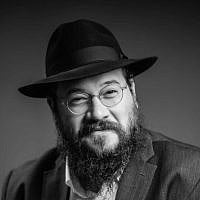
Jamaica's Rabbi
The 400-year-old Lesson from Jamaica’s First Rabbi – Don’t Stray from Your Path
On Thursday, January 29, I found myself standing in the quiet outskirts of Kingston in a spot that most Jamaicans have never visited, and one which many don’t know even exists.
It was the Hunt’s Bay cemetery, one of Jamaica’s oldest burial grounds and the oldest still-existing Jewish cemetery in the Americas.
I was invited by Douglas Reid, President of the United Congregation of Israelites, to join a small group of volunteers who are dedicated to preserving Jamaica’s 15 historic Jewish cemeteries, some of which date back over three hundred years. While some of these sites have yet to be restored or fully documented, each one holds an essential chapter of Jamaica’s history.
One of those chapters involves Jamaica’s first Rabbi, Yoshiyahu (Josiah) ben David Pardo, whose grave we visited during our gathering. I must say that standing there was chilling.
The timing and synchronicity of events which had led to that moment are something that words can’t really describe.
Recently, I received a phone call from Rabbi Yosef Weitman, from São Paulo, Brazil, a colleague of my father-in-law, and a publisher of rare, medieval Jewish writings. In the course of his research, he came across teachings of Rabbi Pardo from 1671, and noticed that the author was listed as being buried in Jamaica. He noticed that this year is the 400th year anniversary of the Rabbi’s birth, and asked me if I knew where he was buried.
I reached out to Mr. Reid, who told me that there was actually going to be a gathering of historians and community members at the very cemetery where Rabbi Pardo was buried.
In the days leading up to the meeting, I re-familiarized myself with his story. Rabbi Pardo was born in Amsterdam in 1626 to a line of well-renowned Sephardic rabbis. At the time, Jews were slowly re-adopting their religious practices after centuries of persecution in Spain and Portugal. Like many others of his era, he crossed the Atlantic and settled in the Caribbean, serving the Jewish communities in Curacao and then in Jamaica at Port Royal, the busiest port and most important port in the New World.
He was a spiritual leader who helped establish Jewish life in the Caribbean, yet over time his legacy was forgotten and the location of his grave was lost to time. However, in 2008, a group of volunteers with the Jamaican Jewish Cemeteries Preservation Fund rediscovered his tombstone in the Port Royal cemetery, bringing attention to this important figure in history.
The Rabbi’s writings took a similar path, which were unknown and unpublished throughout the centuries—only to be rediscovered and published in 2014 by Rabbi Weitman.
Standing at Rabbi Pardo’s gravestone, I shared a short reflection from Rabbi Pardo’s own teachings, we recited a prayer for the deceased and sang a song for peace. Then we read the words carved into the stone.
Rabbi Yoshiyahu Pardo “never turned right or left from the path of G-d.” (2 Kings 22:2)
That sentence stayed with me. Not only because it was a beautiful description of the holy rabbi’s life. It was a message for us today. Not just Jewish people, but everyone.
In our world filled with noise, pressure, and constant pulling in every direction, this gravestone offered a timeless lesson to stay true to your path; to not lose yourself chasing every shiny object or distraction; to not turn right or left when your conscience is clear.
This relates to a theme found in this week’s Torah portion, which speaks of Moses’ father-in-law Yitro, who had explored every belief system of his time before recognizing the truth of one G-d. The verse records him saying “Blessed be G-d” for the first time in the Torah.
While this verse was said by many others before in history, the fact that Yitro – a spiritual seeker who landed on the truth – said it, has great significance. As someone who had lived in confusion and wandering, he understood and appreciated clarity more deeply. That applies to us as well—thos of us who have known darkness and despair appreciate the light in a different way. Reflecting upon the stories of the loss and recovery of Rabbi Pardo’s grave and teachings, and his legacy of moral and upright living, brought me a sense of joy and hope for the future.
The Old Jewish Cemetery at Hunt’s Bay cemetery is on Jamaica’s list of National Heritage Sites. It is among the oldest sites on Jamaican soil and represents how the Jewish presence on this island is deeply woven into our country’s economic, cultural, and spiritual fabric. I applaud Jamaica’s heritage institutions for recognizing that this site is not a relic of the past, but a living reminder of who we are and where we come from.
As the buffalo soldier famously sang: “If you know your history, then you would know where you’re coming from.” Sometimes the most powerful lessons are not taught in classrooms, but discovered when we encounter history face to face. When ancient tombstones speak to us and let us know quietly and firmly not to turn away from the right path.
Related Topics