My grandfather was never the Soviet Union. Iranians are not the Islamic Republic
My grandfather, a Soviet colonel, queued for matzah at night so no one would see his face. Iranians live that double life, yet Israel’s leaders call their country the enemy
In 1963 a second desk was carried into my grandfather’s office. He was a colonel in the Soviet army, a physician, the head of neurology at a military hospital in Riga. From that day a man in civilian clothes sat at it through every examination, from privates to generals. My grandfather did not ask who he was. In Soviet Latvia, the usual suspects were Jews.
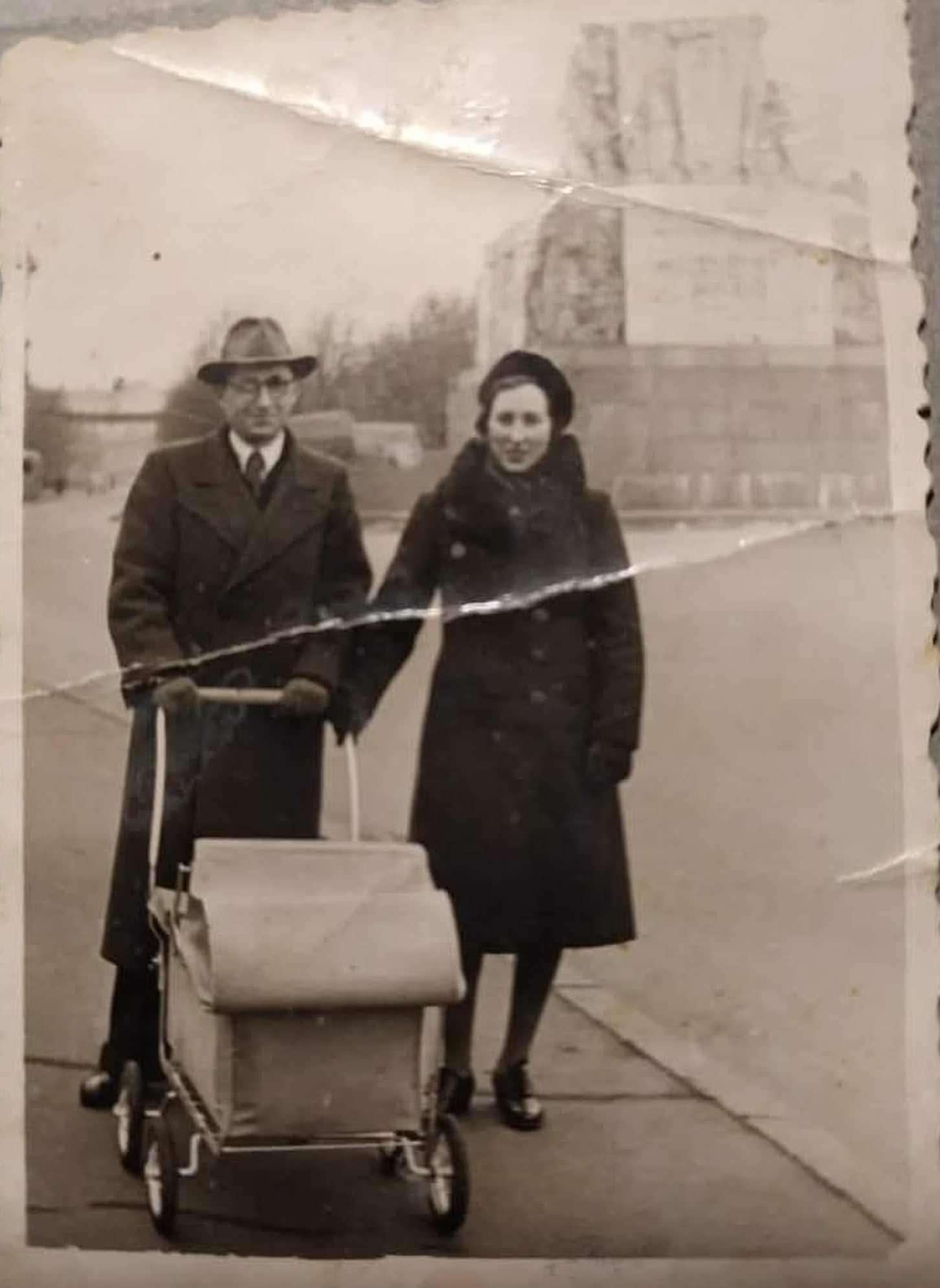
He was also deputy head of the Esperanto federation of Latvia, and one day curiosity won. May I still write to Esperantists in the socialist countries, he asked. The man answered with a question: if your wife writes to capitalist countries, what makes you think you may write even to socialist ones?
My grandmother Lyuba wrote no letters. Her mother did, in Yiddish, to her nieces in Israel. She could not manage the Latin alphabet, so Lyuba addressed the envelopes. Her handwriting was enough. For years my grandfather saw his patients under watch.
He had a secret of his own. Before Passover, he stood in line for matzah at the one synagogue still open in Riga, at night, so that no one would see his face.
He wore the uniform because in 1947, when he wanted a life in science, he was told: the army or prison. He joined the Communist Party after the envelopes, when refusing was no longer possible. As a child, I read every Soviet anti-Zionist book on his shelf, where every second word about Israel was “fascist,” and asked him why we kept them. One must know the enemy by sight, he said. He did not mean Israel.
Nobody who knew him would have called him the Soviet Union.
I think of him whenever an Israeli leader says “Iran” and means the men who rule it. Gadi Eisenkot is now trying to assemble Israel’s next government. On November 12, President Trump said he would count it a defeat if Tehran’s regime outlasts his term. The words for the next round are being chosen now, and one of them is wrong.
For 16 years I have stood among Iranians in a kippah, and they tell me my family’s story with different props. In many of their homes, children were told quietly that there is “them,” the men who took the country in 1979, and there is “us.” On January 12, 2020, the American and Israeli flags lay painted on the ground at Shahid Beheshti University in Tehran, for students to trample. Most walked around them; the few who stepped on them were booed. The chant that week: “They lie that our enemy is America. Our enemy is right here.”
Now listen to us. They do. As a child I watched my grandfather, the colonel, sit at the radio and hunt through the jamming for Israel’s state broadcasts in Russian; I learned to find them myself. Kan Farsi, the Persian service of our public broadcaster, is that voice for Iranians. On its Instagram page I watched Israel’s prime minister say in Hebrew, with Persian subtitles, that we had dealt Iran a heavy blow. On the same page he tells Iranians that Israel is not against Iran, only against the Islamic Republic. Iranians love Iran. They will not side with anyone who boasts of beating it.
Benjamin Netanyahu is one of the few Israeli politicians who usually keeps the line, and Iranians have written songs about him. When Likud came first in last month’s election, my Instagram feed filled with Iranians celebrating; they thought he was staying. That is why his slips cost more. On September 6 he warned that Iran “will absorb a blow it cannot even imagine.” In June 2025 his defense minister, Israel Katz, said Tehran’s residents “will pay the price,” then explained that he meant them no harm. The regime’s English-language daily printed the threat beside the correction and told its readers which to believe. I have slipped too: in July I headlined a post on this blog “Flattering Iran.” I meant its rulers.
The slip has a price, and the regime collects it. Raz Zimmt of the Institute for National Security Studies wrote on November 3 that Iran’s rulers are encouraging a rally around nationalism. They turned President Trump’s threat to send Iran “back to the Stone Age” into proof that America’s target is the country, not its government. After two wars, and after killing thousands of its own citizens within days this January, the Islamic Republic has one asset left that Iranians still love: the name Iran. Each time we say we struck “Iran,” we hand it over.
Iranians, I have learned, treat a speech addressed to them as propaganda; what Israelis say to one another in Hebrew is what Israel thinks. Almost every exile has family inside, and in this hard year many send them money. What the exiles hear from us, their relatives hear next.
In Stuttgart, where I live, the Iranian rallies since last year’s 12-day war have been filled by people who look to Reza Pahlavi, the son of the last shah. Beside the lion and sun, they carry the Israeli flag. That is their choice, not ours. And it is our flag, not theirs, that draws the fists.
I have described on this blog a woman dragged to the ground by her hair and a man with a broken nose. The Iranians I saw attacked are not Jews. I have told the police in my city more than once: antisemitism aimed at non-Jews is still antisemitism.
The enemy has a name: the Islamic Republic, its supreme leaders, its Revolutionary Guards. Iran is the country of Cyrus, whom Isaiah calls God’s anointed. Say it the same way in Hebrew, in English and in Persian, and make it a rule of political etiquette that no minister breaks.
My grandfather stood in a matzah line at night, hiding from a state whose uniform he wore. Tehran’s students walked around our flag. They refused to step on it. Let us not step on them with a word.