
The 8th Front: A Bold New Approach to Fighting Jew-Hatred
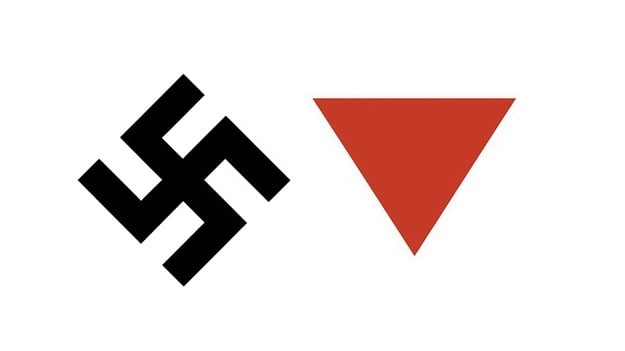
We, Zionists, have been going to war on the 8th front – the battlefield of ideas – armed with the wrong weapons. This is because we have failed to clearly identify the exact enemy we are up against.
What is familiar has led us to keep relying on the tools we already have and name the enemy we already know. We use facts, data, history lessons and logic – to fight antisemitism. However, our enemy is no longer only the Nazi supporter of racial purity, but mostly the one who supports the elimination of Israel.
If we wish to attack effectively, we must identify our enemy precisely.
Yes, antizionism is antisemitism, but in a new costume. Antizionism is neither rational nor logical. Antizionists are not holding a debate, but a campaign. Contra to our inherent Jewish-instincts – more facts and history lessons about Israel are ineffective. Our enemy is the antizionist hate movement.
Debating hate with rationality is as effective as explaining fire safety to a burning house. More effective would be to name, expose, and outcast hate.
Just as feminists named ‘sexual harassment’ and drew a red line, Zionists must name ‘antizionism’ as organized hate and insist that institutions treat as such.
Before going further, a comment on a tiny yet crucial detail is necessary, so we are all aligned: ‘anti-zionism’ with a hyphen represents Zionism as an external ideology to oppose. In contrast, ‘antizionism’ refers to a structured hostility toward Jewish collective existence, expressed not through race but through opposition to Jewish nation-statehood. Dropping the hyphen makes clear this is not the critique but the targeted hate.
Antizionism is an organized campaign to deny Jews sovereignty, indigeneity, and the right to live as a nation among other nations. It justifies, normalizes, and ultimately enables acts violence against Jews. Wherever it is presented, Jew hatred is flourishing; and these days it is thriving.
The history of antizionism and its atrocities must be told because the patterns and tactics are alike. Historians trace this pattern across the Soviet Union, North Africa, the Middle East, Mandatory Palestine, Europe, and beyond.
Take Poland for example: After the six days war, communist Poland began brutally targeting the Jewish community. They did that by code-naming them “Zionists”, leading to the dismissal of Jews from their jobs, ultimately forcing Polish Jews to emigrate while stripping them of citizenship.
Today, antizionism must be thought of as important as our first front, not only because it is the contemporary version of antisemitism, but because it unites all of our enemies and corrupts our allies. It is an existential threat to diaspora Jews and ultimately to Israel. Our organizations must internalize this reality and act on it sooner rather than later.
Understanding how this threat operates requires seeing antizionism not just as a personal prejudice, but as a coordinated system of social and institutional power that targets Jews collectively.
Antizionism functions as a social and institutionalized system of hate, with its own tactics, laundering old antisemitic tropes through the new language of social justice.
Once one has mastered antizionist tactics and propaganda, it is possible to expose it and flip the onus onto them. Core tactics of the antizionist include libel (“genocide”, “apartheid”, “colonizer”), conspiracy (“Israel controls media and governments”), stigmatization (“No Zionists allowed”), and open justification of violence (“by any means necessary”).
These tactics escalate real-world harms: attacks on Jewish communities, exclusion of Jews from universities and workplaces, and a climate where violence against Israelis and Jews is normalized as “resistance”. For members of the hate movement and their crowd, fighting Zionists has become a moral imperative.
When antizionists attack, they deploy pre-packaged narratives and slogans that treat Jewish speech as inherently suspect and Israeli existence as inherently criminal. Each “debate” is structured as a show trial in which Israel is presumed guilty. And what is our instinct? Endless defense, facts, data, history lessons – all ultimately and immediately dismissed as ‘Zio propaganda’.
This is because antizionism runs on libel and moral posturing – a social dynamic that renders “truth” as inadmissible once the libel or accusation takes hold. Each time advocates answer point-by-point with data, they accept the framing that Zionism or Israel are on trial, which paradoxically strengthens the libel instead of dissolving it.
So what can be done?
Since antizionism is built on hate and not a rational debate, our role is not to “win the argument” but to expose the tactics and shift institutional norms. There are many frameworks for doing this.
What follows is one simplified example that illustrates how to shift the focus from defending and debating to naming and exposing the tactics of antizionists.
Consider this four-move structure every time antizionism appears in an institution: First, introduce people to notice the movement: “The antizionist hate movement is built on libel and incitement, designed to demonize the Jewish state and deny the Jewish people’s right to exist as equals among nations. This racist movement, now deeply embedded in our institution, does not operate through arguments, data, or debate, but through tactics of hate”.
Second, describe what happened and name the tactics of hate: “Person X was spreading libels / conspiracy tropes / claims of collective guilt against Jews. This is not criticism of Israel but bigotry, pure antizionist hate targeting Jews”.
Third, spell out the harms. It could be something like: “This rhetoric directly normalizes exclusion of ‘Zionists’, posing a direct threat to Jews in this institution”. You can add that this is not a new phenomenon, and that antizionism drove Zionists, code-name for Jews, out of their communities and countries, stripped rights and citizenship, and set the stage for violence in the past, as it does now.
Antizionists train institutions to replace individual rights with ideological loyalty tests. Within the description of harms, it’s also important to mention the harms to the institution and to liberal democracy. For example, once a minority is libelled, pre-judged, and placed outside the boundaries of legitimate participation, equal citizenship and pluralism collapse, and the damage to liberal democracy is already done.
Fourth, set explicit expectations: demand the policy changes, public apology, antizionism training, or firing – whatever is needed, making sure there are clear consequences for anyone who continues to normalize antizionist hate. CC the local media, Jewish organizations, or a colleague – it creates witnesses, builds an accountability record, and prevents the quiet burying of the case.
To recap: Present the hate movement, expose its techniques, describe the harms, and set firm expectations. Now both the onus and the narrative are flipped. The conversation is no longer about Israel or Zionism but about the antizionist that needs to defend.
The era of debating our own dehumanization is over. From now on, every time antizionists take the stage, they should leave branded as organized hate.