The Abuse of John Lennon’s ‘Imagine’
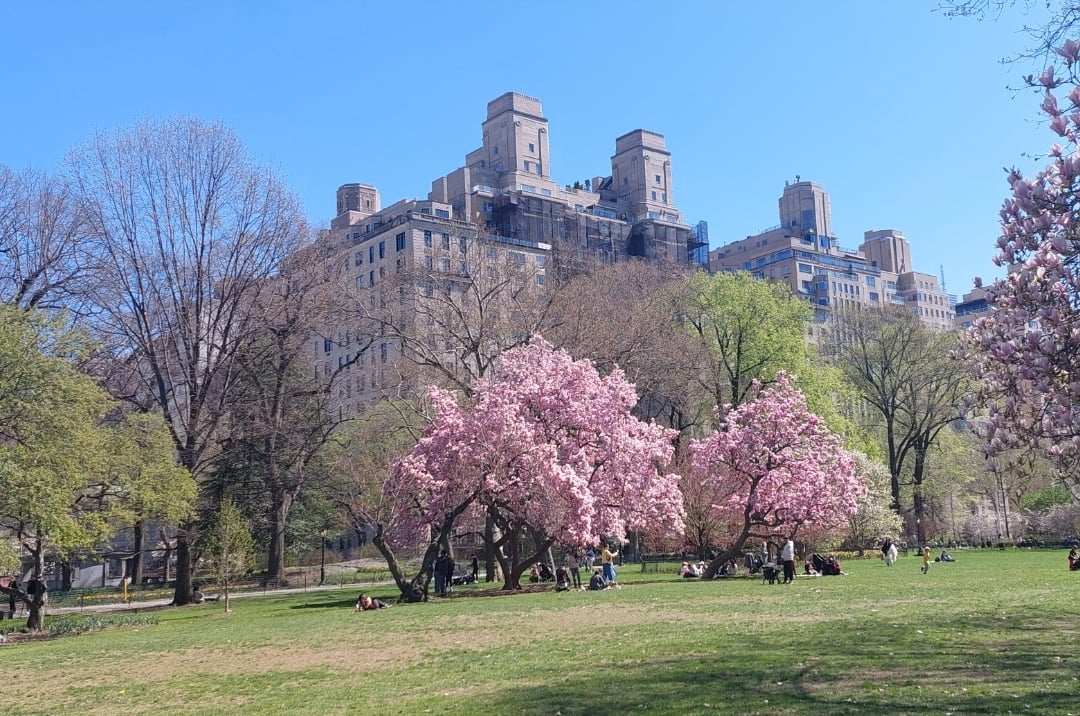
Walking to synagogue on Passover, I passed every day near what used to be John Lennon’s home on 72nd Street and Central Park West. As the words of prayer were on my lips and the ideas for my upcoming sermon brewing in my mind, I saw excited tourists from all over the world standing on the large mosaic with one word on it: “imagine,” while an occasional artist would be playing John Lennon’s songs on his guitar. The beauty of Lennon’s music would fill the park.
With wars in the Middle East, Africa, and between Russia and Ukraine, I wondered to myself how different things would have been had the world heeded the words of Lennon—or perhaps it was the naïveté of the Lennons of the world that brought us to where we are. That’s when I realized that our world’s problem was not having too many or too few Lennons; it was the rationing of John Lennon that has brought our world to where it is.
Let me explain. Lennon’s assertion that imagining there is no heaven or hell is key to world peace has long been articulated. Seeing religion as the source of all conflict is something easy to do—until you look at the facts of recent history and notice that between WWI, WWII, Nazism, fascism, imperialism, and communism, the greatest driver of war and destruction is surely not religion.
Lennon’s imagining that there are no possessions—a clear reference to the misleading promise of utopia under communism—has been a driver of war in the past 120 years beyond anything religion has done.
Yet to John Lennon’s credit, there is no question that the yearning for peace, reducing unhealthy levels of nationalism, and highlighting the belief in world peace as an ideal are all important components of setting a vision that would mitigate the human tendency to violence and war. Thinking of the Iraq and Afghanistan wars makes so many Americans rightfully wish we had not rushed to war, saving so much in life, resources, and treasure. If only we had done more imagining in the spirit of John Lennon, perhaps that would have reduced the zeal to rush to a war that clearly did not achieve what we had set out to accomplish.
Yet, looking today at the wars in Gaza, Ukraine, Sudan, and beyond, our world has seen the cruel weaponization of John Lennon. The idealistic anti-war, post-nationalist sentiment Lennon imagined is now weaponized by the world’s most extreme nationalists, and by those who cheer on war and violence when it serves their needs.
We have seen Vladimir Putin harness the influence of isolationists and anti-war activists, getting them to weaken support for Ukraine’s right to defend itself. Russia, an ultra-nationalist war machine, has cynically mobilized a campaign of anti-war isolationists to make sure Ukraine, the victim of Russia’s cruel aggression, is not able to defend itself.
We have also seen supporters of Palestinian nationalism who openly cheer on violence with statements like “resistance is justified,” “globalize the intifada,” or “by all means necessary,” brand themselves as anti-war activists, when in fact all they are opposing is Israel’s right to defend itself—or even to exist altogether.
More than fifty years later, John Lennon’s Imagine is factually untrue, morally and historically imperfect, and even misleading—yet despite it all, it still has great merit. In a world that has known too much war and bloodshed, we must welcome and attempt to resolve all human conflicts through dialogue, diplomacy, and keep war and violence as the very last resort.
Sadly, we see the cynical weaponization of John Lennon’s Imagine today. We are seeing pawns of Russian aggression, Iranian expansionism, and Hamas’s attempted genocide against Israel cynically using John Lennon’s noble disdain for war and violence to paralyze countries like Israel and Ukraine from being able to defend themselves against heartless aggressors like Putin, Hamas, and Iran.
Walking through Central Park, looking at John Lennon’s home, while passing the beautiful spring cherry blossoms, I am again reminded of the world’s need for less violence and more peace. To imagine such a world, we need not imagine there is no religion or no country; we must remember the need to uphold a rules-based order that respects the sovereign borders of each country, the right of others to hold beliefs that are different than ours, and to make sure the scourge of antisemitism does not drag the world into deadly violence as we saw in 1939.