Author, Teacher and Member, Hadassah Nassau, Hadasah Writers' Circle
The Adult Confirmation Journey
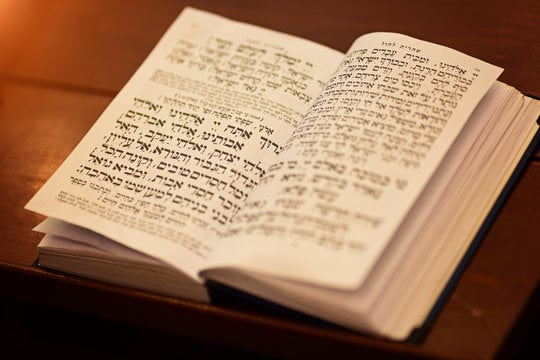
Image courtesy of Hadassah.
If I ever thought I knew everything there was to know about my spouse, Torah and Talmud study forced me to toss that assumption out the window.
The proof came during our full-fledged Monday night classes this past spring, moving us toward an adult confirmation of 12 students at Temple B’nai Torah of Wantagh, N.Y., in Spring 2027.
The back story: Both my husband and I made it through Adult B’nai Mitzvahs in June 2022 with distinct personal objectives. His purpose had been to learn to read Hebrew and Torah for the first time ever, since his original Bar Mitzvah obligation at age 13 was limited to learning a Haftorah (referring to a reading from the Prophets, which follows the Torah reading).
My purpose? Even with a momentous Adult Bat Mitzvah when I was in my mid-20s, I hoped not to miss out, wanting to be a part of something greater, within the congregation and community I called home.
But this study toward adult confirmation is entirely different, homing in on the process of Chevruta (a partnership, usually between two students, to study the Torah).
Each classmate is paired with another individual for study and reflection. For my spouse and I, sharing a Jewish home, it made sense for us to be a “study couple.” But not a week goes by when we don’t respectfully contest each other’s viewpoint – often leading to my incredulous realization that what I make complex, he makes simple.
One of the requirements of the course has students reviewing the prayer liturgy and analyzing the substance and meaning of a specific Shabbat prayer. To do this with integrity, we were exposed to different siddurs (Jewish prayer books), examined different English translations and structured brief remarks to potentially accompany the reciting of the particular prayer in our Confirmation service.
Our classmates gravitated to a variety of choices. My husband and I chose to study the Avodah (a “service” prayer).
We are on “Draft 6” of our discoveries – he confident of its point of view but respecting, though not swaying, me. Usually, I end an assignment and move on. This experience is different, as I am still wondering if another look (or two) might provide another perspective.
Following our prayer work, all dozen of us turned to Talmud study, with a particular emphasis on Jewish pragmatism, based on our homework: reading chapters from Yochanan’s Gamble: Judaism’s Pragmatic Approach to Life by Rabbi Marc Katz.
Every week, post-reading, we examine more in-depth passages in the chapter. It is inevitable that I will read the chapter early in the week, my husband will read it during the weekend and then we carve out an hour to review (more like debate) as a duo at the kitchen table.
For someone who has taken pride in being a teacher, I’m always learning from my students. But this is so unexpectedly different – my partner schooling me in ways that make me think harder, relate further and not remain resolute on the first idea or meaning that comes into my head.
“Who are you?” I wonder while my husband lays out a case relating to a parable or philosophy. Did I ever anticipate he’d think that way?
And he’s not the only influencer in my class. Listening to the other students around me, I realize that their previous religious learning and life experiences are never left at the temple’s doorstep; they follow their owners into our classroom, invigorating the thinking of our ancient rabbis with the realities of Summer 2026.
“None of us is as smart as all of us,” Rabbi Katz writes regarding the wisdom of the masses – quoting “contemporary business guru” Ken Blanchard.
Yes. And it starts with two, integrating into that team of 12.
The author does not speak on behalf of Hadassah and the views expressed herein are the author’s own and not necessarily those of Hadassah.
Lauren is a member of the Hadassah Writers’ Circle, a dynamic and diverse writing group for leaders and members to express their thoughts and feelings about all the things Hadassah does to make the world a better place. It’s where they celebrate their personal Hadassah journeys and share their Jewish values, family traditions and interpretations of Jewish texts. Hadassah members are proud of their Zionist mission and their role as keepers of the flame of Jewish values, traditions and beliefs as well as advocating for women’s empowerment and health equity for all. Since 2019, the Hadassah Writers’ Circle has published nearly 800 columns in The Times of Israel Blogs and other Jewish media outlets. Interested in writing? Please contact
Related Topics