A Liberal Atheist Who Supports and Studies Israel
The Antizionist Lexicon in Plain Sight: AI Detection for an Accepted Jew-Hatred
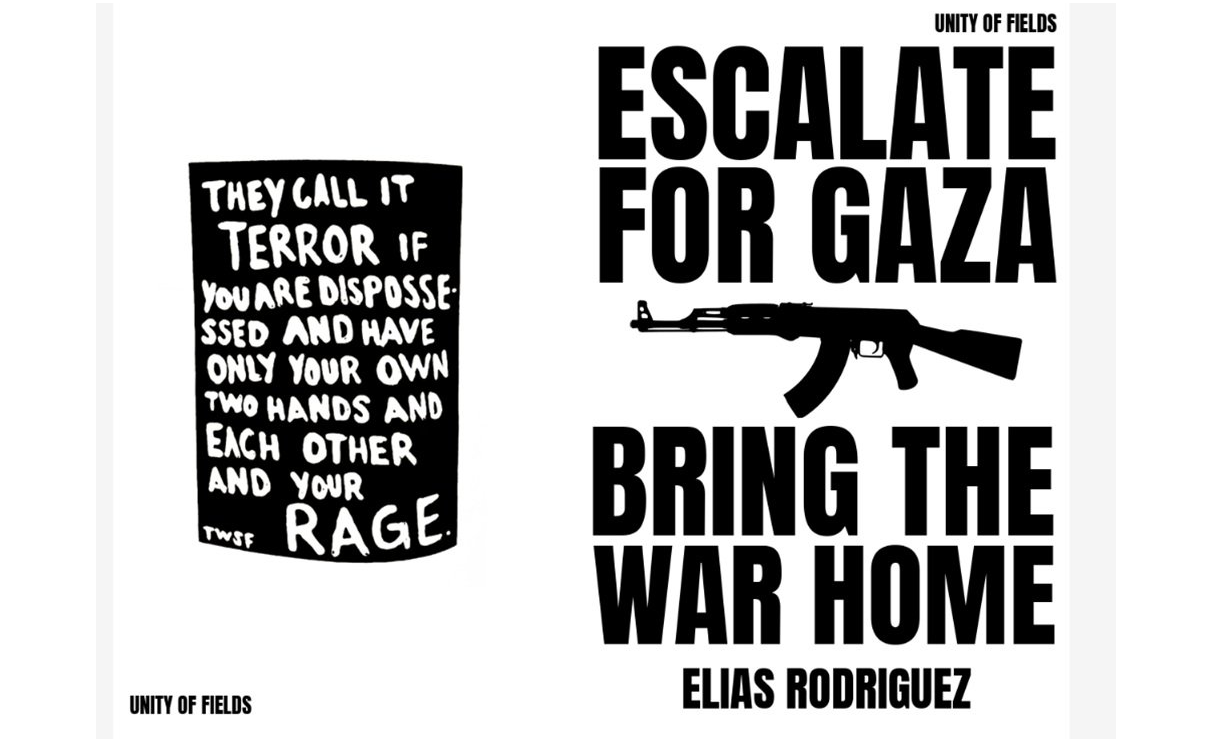
Rifle posted with Elias Rodriguez's manifesto. Source: ADL.org.
The old slurs still matter, but the next Jewish bodies may fall to slogans everyone already knows.
The American University team—Wendy Melillo, Jeff Gill, and Nathalie Japkowicz—published a piece in The Conversation last week that deserves serious attention. Their Unmasking Antisemitism project isn’t hype or a campus press release. It’s an attempt to study Jew-hatred with real instruments: language analysis, survey research, machine learning, and the recurring patterns in which antisemitism presents itself online.
Projects like this matter—which is why their focus matters too.
It’s strongest when antisemitism is written in forms we generally know: conspiracy, dual loyalty, Holocaust denial, and words like Bankster, Goycattle, Israhell, Gorillion, Happy Merchant, and Great War.
The glaring problem, however, is that the language killing Jews today is not contained in this far-right glossary.
Their team uses far-right antisemitic seed terms from extremist spaces to find coded Jew-hatred, similar to the words in the American Jewish Committee’s Translate Hate Glossary.
The article continues by noting that the “men accused of carrying out high-profile antisemitic attacks in the United States in recent years shared an important characteristic: They posted hate speech on their social media accounts beforehand.”
An important fact we should all know. It then mentions three of these high-profile cases: the Tree of Life synagogue shooting in Pittsburgh, the Temple Israel attack in Detroit, and the killing of two Israeli Embassy staff in DC.
While these tragedies have some items in common, one of them is unlike the other two. In significant ways.
Robert Bowers, the shooter in Pittsburgh who was recently sentenced to death, was part of a world the Unmasking Antisemitism project is perfect for. Bowers is a quintessential example of a white nationalist, and an antisemitic racist. He’s obsessed with Jews, violently against immigration, calls for taking up arms against Antifa and leftist groups, and believes in conspiracies like QAnon, white genocide, and the great replacement. He shared memes with classic antisemitic tropes and descriptions, such as ones depicting the “globalist,” “ZOG” (“Zionist Occupied Government”), and words using the triple parenthesis (((echo))) to mark Jews.
The authors then note that the “FBI said the man who drove his truck into a synagogue outside Detroit in March 2026 posted on Facebook that ‘Israel is a cancerous malignant growth’ and ‘Israel is pure evil.’” [emphasis mine]
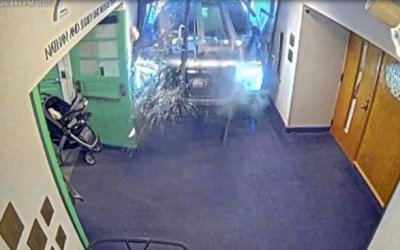
Those words were posted by Ayman Ghazali, who drove a truck loaded with fireworks and thirty-five gallons of gasoline into a synagogue full of children. His brother, a Hezbollah member, and three other relatives had recently been killed in an IDF strike in Lebanon. Ghazali posted that Israel was “pure evil,” called Israelis “oppressors,” and was consuming pro-Hezbollah and Iranian-regime content.
He did not need to type “Jews.” His search history had “Israelis near me” and “largest gathering of Israelis.”
Projects like this would more likely find people like Timothy McVeigh or Anders Breivik on social media, than what Ghazali’s had. Not simply Islamic or pro-Ayatollah messaging, but words like “Israel,” “oppressors,” “retribution,” and “occupiers.” Let’s put it this way: Ghazali and Bowers would not enjoy each others company.
Ghazali spoke a different kind of anti-Jewish language.
He spoke the language I’ve been studying since October 8, 2023.
Elias Rodriguez, the man charged with killing two Israeli Embassy staffers outside the Jewish Museum last May, also spoke this language. He didn’t whisper a code. He shouted “Free Palestine!” while being arrested. He even added another “Free,” so it rang out as “Free, Free Palestine!”
Ghazali didn’t need a password. He used the words The Guardian uses, the words chanted on the steps of Columbia, the words Zohran Mamdani refuses to condemn. He used the verbiage printed in op-eds. He didn’t have to descend into the swamp to find his vocabulary. The swamp had been pumped, filtered, and piped directly to his tap, and he simply turned on the faucet.
The gunmen who killed fifteen Jews at the Bondi Beach Hanukkah celebration last December didn’t need to look anything up. The language was waiting for them, translated, available, defended by most progressive institutions in the West.
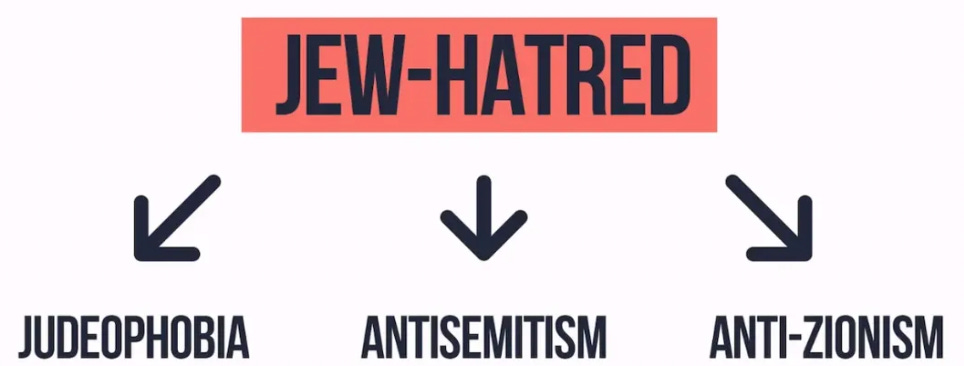
This is the vocabulary of modern antizionism, and there’s a desperate need for a 2026 update.
This is the gap I see all the time. It’s what Naya Lekht, Izabella Tabarovsky, Adam Louis-Klein, and Andrew Pessin see. The lag between the habit of thinking classical antisemitism and what’s occurring now.
And what exactly do we hear?
“Zionist colonizer.” “Apartheid state.” “Settler-colonial entity.” “From the river to the sea.” “Globalize the intifada.” These are not codes. Codes presuppose a community in on a secret pattern. They may have layers, but they’re not sophisticated enough to require deciphering.
They’re slogans. They’re painted on cardboard, taught in seminars, shouted into bullhorns, and sung by people who don’t believe themselves to be doing anything wrong. That’s what makes it dangerous.
So why did Elias Rodriguez add another “Free”?
Because its rhythm is built for a crowd. It’s chanted regularly at protests. Just three days prior to his double homicide, there was a pro-Palestinian protest a little over a mile down the road at the Washington Monument. It was a commemoration of Nakba day complete with people holding “Free Palestine” signs.
I wrote about this language and rhythm here. I called it The Antizionist Liturgy: How Jew-Hatred Spreads Through Rhyme and Repetition.
People need to know how Soviet measures, Arab publications, Islamist messaging, Western leftism, and postcolonial theory have contributed to the vocabulary now chanted on campuses. The kids in the keffiyehs didn’t invent any of this. They inherited it. They’re the latest carriers of a vocabulary engineered almost a century ago by regimes whose names they couldn’t place on a map.
The Slánský Trial of 1952. Kichko’s Judaism Without Embellishment in 1963, which had Der Stürmer-style illustrations. Sayegh’s Zionist Colonialism in Palestine in 1965, which taught a generation of UN diplomats to call Jews colonizers. Ivanov’s Beware! Zionism in 1969. Operation SIG. UN Resolution 3379 in 1975.
None of this is hidden.
When “Zionist” appears where “Jew” used to appear—in the same grammar, the same conspiratorial cadence, the same totalizing reach—that is a tell. “Zionists control the media.” “Zionists run the banks.” “Zionists harvest organs.” “Zionists infiltrated the government.” Replace the noun.
Only the word at the front changes, and that word changed because the Kremlin decided in the late 1960s that “Jew” had become too embarrassing to print after Auschwitz, and “Zionist” would do the same work without the social cost.
Antizionist propaganda worked. It’s still working right now, in the post above this one, on whatever platform you read this on.
What if we took this information and applied it to their technology?
What AUUA Could Help Us See Next
Let’s imagine that everything I just said can be operationalized. We know antizionism is different because the dangerous words aren’t rare. They move through newspapers, campuses, protests, and social media all day. A detector can’t simply flag them. It has to see a pattern and narrow the search.
It has to learn the cluster, or “braid.” What I’ve been calling The Antizionist Lexicon almost never travels alone. Where one term appears, three or four arrive within the same paragraph. Colonizer. Apartheid. Genocide. ’48. River. Occupier. Settler. Intifada. Israel. Entity. The cluster is the catch. Code the clusters.
It then has to learn inversion. Modern antizionist language performs three operations on Jewish reality, almost every time: Jewish self-defense becomes aggression, Jewish memory becomes manipulation, and Jewish sovereignty becomes racism. The IDF isn’t an army, it’s a genocide machine. The Holocaust isn’t a wound, it’s a weapon. Israel isn’t a country, it’s a supremacist project. Every term in the contemporary lexicon performs one of those inversions. Code the inversions.
Lastly, antizionists use verbs like “control, infiltrate, harvest, erase, replace, cleanse, and manipulate.” Code the verbs.
Imagine if you connect the clusters, the inversions, and the verbs, relate them to Jews and Jewish institutions and ask their app to work its magic.
The AU researchers ended their piece with a sentence I want to borrow and return: “Technology may be part of the problem, but its immense power can be harnessed to create a solution.” I believe them. I’m grateful they are building. I want them and others to make detection for people like Ghazali and Rodriguez, ones that target this specific form of Jew-hatred, and for it to know the lexicon pulling the triggers tonight.
The classic antisemitic slurs that killed at Tree of Life are still circulating in their dark corners. And don’t get me wrong, their Jew-hatred is very dangerous and heavily armed. It’s just not the driving force it once was. The slogans that justified the Temple Israel attack, the murders at the Capital Jewish Museum, the massacres on Ocober 7th, and Bondi Beach are circulating in daylight, printed on tote bags, and on dormitory window stickers.
Different vocabulary, same consequences: Jews getting harmed.
AUUA may be one of the tools powerful enough to help others see it before it finds another synagogue.
Related Topics
Related Posts