
Writing on Jewish life, relationships, trauma, and resilience
The Apology Israel Still Needs
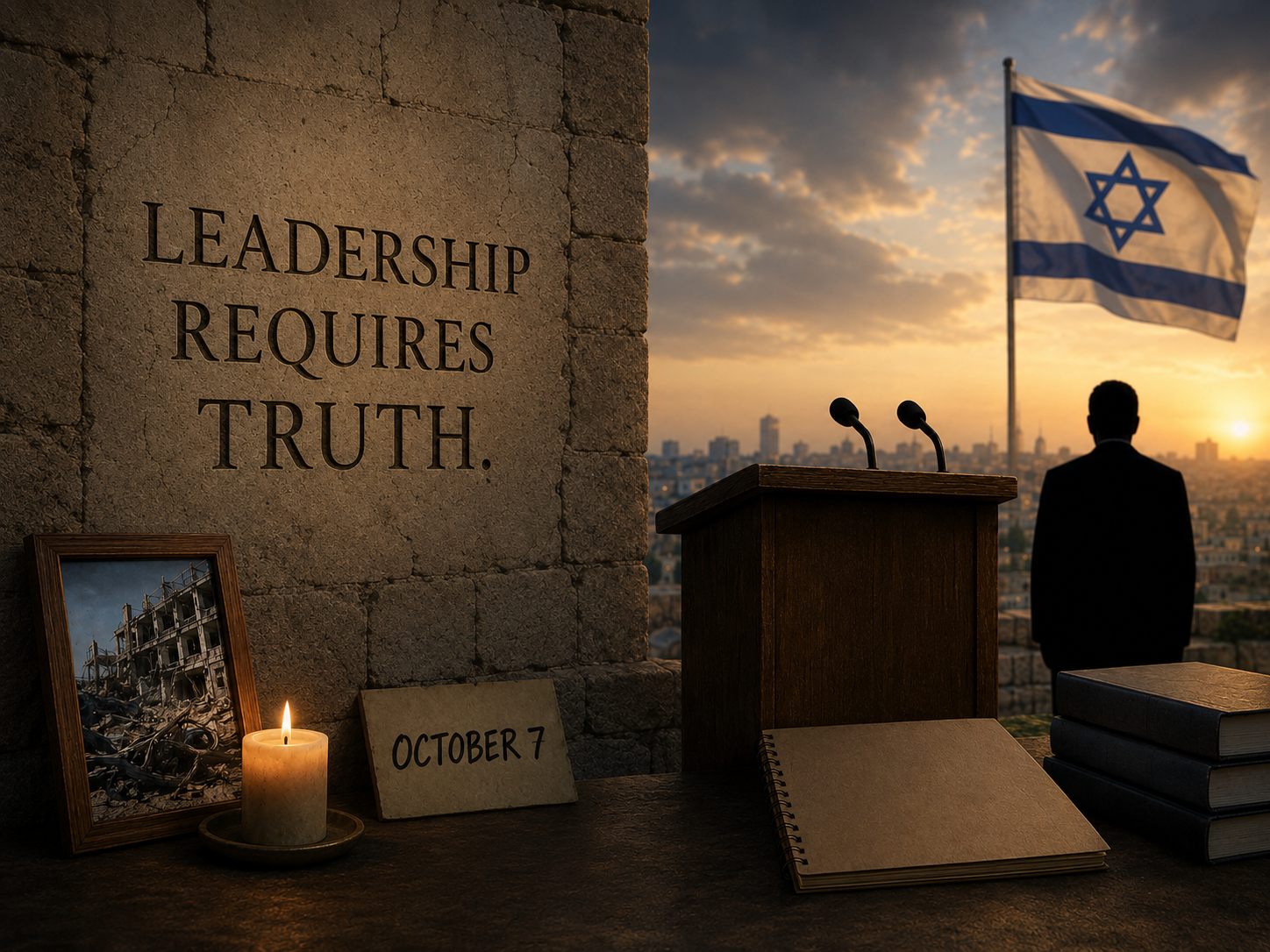
Illustrative. AI image created by the author.
After October 7, Israel does not need polished sorrow. It needs the kind of accountability that begins repair.
Years ago, I sat with a couple who had spent three days circling the same wound.
He had said something cruel in anger. She had withdrawn behind a wall of silence. By the time they came in, both were exhausted. He wanted the fight to be over. She wanted him to understand why it mattered.
“I already said I’m sorry,” he told her.
She looked at him quietly and said, “No. You said you were sorry I was upset.”
There it was — the canyon between regret and responsibility.
He was not a bad man. She was not trying to humiliate him. But the relationship could not begin to heal until he stopped defending himself long enough to name the injury, own his part, and say what would change.
That is true in marriages.
It is true in families.
And, painfully, it is true in nations.
That is why I have been thinking about apologies that heal, apologies that manipulate, and apologies that never arrive.
As an American Jew watching Israel from afar — close enough to feel heartbreak, far enough to know I do not carry the daily weight Israelis carry — I have been thinking about the third kind.
Not the polished sentence that expresses sorrow while avoiding responsibility. Not the carefully managed statement designed to lower the temperature without telling the truth. I mean the kind of apology that begins repair because it names what happened, accepts responsibility, and changes what comes next.
Since October 7, Jews around the world have lived with grief, fear, anger, and a sense of rupture that is difficult to explain to those outside our community. For Israelis, that rupture is not abstract. It is personal, physical, immediate. Families were murdered. Hostages were taken. Communities were shattered. Soldiers were sent into war. Parents still wait by phones. Children still wake from nightmares. Entire towns have been displaced from the places they called home.
For those of us in the Diaspora, the pain is real, but it is not the same. That distinction matters. We should speak with humility.
And still, from that place of humility, it is fair to ask: why is real accountability so rare in national leadership?
An apology from a leader is never just a sentence. It is a public act. It tells citizens: I see what happened. I see your pain. I see my role. I will not hide behind slogans, scapegoats, committees, timing, or the fog machine of politics.
After October 7, many Israelis waited for words that would not bring back the dead, heal the wounded, return the hostages, or rebuild the communities of the south — but might at least acknowledge the unbearable truth that the state failed in its most basic promise: to protect its people.
Some security officials did take responsibility. Military and intelligence leaders spoke of failure. Some resigned. But from Israel’s political leadership, too much of what followed October 7 has sounded cautious, legalistic, and defensive — sorrow without ownership, grief without accountability.
Since this essay was first written, the case for accountability has only grown stronger. Reports and investigations have continued to show how October 7 became possible: warnings not fully heeded, assumptions that proved disastrously wrong, systems that failed to imagine what the enemy was plainly preparing to do, and a political culture too often more interested in survival than responsibility.
None of that lessens Hamas’s guilt. Hamas murdered, kidnapped, raped, tortured, and terrorized. But acknowledging the evil of the attacker does not absolve the duty of the state.
A government’s first promise is protection. When that promise fails so catastrophically, citizens deserve more than commissions, timelines, leaks, briefings, and carefully worded statements. They deserve leaders willing to say, plainly: we failed you.
Not as theater. Not as strategy. As truth.
“I am sorry this happened” is not the same as “I am sorry for my part in what happened.”
One expresses sadness.
The other accepts responsibility.
A real apology is not measured by how polished it sounds. It is measured by whether those who were harmed can hear three things clearly: I know what happened. I understand what it cost you. I am willing to change what happens next. Anything less may express regret, but it does not yet begin repair.
In personal relationships, we recognize the difference immediately. A spouse who says, “I’m sorry you feel hurt,” has not quite apologized. A parent who says, “Mistakes were made,” has left the child alone with the injury. A friend who says, “Let’s move forward,” while refusing to name the wound, has only asked for the benefits of forgiveness without doing the work of repair.
Nations are not so different from families. They are larger, louder, and have more committees, which is not always an improvement. But the human heart still knows when it is being met honestly and when it is being managed.
Jewish tradition offers a different model.
Teshuvah is not public relations. It is not crisis management. It is return — a disciplined process of recognition, remorse, repair, and changed action.
On Yom Kippur, we do not say, “Mistakes were made.”
We say, “We have sinned.”
The grammar matters. The subject is present. The verb is active. The responsibility is owned.
That tradition exists because our ancestors understood something modern leaders have largely unlearned: accountability is not the enemy of authority. It is the foundation of it.
Leaders who cannot admit failure do not project strength. They project fear — fear of the truth, fear of the people they govern, fear of what acknowledgment might cost them.
Israel’s apology problem is not uniquely Israeli. It is a feature of modern politics everywhere. To apologize is seen as weakness. To take responsibility is seen as surrender. To admit failure is seen as handing ammunition to enemies, rivals, journalists, prosecutors, and history itself.
So leaders learn the choreography of non-apology. They express sorrow without ownership. They honor the fallen without explaining the failure. They promise investigations later — after the war, after the election, after the next crisis, after everyone is too exhausted to press the question — even as they continue to claim credit in real time.
That is the moral asymmetry of power: success belongs to the leader; failure belongs to the system.
American Jews know this dance too. We have seen it in our own politics, in our institutions, in our communal life. Leaders who speak beautifully about responsibility often become surprisingly allergic to it when responsibility knocks on their own door.
And yet Israel’s case carries special weight for Jews everywhere, because Israel is not merely another country on a map. For many of us, it is family. Complicated family. Beloved family. Sometimes inspiring, sometimes infuriating, always impossible to ignore.
That does not mean American Jews have the right to lecture Israelis about how to live with consequences we do not personally bear.
It does mean we have a responsibility to care honestly.
Love that cannot tell the truth is not love.
It is fandom.
And Israel does not need fans. It needs friends.
A true public apology does three things.
First, it names the harm. Not vaguely, not passively, not with phrases like “tragic events unfolded.” It says: people were abandoned, warnings were missed, arrogance replaced listening, and families paid the price.
Second, it accepts responsibility proportionate to power. Not all responsibility — war, intelligence, and leadership are complicated. But complexity is not a hiding place. The person at the top cannot claim to be captain only when the ship reaches port.
Third, it changes behavior. It leads to independent investigation, public findings, reform, resignation when warranted, and a culture that makes repetition less likely. Without that, apology becomes theater: beautiful lighting, moving music, no moral content.
That last part is why leaders resist apology. They know the public may forgive sorrow. It may not forgive accountability that demands consequences.
And yet refusing to apologize carries its own cost. It teaches citizens that power protects itself first. It deepens cynicism. It tells bereaved families, wounded soldiers, displaced communities, and hostage families that their suffering is politically inconvenient.
This is not only about one prime minister, one government, or one catastrophe.
It is about a political culture that too often mistakes stubbornness for strength.
But the strongest leaders I have known — in families, communities, and public life — are not the ones who never admit fault. They are the ones secure enough to say: I was wrong. I failed. Here is what I will do differently now.
That kind of apology does not weaken a nation. It treats citizens as adults. It says: your pain is real, your judgment is trusted, and I am willing to be measured by what I do next.
For Israel, the question is not whether leaders can find better words. Israel has never lacked for words. The question is whether words can still carry moral weight — whether the citizen who survived October 7, who buried their dead, who waited at borders and hostage forums and gravesides, will be met with the kind of honesty that makes continued trust possible.
For those of us watching from across the ocean, our role is not to shout instructions from the cheap seats. It is to stand with Israel’s people, grieve with them, advocate for the hostages, oppose those who seek Israel’s destruction — and insist that love of Israel includes concern for the moral health of Israeli democracy.
Real apology would not undo the catastrophe. It would not bring back the dead, heal every wound, return every hostage, or rebuild every home.
But it would tell citizens something they deserve to hear from those who ask for their trust: your grief is not being managed, your pain is not politically inconvenient, and no office is high enough to stand above responsibility.
Accountability is not betrayal.
Apology is not surrender.
And leadership that will not answer for failure cannot ask a wounded nation for trust.
Related Topics
Related Posts