The beginning of the beginners: Our storm shelter
“Beginning” — Bereshit, first word of the Torah, Genesis, 1:1. (With the prefix Be, Bereshit more precisely means, “In beginning,” though it is always translated “In the beginning.”)
The summer of 1970 marked many beginnings for me.
I had just turned 20; it was the first time I ever flew on a plane, obtained a passport, left the country, and most importantly, visited Israel.
I still vividly recall descending the plane stairs, kneeling on the tarmac to kiss the sacred soil. My first visit to the Kotel, the Western Wall, on Erev Shabbat (Friday), I encountered many friends who invited me, a first-timer, to lead the prayer service. Thrilled, I innocently responded: Sure, which way’s Mizrach? — the direction Jews pray — often the East, toward the Temple, which I was fundamentally standing next to, precipitating their laughter… and my confusion.
I had been hired to work at Camp Yaron, a camp for American kids to spend a summer in Israel, run by Victor Geller, a pioneer in Jewish youth travel. The head counselor was Effie Buchwald, whom I knew from Camp Massad, and the camp rabbi was Steven (as he was then known) Riskin. I wasn’t getting paid, but it was worth it just for a free summer in Israel, much less to be with Effie and Riskin.
Yaron was kosher, strictly Orthodox. We discovered however, the first morning, to our dismay, a large percentage of the kids were not. Assembling in the synagogue to pray, we couldn’t help noticing, not only were they completely unfamiliar with the service, but they didn’t understand Hebrew, the language in which we prayed. They sat there, at first bored, but soon disruptive.
We had minyan thrice daily. This wasn’t going to work.
Effie had the idea, born of necessity, to separate them for their own prayer service. He volunteered me to lead it. Candidly, I was delighted, since, truth be told, I never enjoyed communal prayers. (I usually found praying on my own to be more meaningful.)
First problem: Find a place.
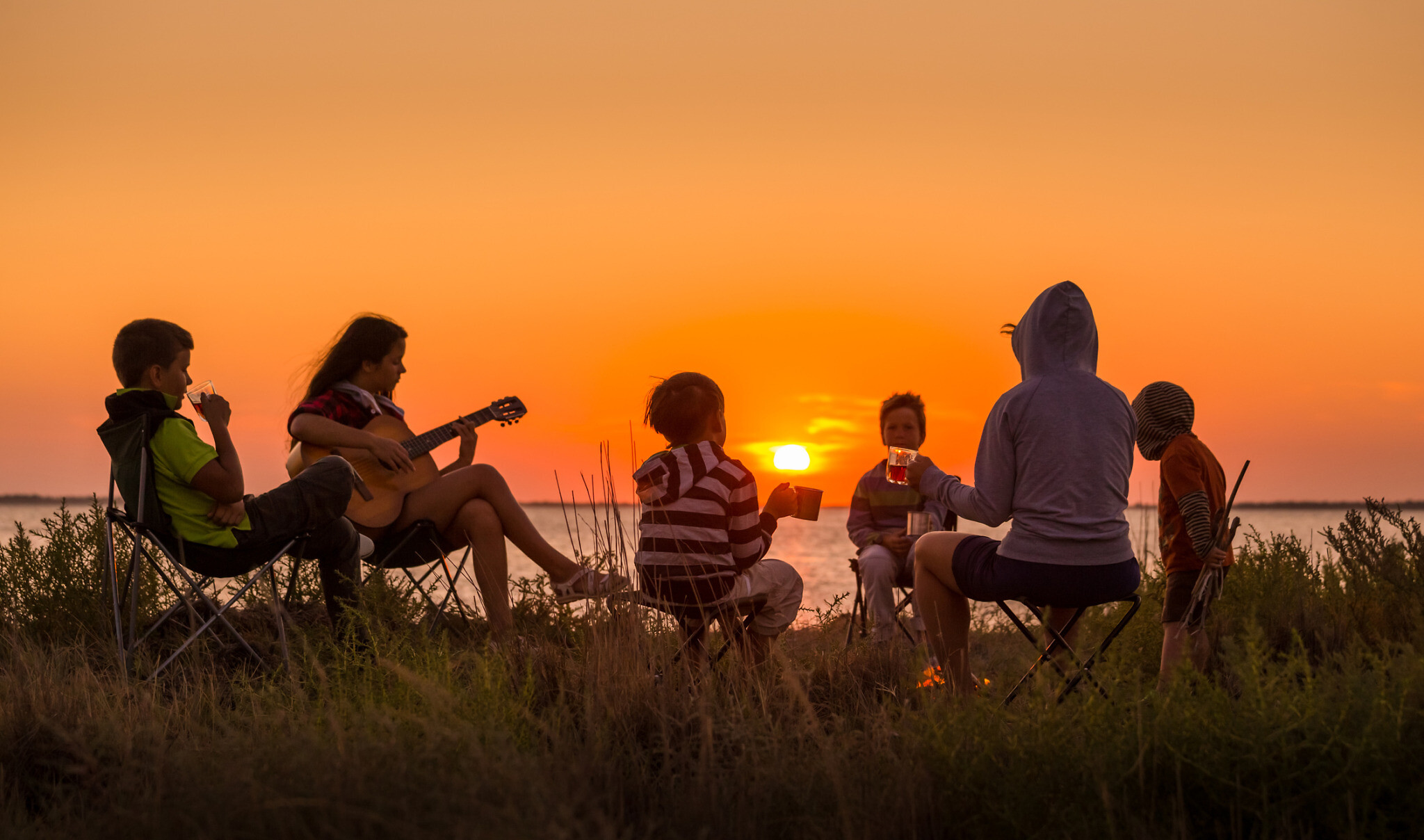
Neve Hadassah, the youth village outside Netanya, our home base, had but one synagogue. The only space we could find large enough to accommodate us was the miklat, the subterranean storm (and bomb) shelter.
Bigger problem: What, in God’s name, are we going to do during the service?
We brought prayer books, but none of the kids read Hebrew, or cared about the English translations. Forcing the kids to read them out loud, or even to themselves, would be pointless, and unsuccessful.
Since this was, willy-nilly, the first “Beginner Service,” there was no precedent. I had no idea what to do. I asked for their attention which I knew I could only command briefly, offered a succinct introduction to the concept and history of prayer in general, Jewish Tefilot (prayers), in particular.
OK, now what? I was clueless. I read the opening prayers out loud, first in Hebrew, then English. I could see the eyes of kids in front start wandering, hear the voices of ones in the back start whispering to each other.
I didn’t blame them. This was not going to work.
Then, inspiration struck. Out of the blue (actually, there was no blue; there were no windows), I had an idea. I asked them: “What does this prayer mean to you?”
It worked! It more than worked! It was divine!
At first, we went around the room, everyone responding obligatorily. Soon, they grew so excited to express themselves, everyone wanted to speak first.
It was better than group therapy! They shared their philosophies, their histories, their hopes, their fears, their dreams. It was an indescribable bonding experience.
They offered suggestions. Since I was but a few years older, and, more importantly, prayers belong to them as much as me, I’d be an idiot not to listen. Kids chose their favorite prayers which they recited to the others. Occasionally, moved by a prayer, we recited it again. There were no hard and fast rules. It was a truly democratic minyan. I witnessed their growth daily.
They weren’t the only ones who grew. I realized I had never really thought about these prayers I had been reciting by rote since I was sentient. Why should I thank God “for not making me a woman”? How did He “firm my footsteps”?
I could ask a rabbi, but while his answer might be more informed, it wouldn’t be more valid than the kids’. I had grown up in a sheltered yeshiva environment; they had not. They experienced things I never had. They broadened my horizons, and each other’s.
We spent as much time as needed on each prayer, each sentence, occasionally, a single word. Towards the end of each service, we learned to sing together a single prayer, starting with Shema, gradually expanding our repertoire.
For the first time in my life, I looked forward to davening communally as much as they did.
Not only did I learn more about each of them at every service, I learned more about myself.
By summer’s end, they had grown so familiar with the prayers, on Shabbat, we could all pray together, singing the same songs. We considered joining the main service consistently, but treasured our unique service too much to do that.
Returning home, many of us stayed in touch. A half-century later, I still remain close with campers I met on those tours. Some were ushers at my wedding.
When my children were young, on occasions we couldn’t, or didn’t want to, attend synagogue, we conducted our own Beginner Service at home. We weren’t beginners, but, at times, it meant more to discuss our feelings and interpretations of the prayers than to just recite them.
Eventually, the world discovered Beginner Services.
Effie introduced them at Rabbi Riskin’s Lincoln Square Synagogue. Lincoln Square became world renown for its outreach to beginners, emulated by synagogues of all denominations.
Rabbi Riskin claimed Jews weren’t divided between “religious” and “secular,” but between “religious” and “not yet religious.”
Beginner Services are the bridge between the two.
Effie institutionalized what he began at Lincoln Square, starting a National Jewish Outreach Program (now known as NJOP) going beyond Beginner Services to promote broader neophyte engagement.
Today, one can find Beginner Services in every city, indeed in most Orthodox synagogues. A Beginner Service that George Rohr began at Manhattan’s KJ has more High Holiday attendees than many “Regular” services.
And yet, cynics remain. Some rabbis, perhaps threatened by Beginner Services stealing their audience, discourage their formation. Some claim since they don’t include every prayer, non-beginner participants must pray individually in addition to fulfill their obligation.
I’ve heard rabbis sarcastically question if God listens to prayers in Lashon Am Zora, profane languages (English) rather than Lashon Kodesh (Hebrew). (Apparently, though omniscient, He remains monolingual.)
I can only speak for myself. In that storm shelter, viewing those kids falling in love with Judaism, I saw God smiling. I heard Him listening to their voices.
Sometimes, present day, passively bored in a “regular” service, I wish I was back in Brigadoon, actively participating in a Beginner Service.
Today, more than ever, witnessing the storms confronting Jews throughout the world, I take comfort in my memories of that shelter. I am reassured by the existence of Beginner Services, knowing that even though we lose Jews constantly, we simultaneously reclaim them.
To quote Shabtai Zimmerman (also known as Bob Dylan), when life feels “hopeless and forlorn,” Beginner Services “give us shelter from the storm.”