Teacher. Listener. Builder of sacred spaces.
The Best Thing About Old People
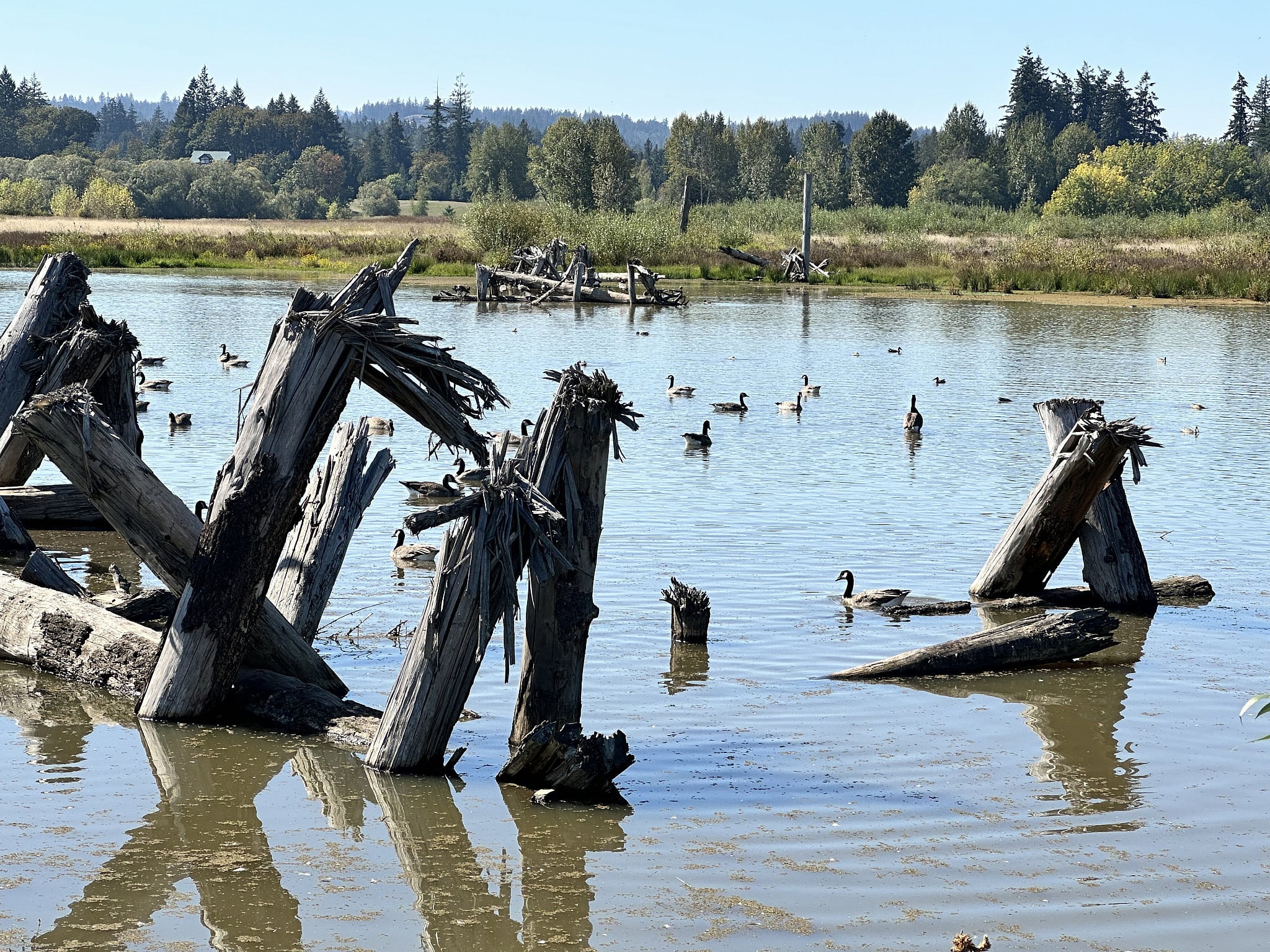
Tualatin River National Wildlife Refuge photo by Rabbi Shanee B. Michaelson
“How old are you?” an eleven-year-old student asked me recently.
“Fifty,” I said.
She nodded, thought for a moment, and then said, “The best thing about old people is that they weren’t always old.”
I laughed—partly because it was funny, and partly because something in me softened. It was such a simple observation, almost obvious, and yet it landed in a way I didn’t expect.
For a moment, I felt less fixed than I had been feeling. Less like I had arrived at a new, permanent category of life, and more like someone who has simply kept going—through one stage and into another, as I always have.
It wasn’t a compliment, exactly. It didn’t make me feel younger or reassure me in any direct way. It was something quieter than that. It reminded me that even this—this sense of “being fifty”—is not a settled identity, but part of a longer unfolding.
I turned fifty this year, which still feels a little like a clerical error—like someone misfiled me under a category I haven’t quite grown into. For most of my life, fifty belonged to other people: teachers, parents, people who seemed to stand firmly in their lives. Now I find myself here, and what I feel most is not firmness but awareness.
The signs of aging arrive in layers. Some are unmistakably physical. My knees register stairs more than they used to. Sleep has become something I prepare for, rather than fall into. There are mornings when I move more slowly at first, easing into the day with coffee and a kind of quiet negotiation with my body.
Even my voice feels different sometimes—less automatic, more something I have to care for. After a long stretch of talking or teaching, I notice it in a way I never did before. What once felt effortless now asks for attention.
And then there is the mirror. Not unkind, but increasingly specific. The lines around my eyes are no longer subtle; they carry the accumulation of years—of laughter, of strain, of paying attention. My face looks more like it belongs to someone with a history, which, of course, it does. Sometimes I catch a glimpse of my late mother there, which is both comforting and disorienting.
But the deeper shifts are quieter. They show up in how I move through the world—in conversations, in what I notice, and in what I’m willing to carry.
I spend my days with people at very different stages of life. Some are just beginning to ask who they are, testing out questions about identity, belief, and belonging. Others are looking back, trying to make sense of what has unfolded, and what has not. Somewhere along the way, I have moved from identifying primarily with the first group to recognizing myself in the second. Not entirely, but enough to feel the shift.
There is a new kind of listening that comes with that. When someone speaks about loss, or estrangement, or the ways life has not unfolded as expected, I am not hearing it from a distance. I am hearing it as someone who has also had to revise her own understanding, who knows that certainty is more fragile than it once seemed.
In Jewish tradition, fifty is known as the age for giving counsel or guidance. I don’t always feel like someone who has answers. But I do recognize the shift—the way people speak to me now, the unhurried conversations, and the way I find myself holding things with them rather than solving them.
My writing feels different now. At fifty, I feel a new urgency to tell the truth, or at least to get closer to it. I revisit old memories and find that they are less settled than I once believed. Aging, it turns out, is not just about accumulating years; it is also about finding other perspectives.
And then there is loss. Not abstract, not distant. It lives in specific places now—in dates, in absences, in relationships that have shifted or fractured. It changes the way I move through the world, the way I show up for others, and the way I understand what matters.
I am also more aware of my limits, which is its own kind of relief. I know when I am tired, even if I don’t always listen. I am learning to treat my body less like something to manage and more like something to accompany. There is a humility in this—an understanding that I am not separate from my own fragility.
And still, there is resistance. I miss the ease I once took for granted—the way my energy seemed to replenish itself without effort, the way time stretched ahead without edges. There are moments when I want to push back, to insist that I am unchanged.
But then I think about what my student said—that the best thing about old people is that they weren’t always old—and I realize this is part of the story. Not a contradiction, but a continuation.
What remains is something quieter and steadier. A willingness to inhabit my life as it is, rather than as I imagined it would be. A growing appreciation for the ordinary: the rhythm of a familiar day, the sound of conversation, the way the light shifts in the late afternoon.
Fifty is not what I thought it would be. It is less certain and more demanding, but it is also more honest.
I am not finished. There are still things I am learning—about my relationships, about the stories I carry, about the ways I am still changing. If anything, I feel more aware of the work of becoming, not less.
Fifty is not an ending. Rather, it is a threshold. And I am standing in it, paying close attention.
Related Topics
Related Posts