The Black or the Golden Book
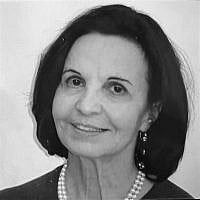
In honor of the 15th Yuhrzeit of my mother
How do you explain the importance of Rosh ha Shana and Yom Kippur to a young child?
Leave it to my late mother, she always found a way.
“You know what Hashem is doing right now?”
She would ask us.
“He’s watching the little children from high up in the sky. He checks if they respect their parents. If they say Modeh Ani. If they make a Bracha before they eat their snack. If they fight with their brother or sister.”
On and on went her list, and for a couple of weeks we were the best-behaved kids in town. After all, who wanted their name in the black book? We longed for the shining pages of the Golden Book.
There was a certain innocence in those years. We weren’t flooded with information the way children are today. Our picture dictionary was enough to fill our heads with wonder. We knew every country in Europe, its capital, and its flag. We could match flowers to their names and identify trees. We recited continents and the animals that roamed the jungles of Africa and South America.
We admired the traditional costumes from faraway lands, and we giggled at the cowboy boots and hats drawn on a page.
That was our world:
Contained, colorful, orderly.
Now, when I travel by plane and stretch my legs down the aisle, I sometimes glance at the iPads clutched in tiny hands. And I am shaken by what I see, frightening films of horror, stories not meant for children, not even for grown-ups, really. And the parents, sitting quietly beside them, do not interfere.
When I flew with my own children, I packed coloring books and crayons, dot-to-dot magazines that kept them busy for hours, and little bags of Lego, half of which inevitably disappeared beneath the seats.
When their eyes grew heavy, they drifted into dreams shaped by colors and numbers, not by monsters.
In those simpler years, without screens or endless distraction, my mother’s words carried power. To be good meant live in a way that would let your name be written in the Golden Book. The Black Book was always there, like a shadow, but it was not the point.
The point was choice.
And isn’t that the essence of these days of awe? That in every moment, even as children, we are presented with two paths.
Goodness or selfishness.
Kindness or cruelty.
Light or darkness.
The Golden Book
Or
The Black one.
As children, we thought the matter was simple:
Hashem was keeping score.
But as I grew, I learned the truth is more mysterious. Good and evil are not only written in books high above us, but in the pages of our lives.
The choices we make.
They are written in the eyes of those we love, in the words we speak or withhold, in the times we reach out or turn away.
Perhaps that is why my mother’s story stayed with me. Because beyond its childlike simplicity, it carried the deepest truth: that every year, every day, every hour, we are given a pen. And with it, we write ourselves,
Sometimes in gold, sometimes in black.