
99.6% Ashkenazi + .4% Viking = 100% Zionist
The Blind Leading the Blind
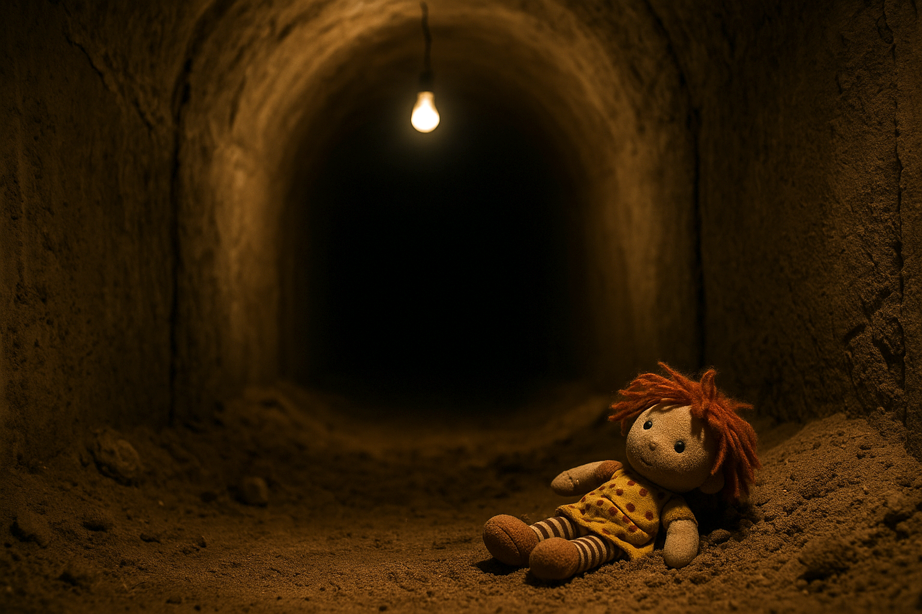
The world has forgotten. (AI-generated image)
There are cries in Gaza tonight.
Cries of hungry children, their parents frantic and helpless, and their futures flickering like candlelight in a tunnel choked by dust and war. I hear those cries. We all do. We are human.
But there are other cries, quieter perhaps, but no less wrenching—the cries we don’t hear, because they are sealed beneath the earth in Hamas’s tunnel dungeons. Cries of toddlers and babies who were kidnapped from their homes. Children who haven’t seen daylight, haven’t been held by their mothers, haven’t tasted freedom in nearly a year. And somehow, the world has gone deaf to them.
In one of the most disorienting acts of modern diplomacy, UK Prime Minister Keir Starmer announced that Britain will recognize a Palestinian state this September—unless Israel agrees to a series of demands. Among them: an immediate ceasefire, a halt to the West Bank annexation, the unfettered flow of humanitarian aid into Gaza, and renewed commitment to a two-state solution.
But something is missing from this list. Or rather—someone.
Hamas.
The terrorist group that started this war, that butchered 1,200 Israelis on October 7, that paraded the kidnapped and desecrated the dead, is asked for nothing. No preconditions. No accountability. No consequences.
Starmer’s plan places the entire burden of diplomacy on the shoulders of the one country that did not initiate the war—and none on the one that did.
How did we get here?
It wasn’t always this way. Across the Middle East, Arab nations are beginning to confront reality with refreshing moral clarity. Egypt, Saudi Arabia, and even longtime Hamas supporter Qatar have called on Hamas to disarm, surrender governance of Gaza, and release the hostages. In May, 22 Arab and Muslim states signed a declaration demanding Hamas relinquish control and transfer power to the Palestinian Authority. These are not Israeli demands. These are Arab demands. Demands born not out of loyalty to Israel, but of disgust at Hamas.
Meanwhile, in the West, our moral compass spins wildly. The UK has effectively said: if Israel doesn’t concede, Hamas gets rewarded. France and Canada have followed suit. They call it a “path to peace.” But how can you end a war by ignoring the side still firing?
If Hamas wants statehood, it now has a roadmap: keep fighting. Keep holding hostages. Keep the war going long enough, and international pressure will twist the arm of the only democratic actor involved. Israel will be blamed for “failing to end the war”—a war it didn’t start, and legally cannot end unilaterally.
Let us be crystal clear: Hamas has zero incentive to stop.
Why would they release hostages now, when doing so removes the very leverage that is keeping international recognition alive? Why agree to a ceasefire when the continued suffering of Gaza civilians is the political fuel pressuring Israel to withdraw? If anything, Starmer’s policy has made peace less likely and hostage release less urgent.
It has made cruelty strategic.
In a bitter twist, Hamas’s most gruesome atrocities—the ones that triggered this war—are now the very acts that might win them international legitimacy. And those who suffered the most? They are now being erased from the diplomatic ledger.
Consider the Bibas family.
Shiri Bibas and her two red-haired sons—Ariel, just four years old, and baby Kfir, only nine months—were abducted on October 7. The image of Kfir, flame-haired and wide-eyed, became a symbol of innocence lost. Months later, their bodies were returned. Murdered by their captors. Hamas then cynically tried to claim they were killed by an Israeli airstrike. It was a lie; a deliberate attempt to conceal the true nature of the killings – Hamas murdered them with their bare hands then mutilated their bodies. A 4-year-old and a 9-month-old. Let that sink in.
But even more haunting than the murder and the lie was the silence that followed.
There were no front-page photos of the Bibas children’s mutilated bodies on the cover of The New York Times. No impassioned speeches in the British Parliament. No UN emergency session. No candlelight vigils in London’s Hyde Park. Only the quiet grief of a nation that still sets an empty seat at the table, waiting for children who will never come home.
Contrast that with the relentless—and warranted—coverage of suffering in Gaza. Starving babies, mass graves, bombed-out buildings. These horrors are real. But so is the horror of being nine months old, ripped from your crib, dragged into a tunnel, and used as a political pawn for ten months while the world negotiates your fate with your captors.
There are no humanitarian aid convoys for Kfir Bibas. No calls for an urgent ceasefire to rescue him.
Why?
Because in this topsy-turvy world, moral clarity is filtered through politics. The UK is not negotiating peace. It is appeasing demographics. Starmer’s calculation is not moral but electoral—placate a growing domestic constituency and secure diplomatic relevance. The cost? The very values Britain once claimed to uphold, but have sadly vanished.
It would have been so easy—and so right—for the UK to say: Hamas, if you do not release the hostages, disarm, and end this war, we will back Israel’s right to secure its borders and its future. We will support the annexation of parts of Gaza and the West Bank. We will no longer play both sides.
Instead, the UK has offered Hamas a reward for noncompliance. The message is: hang on long enough, hold enough civilians underground, and recognition is yours.
Starving children in Gaza deserve our empathy. So do the starving children held in silence, somewhere in the dark, underground; possibly alive, probably dead.
But only one group is seen. And only one is being heard.
And so, while Israel may be militarily superior and—I would argue—morally on higher ground, it is Hamas that holds the power. If Hamas were to lay down its arms, release the hostages, and relinquish control of Gaza, the war would end. The hostages would come home. The bombs would stop falling. The starving would be fed. International aid would flood in. Reconstruction could begin. Soldiers could return to their families. Peace would, finally, be possible.
If the UK, France, and Canada truly wish to be agents of peace, then let them follow the lead not of hashtags, but of history—and of their Arab peers. Let them join Egypt, Saudi Arabia, and Qatar in demanding that Hamas—not Israel—end this war. Because no matter how many resolutions are passed or flags are raised, there will never be peace if the world keeps rewarding the hand that holds the knife.
Related Topics