A Searcher for Truth and Meaning
The Body Speaks: IFS and the Language of Symptoms
The Body Speaks: Internal Family Systems (IFS) and the Language of Symptoms
My journey into the world of healing began in 1996, triggered by my father’s cancer diagnosis. Suddenly, doors swung open to questions I had never considered: Why do people die? What choices do we have? Can we be active participants in our own healing, rather than just handing the “keys” over to a doctor?
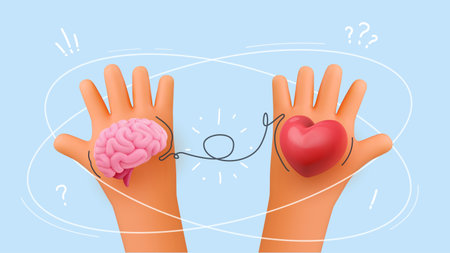
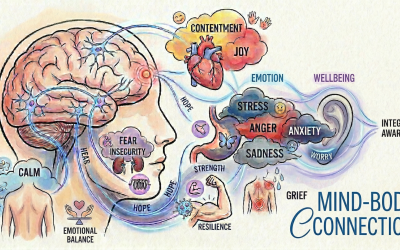
I’m a firm believer in modern medicine—I use doctors, and I recommend them. Often, people come to me saying, “I’ve tried everything. Now let’s see what you can do.” What I’ve learned over decades of practice is that the mind and body are not two separate entities. We might go to a surgeon for a broken arm and a psychologist for a broken heart, but the body doesn’t see that divide. When you’re nervous, your stomach flips; when you’re angry, your jaw tightens; when you’re grieving, it feels like you’re being strangled.
The body is 100% connected to our emotions. It is a “mind-body” unit. And if there are physical symptoms, more often than not, it is the body speaking a language we’ve forgotten how to hear.
The Messenger in the Wrist
About 18 years ago, I developed a large ganglion on my left wrist. It was so debilitating that I couldn’t do the things I loved—practicing reflexology and yoga. My doctor, a brilliant homeopath, tried every trick in her box before finally saying, “You’ve earned your surgery. Go book it.”
Before I went under the knife, a friend asked me, “Don’t you work with people on this kind of thing? What would you tell a client? What is your wrist telling you?” It was a classic case of the shoemaker’s child going barefoot. I decided to sit with myself and look at what this symptom was telling me.
In Chinese medicine, the left side of the body is connected to the right brain—the emotional, creative, feminine side. The right side is the logical, analytical, “career” side. After some deep introspection, I realized my left-side pain was connected to a female in my life that I wasn’t “hugging.” At the time, my eldest daughter was going through a challenging “coming of age” phase, and I was struggling to find my footing as her mother.
I maintained a rigid, idealized vision of the mother I envisioned being—the one who had it all under control, who could mold my daughter into who I wanted (or needed) her to be. The daughter she was displaying simply didn’t fit that mold; she was rebellious, and finding her own voice didn’t sit well with me. Instead of supporting her journey of self-discovery, a part of me was terrified that her “failure” to fit my vision was actually my failure. I began insisting on control, pushing her to be like me because that felt safe. But the more I pushed, the less it worked. I found myself wanting to push her away entirely just to stop the conflict, which only created a heavy, cold distance between us.
The wrist is the body part we use to bring people closer, to embrace, and to support. By pushing her away emotionally to protect my own ego, I was literally impacting my own body. When I realized this, I shifted. I stopped trying to “fix” her and started the “hugging” approach—not just physically, but by softening my heart toward her crisis. I realized I had been pushing away who she needed to be in order to protect who I thought I needed to be. I hadn’t even been present for her internal struggle in finding herself. I felt so much care for her. As I leaned into that compassion and let go of the need to control her path, the ganglion began to recede. Within three weeks, it was gone. No surgery required. My wrist “spoke,” and I finally received the message.
Symptoms as Protectors
In Internal Family Systems (IFS), we don’t view chronic pain as an enemy to be eliminated. Instead, we see symptoms as protective parts. They have a role. My ganglion took me away from my work so I could see who I loved and how I could serve that relationship differently. In the end, that painful ganglion was a gift that allowed me to become a more supportive mother.
Back in the days of the Prophets, people had clearer guidance; you could ask the High Priest for the answer and he would tell you exactly what to fix. Today, we don’t have prophets walking the streets to decipher our challenges, but we do have the body. The body is our internal prophet.
To understand how it communicates, imagine a tube of toothpaste with the lid screwed on tight. If you squeeze it, it will burst at its weakest link. Our symptoms aren’t coincidences; they manifest where we have an energetic “weakness” or a specific message that needs to be delivered.
The Manager and the Firefighter
To understand how this works, we look at the different “parts” of our internal system:
- Managers: These are proactive protectors. They run our daily lives, keep us on time, and try to prevent emotional pain through control, perfectionism, or body vigilance.
- Firefighters: These are reactive. They step in when an emotional fire is already burning. They don’t care if the “furniture” gets ruined by their hoses; they just want to put out the fire. This can look like migraines, diarrhea, or “numbing out.”
Take the case of a client of mine, a well known opera singer. In private, he sings magnificently. In public auditions, he completely loses his voice. When we worked together, we discovered a part that was terrified of success because, as a child, his parents were jealous of his gifts. To his internal system, success equaled rejection. His voice “breaking” is actually a protector keeping him safe from the pain of losing love.
Distraction as Protection
Dr. John Sarno, who helped millions with back pain, argued that physical pain often distracts us from powerful, repressed emotions. The body essentially says, “You have deep emotional trauma we can’t face. Here, have some back pain to keep you busy with doctors so you never have to look at the real wound.”
Years ago, a man came to see me with a burning pain in his right foot. In our session, he described a business betrayal as having gone “sour.” That “sourness” wasn’t just a metaphor; it had manifested as chronic heartburn. He had vowed, “I will never set foot in that synagogue again” after a dispute with his Rabbi.
His foot was literally carrying the weight of his resentment, acting as a physical anchor for his vow of exile. It was as if his system said, “If we aren’t setting foot there, we aren’t setting foot anywhere comfortably.” As he unburdened that exiled part and processed the betrayal, the burning sensation cooled. He realized he didn’t have to be a prisoner to his own vow; he was finally able to “set foot” into a new community and move forward.
The Exiles: “Don’t Ignore Me”
Behind every protector is an Exile. These are young, vulnerable parts carrying burdens of shame, abandonment, or worthlessness. They are the ones screaming through the body, “Please don’t ignore me!”
When a protector feels seen, it no longer needs to create pain. The shift happens when we move from fixing to listening. Instead of asking, “How do I make this stop?” we can ask, “What are you protecting me from?”
A Practice: Trying Softer
Healing chronic pain isn’t about trying harder; it’s about trying softer. It’s about leaning in with curiosity rather than control. If you have a physical sensation right now, I invite you to try this:
- Notice it: Where is it? What is its intensity out of 10?
- Describe it: Does it feel like pressure or throbbing? Is it sour, burning, squeezing or closing your chest so you can’t breathe?
- Befriend it: Place a hand on the area. Ask it, “What do you want me to know?” and “What are you afraid would happen if you didn’t do this job?”
When the Symptom Stays: A Lesson in Tinnitus
Sometimes, despite all the work, the symptom stays. This does not mean you have failed. Eleven years ago, I woke up deaf in my right ear. That night, I was flying to South Africa to say goodbye to my brother-in-law, who was dying of cancer. By the time I returned, the deafness was permanent, accompanied by a high-pitched buzzing—like a mosquito that never stops.
For years, I tried to “fix” it. Eventually, I sat with it using IFS and discovered a clash between the symptom and my Logotherapy part. My Logotherapy part—trained in Viktor Frankl’s school—always wants to find meaning and “jump over” pain to get to the silver lining. But the Tinnitus said:
“You jump over pain too quickly. You use meaning-making to ignore the hard things. I am here to make sure you stop and listen to the struggle. You cannot ‘transcend’ grief without actually feeling it.”
I felt such gratitude for that buzzing. It is my “speed bump,” a constant reminder to pay attention and comfort the parts that are hurting. Today, it is my internal Shofar blast, calling me to check in: Am I being real with my pain?
The Path Forward
Relief from the symptom is not the goal; the relationship is the goal. Relief is the outcome.
Whether the pain leaves or stays, healing happens the moment the system feels seen. Our symptoms aren’t betrayals; they are conversations. The goal is to become the compassionate leader our internal system has been waiting for.
Healing isn’t always the absence of a symptom; sometimes, healing is the presence of Self. So, the next time you feel that familiar ache, don’t try to “jump over” it. Instead, try softer. Lean in. Your body has been holding your stories for a long time—it’s finally time to let it speak.
Related Topics