
An archaeologist cynical of both archaeology and academia.
The British Museum’s Surrender Is Symptomatic of Modern Britain
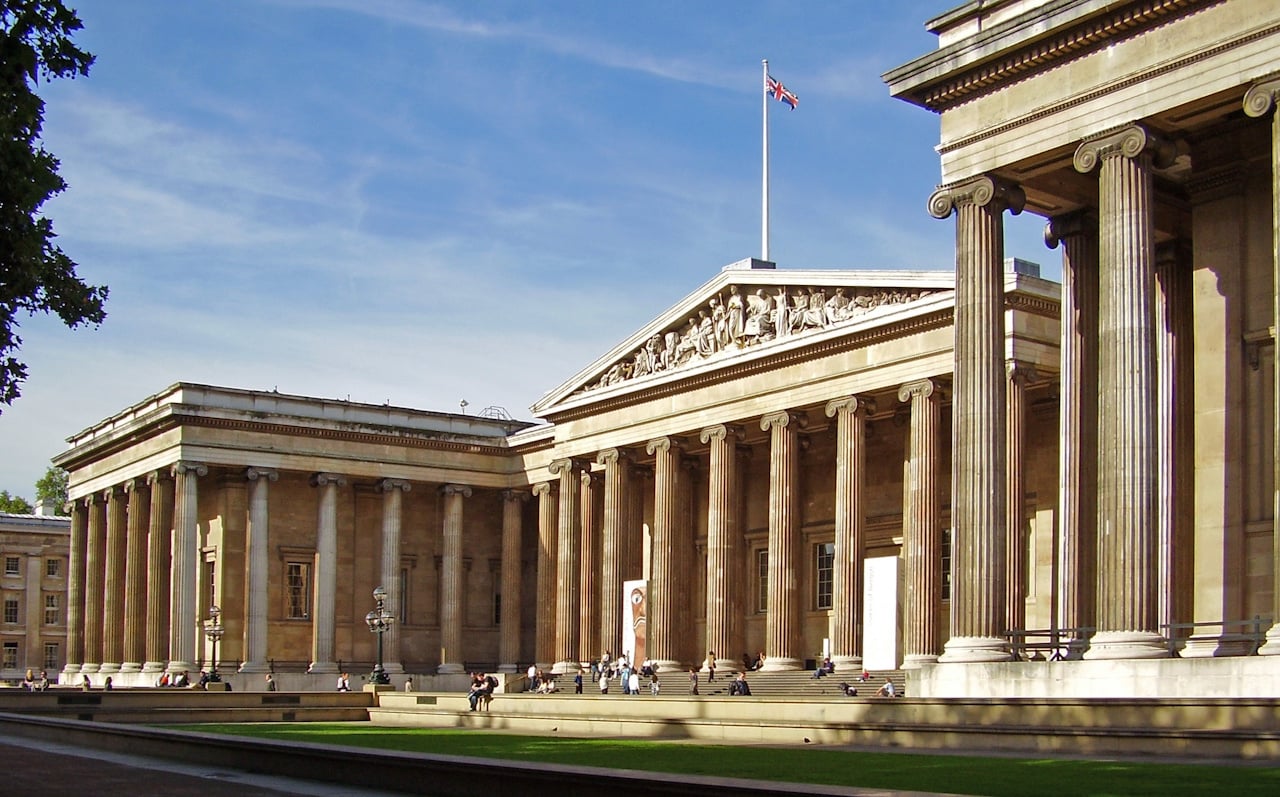
OLYMPUS DIGITAL CAMERA (Courtesy)
The British Museum cancelled—or, in its preferred terminology, “postponed”—a lecture that formed part of its Jewish Culture Month. Paul Collins, Keeper of the British Museum’s Middle East Department, was scheduled to deliver a public lecture entitled Ancient Israel and Judah in the British Museum.
According to the Museum’s announcement, the lecture would examine how “the histories of the kingdoms of Israel and Judah can be illuminated by the archaeology and art of the wider ancient Middle East” (Oddly, this announcement can now only be found via the Wayback Machine). In other words, Collins’ lecture was going to discuss the archaeological and historical evidence connecting the Jewish people to the land of Israel. Hence its inclusion in the Museum’s celebration of Jewish culture. And therein lies the problem.
The British Museum cancelled this event due to ill-defined “security concerns.” Apparently, an unknown number of individuals purchased tickets to Collins’ lecture with the intention of disrupting—or, more accurately, preventing—him from discussing the Jewish people’s archaeological and historical connections to the land of Israel. Instead of providing sufficient security to address this threat, the British Museum capitulated and cancelled Collins’ lecture.
It is worth noting that the British Museum found itself in an unenviable position. Canceling the event in response to pressure would have projected weakness and rewarded intimidation, while proceeding with it invited protests and disruption. Either outcome carried reputational costs for the Museum and served the interests of those seeking to generate publicity through controversy. Nevertheless, a public institution committed to scholarship cannot allow threats of disruption to determine what subjects may be publicly discussed.
To put it plainly, the mob—or, more appropriately, the antisemites—won. What makes these disruptors antisemites? First, they successfully cancelled, through intimidation, an event that formed part of the British Museum’s Jewish Culture Month. Second, the target was not a lecture on contemporary Israeli politics but a scholarly discussion of archaeology and history. Third, by shutting down Collins’ lecture, they sought to prevent public discussion of the archaeological and historical evidence connecting the Jewish people to the land of Israel. Their objective was not to challenge an interpretation of the evidence, but to prevent the evidence from being discussed at all.
The British Museum’s decision is representative of the broader failures of Britain’s ruling class. Britain’s political and cultural elites increasingly prefer accommodation to confrontation, expediency to principle, and retreat to resolve. Three brief examples illustrate this tendency.
First, British leaders have repeatedly failed to stop illegal migration across the English Channel. For example, in 2025, approximately 41,000 people arrived in Great Britain by small boat. These crossings accounted for roughly 89–90 % of illegal arrivals into the United Kingdom. Judging by the continued flow of small boats across the English Channel, Britain has effectively surrendered control of its maritime border.
Second, successive governments have failed for decades to address the grooming/rape-gang scandals that operated in dozens of communities across the United Kingdom. These scandals affected thousands of girls and women across multiple communities in the United Kingdom. Official inquiries continue to acknowledge, perhaps willfully, that the true scale of the abuse remains unknown.
Third, whether it is the burning of Jewish ambulances or the cancellation of an archaeological lecture related to Judaism, antisemitism is unchecked in the United Kingdom. In 2023, 4,103 antisemitic incidents were recorded, representing a 147 % increase over the previous year. Statistics suggest that it is open season on British Jews. Taken as a whole, there is no reason to believe that Britain’s political and cultural elites will address the scourge of antisemitism.
Winston Churchill delivered his famous We Shall Fight on the Beaches speech in the House of Commons on 4 June 1940 following the evacuation from Dunkirk. In that speech he famously declared that Britain would “never surrender.” Sadly, the British Museum surrendered to antisemites. Its capitulation was not an isolated event but a symptom of a broader crisis of resolve in modern Britain.
Related Topics