The Burned Beams Beneath Jerusalem
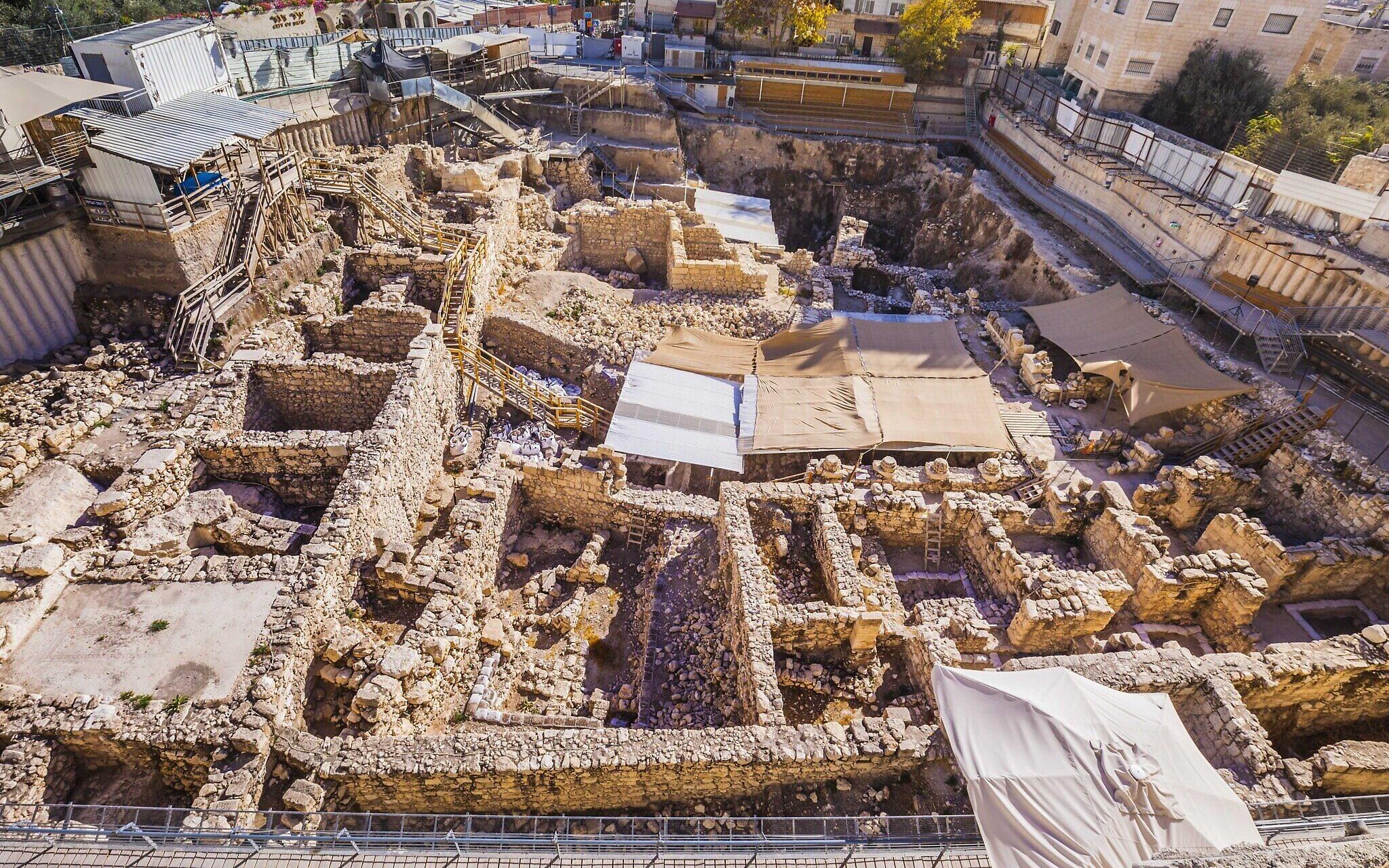
Yesterday, I read a fascinating article about a new archaeological discovery in Jerusalem.
Archaeologists excavating in the City of David uncovered enormous wooden roof beams, blackened by fire and still lying where they had crashed down when the Babylonians burned Jerusalem in 586 BCE.
Not ashes or tiny fragments. Actual wooden beams from the First Temple period.
Wood almost never survives that long in Israel. Normally, it rots and disappears. But in this building, the fire burned so fiercely that the plaster coating the walls melted over the collapsed beams and sealed them beneath the ruins.
The beams are so thick that researchers can still see many of the trees’ growth rings. Those rings allow them to determine with unusual precision when the trees were cut down, and when the building stood.
Incredibly, the fire that destroyed the building also preserved its remains.
But that was not the part that fascinated me most.
In that same Givati Parking Lot excavation are many other buildings from the end of the Second Temple period, above and around these earlier First Temple-era remains.
This has led archaeologists to believe that when the Jewish people eventually returned to Jerusalem and began rebuilding a new life there, they deliberately left some of the burned ruins in place.
This is unusual, since normally when you build, you first clear the site of its previous ruins before beginning new construction. But these Jews did not clear away the destruction to which they were returning. Instead, they built the new city directly over it.
It seems they wanted the burnt ruins to stay.
Not because they wanted Jerusalem to remain a city of mourning. Quite the opposite. They were building new homes, restoring Jewish life and creating a future. But beneath the new walls, they left evidence of what had happened.
They built over the destruction without erasing it.
Yesterday, I also studied a passage in the Talmud that seemed to speak about the very same idea.
The Talmud in Bava Batra 60b tells us that after the destruction of the Second Temple, some Jews became so overwhelmed by grief that they stopped eating meat and drinking wine.
Rabbi Yehoshua asked them why.
They explained that sacrificial meat had previously been offered upon the altar, and wine had been poured there as well. Now that the Temple had been destroyed, how could they possibly enjoy either one?
Their reaction was understandable. The Temple was not simply a building. It was the spiritual heart of the Jewish people. How could life continue normally after such a loss?
Rabbi Yehoshua did not dismiss their pain. Instead, he gently followed their thinking to its conclusion.
If so, he said, perhaps we should stop eating bread. After all, many flour offerings were also brought in the Temple.
They agreed. From then on, they would live on fruit.
Perhaps fruit should also be forbidden, Rabbi Yehoshua continued, since the first fruits were brought to the Temple.
They agreed again.
Finally, Rabbi Yehoshua asked whether they should stop drinking water too, since water had been poured upon the altar during the festival of Sukkot.
This time, they were silent.
They understood what he was showing them. If grief is allowed to take over every part of life, eventually there will be no life left.
Rabbi Yehoshua then gave them the balance that has guided the Jewish people ever since.
“Not to mourn at all is impossible.” Something terrible had happened to the Jewish people, and they could not pretend that it had not.
“But to mourn excessively is also impossible.” We cannot allow the destruction to destroy everything that comes afterward.
This is a remarkably healthy way to deal with trauma.
Often, when people experience something deeply painful, they tend to move toward one of two extremes.
Some bury the experience and refuse to speak about it. They build a beautiful life on the outside, running as far as they can from the pain they have buried deep within. They learn to cope and function fully without ever addressing that chapter of their lives.
Others become completely defined by what happened to them. Their pain becomes the lens through which they see themselves, the people around them and their entire future.
I knew Holocaust survivors who built beautiful families and successful careers but barely said a word about what they endured in the camps. And I know other people who have faced traumatic experiences beyond what I can imagine, who have allowed that pain to follow them into every part of their life.
Rabbi Yehoshua teaches us a more balanced and healthy way to live with pain.
We do not demolish the ruins. We do not pretend that they never existed. But we also do not move into the ruins and make them our permanent home.
No, we build right on top of them.
We see this throughout Jewish life. At the happiest moment of a Jewish wedding, we break a glass to remember Jerusalem. Then everyone shouts “Mazel tov,” the music begins and we dance.
The broken glass of our history does not cancel the joy. And the joy of this couple’s bright and glorious future together does not erase the broken glass.
We remember our loss, and then, immediately afterward, we build anew.
That is also the heart and primary motif of Judaism’s most celebrated holiday, described in this week’s Torah reading. Moses is preparing the Jewish people to enter the Land of Israel. Before they move forward, he takes them on a long, emotional journey through their past. He reminds them of their mistakes, their struggles, their miracles and the covenant they made with G-d.
Then Moses speaks about a child who, one day in the future, will ask his parents, “What is the meaning of all these commandments that G-d has given you?”
The parents are told to answer with the central words that would become the opening of their response to the Four Questions in the Passover Haggadah: “Avadim Hayinu… We were slaves to Pharaoh in Egypt, and G-d took us out…”
It’s quite strange. The child asked about the commandments and the rituals, yet the parent answers with history.
Why not answer the actual question the child asked?
Because we cannot understand where we are going unless we remember where we came from.
We celebrate Passover, we keep Shabbat and we perform mitzvahs today because we are part of a story that began long before us. We were slaves, and then G-d redeemed us. We stood at Mount Sinai and entered into a covenant.
Our past does not trap us. It gives direction to our future. It gives us the strength to survive every trial and tribulation, knowing that we still carry that covenant with us.
We did not sit on the floor yesterday and remember the destruction of Jerusalem simply to become sad. We remember so that we do not become lost.
We remember the Temple we once had so that we know what kind of world we are still trying to build. We remember those who suffered so that we appreciate our responsibility to continue their lives through our own.
We remember where hatred can lead so that we become even more determined to live openly, proudly and joyfully as Jews.
The burned beams beneath Jerusalem are not the end of the story. The Jewish homes built above them are how the story continues.
This national balance contains a deep lesson for each of us as well.
Each of us has ruins somewhere beneath the surface. There are disappointments, losses and painful moments that we would never have chosen. We should not deny them.
But we must also never allow those failures to become the ceiling over our lives. Rather, they must become the foundation stones upon which we build something greater.
The Jews who returned to Jerusalem did not erase the burned beams. They built above them.
We must do the same.
Remember where you came from. Remember what you have survived.
And then use that memory to know where you are going.
Good Shabbos,
Rabbi Yankie & Chana Denburg