
The Business Case for Israel: The Strategic ROI of a Strong Jewish State
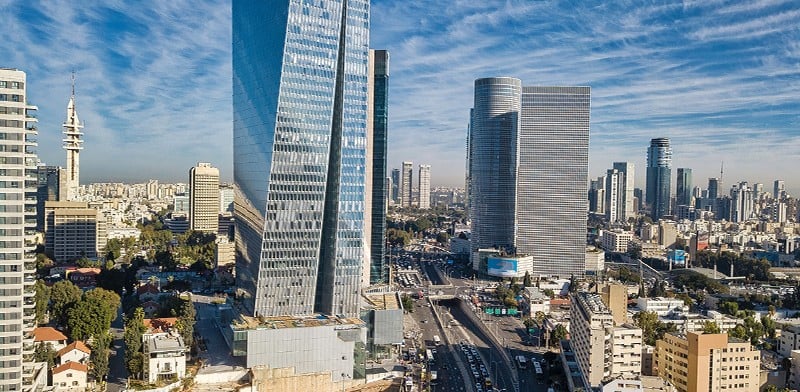
Every dollar America invests in Israel comes back multiplied, in security, in innovation, in technology, in commerce, and in the preservation of the only stable democratic ally America has in the world’s most volatile region.
In an era of resurgent antisemitism, recycled conspiracy theories, and revisionist history cloaked in the language of social justice, a hard-edged, morally unambiguous argument is more necessary than ever. Not the argument from scripture, or from history alone, though both are powerful, but the argument from numbers, from data, from the ledger.
The United States-Israel alliance is not charity, not sentiment, not blind loyalty. It is, by every measurable standard, one of the most productive bilateral partnerships in modern history, delivering returns in defense technology, commercial innovation, cybersecurity, agriculture, medicine, energy, and geopolitical stability that dwarf the cost of American investment.
The people who want to sever this alliance don’t just dislike Israel. They dislike the idea that Jews can be powerful, innovative, and indispensable. They are, in a very real sense, the same people who have always come for us. Let the data be our shield.
A 70-Year Partnership in Numbers
The headline critics always reach for is simple: ‘America has given Israel $300 billion.’ Let’s examine what that number actually means, and what it actually buys.
Since 1951, the United States has provided Israel with approximately $317.9 billion in foreign assistance adjusted for inflation, making Israel the largest cumulative recipient of U.S. foreign aid since World War II. Of this total, approximately 71% has been military assistance ($225.2B inflation-adjusted) and 29% economic aid ($92.7B inflation-adjusted).
The current framework is governed by a 10-year Memorandum of Understanding (MOU) signed in 2016 under the Obama administration: $38 billion over 10 years, or $3.8 billion annually through 2028. This breaks down as $3.3 billion in annual Foreign Military Financing and $500 million for joint missile defense programs.
| U.S. Aid to Israel: Key Data Points | Amount |
| Total U.S. assistance to Israel (inflation-adjusted, 1951–2022) | $317.9 Billion |
| Total U.S. military aid (inflation-adjusted, 1951–2022) | $225.2 Billion |
| Total U.S. economic aid (inflation-adjusted, 1951–2022) | $92.7 Billion |
| Current annual military aid (2016 MOU) | $3.3 Billion/year |
| Current annual missile defense funding | $500 Million/year |
| Total current MOU commitment (2019–2028) | $38 Billion |
| Military aid as % of Israeli defense budget | ~16% |
| Post-Oct. 7 emergency military assistance (Oct. 2023–Sept. 2025) | $21.7 Billion |
Sources: USAFacts, Congressional Research Service, Council on Foreign Relations, Costs of War Project (Brown University)
To put these numbers in perspective, $3.8 billion per year represents less than 0.05% of the U.S. federal budget. For that investment, America receives returns in defense innovation, commercial technology, intelligence, and geopolitical stability that are worth orders of magnitude more.
What ‘Aid’ Actually Means: A Critical Structural Point
Here is what almost no mainstream commentary mentions; the overwhelming majority of U.S. military aid to Israel is legislatively required to be spent on American-made weapons, systems, and equipment. This is not a gift to Israel, it is a subsidized procurement contract for the U.S. defense-industrial base.
According to multiple analyses, approximately 80 percent of U.S. military assistance to Israel flows directly back to American defense contractors, companies like Lockheed Martin, Raytheon, Boeing, Northrop Grumman, and General Dynamics. When the United States funds Israel’s purchase of F-35 fighter jets, Iron Dome interceptors, Apache helicopters, and precision-guided munitions, the vast majority of that money is spent at factories in Fort Worth, Texas; Tucson, Arizona; Mesa, Arizona; Huntsville, Alabama; and St. Louis, Missouri.
Israel is not just America’s ally. Israel is one of America’s most important defense customers, a customer whose procurement helps sustain tens of thousands of high-wage American manufacturing jobs and keeps America’s defense-industrial supply chain warm, funded, and battle-tested.
KEY FACT: Approximately 80% of U.S. military aid to Israel returns directly to American defense companies. Boeing, Raytheon, Lockheed Martin, Northrop Grumman, and General Dynamics are among the primary financial beneficiaries of this assistance.
The Defense Dividend
Israel operates in the most hostile security environment of any U.S. ally. It faces existential threats from Iran and its proxies, Hezbollah, Hamas, the Houthis, as well as state-level adversaries armed with increasingly sophisticated ballistic missiles, cruise missiles, and drone swarms. This environment has created something of incalculable value to the United States; a real-world, live-fire testing environment for the most advanced defense technologies on earth.
American weapons and defense systems that are co-developed with Israel, or tested in Israeli combat operations, are battle-hardened in ways that no simulation can replicate. When Israel uses American-provided F-35 fighter jets in combat over Syria, Iran, and Lebanon, the operational data collected is fed back to the Pentagon and Lockheed Martin. This is priceless intelligence for future U.S. military planning.
As Army Technology noted, ‘Israel was the first country to fly combat operations using Lockheed Martin’s F-35 advanced fighter platform.’ The data from those missions is shared with the U.S. Air Force and has directly improved the F-35 program.
The Missile Defense Revolution: A Joint American-Israeli Achievement
Perhaps no area better illustrates the strategic ROI of the U.S.-Israel partnership than missile defense technology. The multi-layered Israeli air defense architecture, Iron Dome, David’s Sling, Arrow 2, Arrow 3, and now Iron Beam, was built in close collaboration with the United States and represents decades of co-investment that is now directly enhancing U.S. and NATO defense capabilities.
| Defense System | U.S. Role / Investment | Capability / Significance |
| Iron Dome | Raytheon co-produces; $1.6B+ U.S. investment; Tamir interceptors sourced via U.S. supply chain | 90%+ intercept rate; protects vs. short-range rockets/artillery (4–70km); U.S. Army purchased 2 batteries |
| David’s Sling | Raytheon joint development partner; U.S. funded $1.8B in development costs | Counters medium-to-long range rockets, ballistic missiles; Stunner interceptors compatible with U.S. Patriot batteries |
| Arrow 2 / Arrow 3 | Co-developed since 1986 with Boeing; Boeing produces 35% of Arrow components at Huntsville, AL facilities; U.S. signed co-production agreement 2019 | Ballistic missile interceptor; Arrow 3 is exo-atmospheric, can counter hypersonic threats; Germany & Finland now purchasing |
| Iron Beam (NEW) | AI-integrated laser defense; delivered to IDF late 2025 | Cost per intercept: near-zero (laser); counters drones, rockets, mortars; U.S. deploying similar tech concept in ‘Golden Dome’ program |
| SkyHunter (U.S. variant of Iron Dome) | Raytheon developed; manufactured in United States | Deployable by U.S. forces abroad; based on proven Israeli combat technology |
The strategic implications extend beyond Israel. Arrow and David’s Sling interceptors, developed under the U.S.-Israel partnership, are now being sold to Germany, Finland, and other NATO allies, expanding the defense-industrial revenue stream for American contractors and extending the protective umbrella forged in the Middle East to Europe.
In January 2025, President Trump signed an executive order to create ‘an Iron Dome for America,’ a next-generation missile defense shield. That initiative is explicitly modeled on the Israeli architecture and will draw heavily on Israeli technology, expertise, and combat-proven systems. The estimated cost of this program is at least $175 billion, with $25 billion already authorized. The U.S. cannot build this system without Israeli knowledge. This is not a small point. Israel is a mandatory partner in America’s own homeland defense.
In a first-of-its-kind move, Rafael (Israel’s state defense company) and Raytheon opened a joint missile production facility in Arkansas in November 2025, manufacturing Tamir interceptors for the Iron Dome and the U.S. SkyHunter system on American soil, creating American jobs.
Counter-Drone and Counter-UAS Innovation
The drone revolution is reshaping warfare, and Israel is at the forefront of both offensive and defensive drone technology. The two-year multi-front conflict (2023–2025) turned Israel into the most intensively tested counter-UAS laboratory in history, facing thousands of Iranian-designed drones launched by Hezbollah, Hamas, and the Houthis, as well as direct Iranian ballistic missile barrages.
The U.S. Congress recognized this strategic asset. The United States-Israel Defense Partnership Act of 2025 authorizes $150 million annually from 2026 through 2030 for a new joint U.S.-Israel Counter-Unmanned Systems Program, covering joint research, development, testing, and deployment of advanced counter-drone technologies. Additionally, existing counter-UAS cooperation programs were increased from $55 million to $75 million annually.
Israeli counter-drone systems, from SmartShooter’s rifle-mounted SMASH targeting system to Rafael’s Spike FireFly loitering munition, are being rapidly adopted by the U.S. military. The Pentagon’s Joint Interagency Task Force 401, responsible for counter-UAS procurement, is drawing heavily from Israeli experience and technology to protect American forces and domestic infrastructure.
A 9-Million-Person Country That Punches Like a Superpower
Israel has approximately 9.97 million people, slightly less than the state of Michigan. Yet by virtually every measure of innovation intensity, it punches at a weight class reserved for nations ten times its size. Understanding why is essential to understanding the strategic value of the alliance.
| Innovation Metric | Israel’s Global Ranking |
| R&D spending as % of GDP (6.35%) | #1 Globally |
| Engineers and scientists per capita | #1 Globally |
| AI startups per capita | #1 Globally |
| AI startups total | #3 (behind only U.S. and China) |
| Patents per capita | #5 Globally |
| Overall innovation index (WIPO) | Top 15 Globally |
| Venture capital received as % of GDP (historically) | Top 2 Globally |
| Active tech companies per capita | Highest outside Silicon Valley |
| Cybersecurity companies as % of global total | >20% |
| Tech sector contribution to GDP | ~20% |
| Tech sector share of exports | >50% |
Sources: Israel Innovation Authority, WIPO Global Innovation Index, Startup Nation Central, Washington Institute
Israel’s R&D investment as a percentage of GDP, 6.35% in 2023, is not just the highest in the world. It is nearly double that of South Korea (5%), nearly triple that of the United States (3.45%), and more than double the OECD average (2.7%). This is not a small gap. It is a structural commitment to future-forward technology that compounds over time.
As of 2021, Israel had produced 74 tech unicorns, private companies valued at over $1 billion, including 33 in 2021 alone. More than 300 U.S. technology companies have established R&D centers in Israel, including Google, Apple, Microsoft, Intel, IBM, Cisco, PayPal, and Meta. These are not satellite offices. They are core engineering operations where some of the most critical technologies used by billions of Americans are designed.
The Startup-to-Acquisition Pipeline That Feeds American Industry
American companies have acquired over 1,000 Israeli startups since 2013, each acquisition absorbing Israeli intellectual property, engineering talent, and technology directly into the U.S. innovation economy. Consider the landmark deals:
| Acquisition / Exit | Value & Details |
| Wiz → Google (Alphabet), 2025 | $32 Billion — Largest acquisition in Google history; largest in Israeli tech history. Founded by Unit 8200 veterans. Cloud cybersecurity platform now protecting global enterprise infrastructure. |
| Mobileye → Intel, 2017 | $15.3 Billion — Autonomous vehicle technology; Intel’s autonomous driving division now headquartered in Jerusalem. Mobileye’s ADAS technology in tens of millions of vehicles worldwide. |
| Check Point Software Technologies (IPO/ongoing) | ~$18B market cap — Founded by Gil Shwed (Unit 8200 veteran); invented stateful firewall inspection; protects 100,000+ organizations globally. |
| Mellanox → Nvidia, 2020 | $6.9 Billion — High-speed networking chips foundational to data centers and AI infrastructure worldwide. |
| CyberArk (Nasdaq: CYBR) | ~$12B market cap — Privileged access management; protects 50%+ of Fortune 100 companies. |
| SolarEdge (Nasdaq: SEDG) | ~$3B market cap (peak >$20B) — Solar inverters installed on 2M+ American rooftops. |
| Talon (browser security) → Palo Alto Networks, 2024 | $625 Million |
| Dig Security → Palo Alto Networks, 2024 | $350 Million |
| Given Imaging (PillCam) → Medtronic | $860 Million — PillCam capsule endoscopy used in 500,000+ annual procedures in the U.S. |
| Mazor Robotics → Medtronic | $1.65 Billion — Surgical robotics for spinal procedures. |
The Google acquisition of Wiz alone, $32 billion, is larger than the total U.S. foreign aid to Israel in any single decade before 2010, adjusted for inflation. This is what Israeli innovation returns to the American economy: not receipts for weapons, but transformational companies that become global infrastructure.
The Commercial Relationship: Trade, FDI, & Mutual Markets
The U.S.-Israel Free Trade Agreement, signed in 1985, was the first Free Trade Agreement the United States ever negotiated before NAFTA, before deals with Korea or Japan or any other nation. It has been in force for 40 years and has produced one of the most dynamic bilateral trade relationships in the world.
| U.S.-Israel Trade — 2024 Data | Value |
| Total U.S.-Israel goods and services trade | $55.7 Billion |
| U.S. exports of goods and services to Israel | $24.2 Billion |
| U.S. imports of goods and services from Israel | $31.5 Billion |
| U.S. goods exports to Israel (goods only) | $14.8 Billion |
| U.S. goods imports from Israel (goods only) | $22.2 Billion |
| Growth in U.S. exports to Israel since 1985 FTA | +473% |
| Israeli FDI in the United States | $22.4 Billion (2023) |
| U.S. FDI in Israel | $45.9 Billion (2023) |
| Israel’s rank as U.S. trading partner | #25 globally |
Sources: U.S. Trade Representative (USTR), U.S. International Trade Administration, BEA
The top categories of U.S. imports from Israel are highly instructive: computer and electronic products ($7.79B), miscellaneous manufactures ($5.29B), and chemicals ($3.08B). These are not raw commodities, they are high-value, high-margin products, semiconductors, medical devices, advanced software, cybersecurity solutions, and precision agricultural technology. Israel exports value, not volume.
Meanwhile, U.S. exports to Israel include transportation equipment ($2.53B), computers and electronics ($2.65B), and chemicals ($1.55B), demonstrating a deeply integrated technology supply chain flowing in both directions.
The United States is Israel’s single largest trading partner. Israel, in turn, consistently ranks as one of America’s most important mid-size trading relationships, with a per-capita trade volume that rivals relationships with nations ten times its size.
The Tech Sectors: ROI by Industry
Cybersecurity: More than 20% of all cybersecurity companies in the world were founded in Israel. The pipeline is direct: elite military intelligence units, most notably Unit 8200, the Israeli equivalent of the NSA, produce some of the world’s most sophisticated cyber operators, who then found or join cybersecurity companies that protect American critical infrastructure, corporate networks, and government systems.
In 2024, Israeli cybersecurity companies attracted private funding equivalent to 40% of the entire U.S. cyber market, despite Israel representing a fraction of the global economy. The sector comprises over 500 companies, grew by 86% in the past decade, and is now deeply embedded in American enterprise security.
| Israeli Cybersecurity Company / Origin | American Impact |
| Check Point Software (est. 1993) | Invented stateful firewall inspection; protects 100,000+ organizations globally; ~$18B market cap |
| Wiz (est. 2020, acquired by Google 2025) | $32B acquisition; fastest startup in history to $100M ARR; cloud security now embedded in Google’s infrastructure |
| CyberArk (Nasdaq: CYBR) | Protects privileged credentials; 50%+ of Fortune 100 companies; prevents the most damaging corporate breaches |
| Palo Alto Networks (Israeli co-founders) | Processes 1.5 trillion security events weekly for American clients; ~$100B+ market cap |
| SentinelOne (Israeli founders) | AI-powered endpoint protection; NYSE listed; competes with CrowdStrike |
| Akamai (Israeli R&D) | CDN and web security infrastructure for a large portion of the global internet |
| Cybereason (Israeli founders) | Threat detection and response platform for enterprise security |
| Armis Security | IoT/OT asset security; valued at $1.65B; protects industrial and medical networks |
| BigID | Data intelligence and privacy; used by major U.S. enterprises to manage data risk |
| Snyk (Israeli-founded) | Developer security; secures software supply chains for global tech companies |
The NSA and Department of Homeland Security actively rely on Israeli cybersecurity expertise. This is not an accident of history, it is a deliberate strategic relationship that began with the unit of young Israelis who served in signals intelligence and emerged with skills that the private sector could not match.
Medical Technology: Israeli Devices in Every American Hospital
Israeli medical devices treat over 100 million Americans annually. This is not a metaphor. The technologies are embedded in American hospitals, clinics, and homes, often without the patients or providers knowing their origin.
| Israeli Medical Innovation | American Clinical Impact |
| PillCam (Given Imaging → Medtronic) | 500,000+ procedures annually in the U.S.; non-invasive GI diagnosis; replaced risky surgical scoping |
| Medigus Ultrasonic Scalpel | Revolutionary minimally invasive surgical technology |
| Zebra Medical Vision / Nanox AI | AI radiology analysis in 1,000+ American hospitals; catches tumors, fractures, and cardiovascular disease earlier |
| ReWalk Robotics | FDA-approved exoskeletons helping paralyzed veterans walk again; used in VA hospitals nationwide |
| Mazor Robotics (→ Medtronic, $1.65B) | Surgical robotics for spinal surgeries; improved precision and reduced complication rates |
| Watchman Device (Israeli engineers) | Prevents stroke-causing blood clots for atrial fibrillation patients; used in hundreds of thousands of Americans |
| Aidoc AI Platform | $110M funding round in 2025; AI-driven radiology triage deployed in hundreds of U.S. hospitals |
| CollPlant | Plant-based human collagen for regenerative medicine and 3D bioprinting of tissues |
Israel’s biotechnology and pharmaceutical sector accounts for over half of the country’s scientific publications and has produced breakthrough treatments across cancer, cardiovascular disease, neurology, and rare diseases. Compaq Health (cardiovascular), Oramed (oral insulin), and dozens of other companies are in advanced clinical trials whose results will directly benefit American patients.
Agricultural Technology: Feeding America with Israeli Science
Israel developed drip irrigation technology, one of the most transformative agricultural innovations in human history, in the 1960s under the most water-stressed conditions imaginable. Today, Israeli agricultural technology is deployed across California’s Central Valley, the American Southwest, and in farming operations in 110+ countries.
| Israeli AgTech Innovation | American / Global Impact |
| Drip Irrigation (Netafim) | 70% less water than traditional irrigation; 30–150% yield improvement; deployed across California’s Central Valley, producing 1/3 of U.S. vegetables |
| Precision Agriculture (CropX, Taranis) | Real-time soil and crop monitoring; AI-driven irrigation decisions; reduces input costs and water waste on American farms |
| Cherry Tomato Development | Israel developed the modern cherry tomato variety now generating hundreds of millions in annual U.S. retail sales |
| SolarEdge Precision Energy | Installed on 2M+ American rooftops; manages solar energy conversion across U.S. residential and commercial properties |
| Desalination Technology | Israel recycles 90% of its wastewater; developed advanced desalination systems now licensed globally; California exploring adoption to address drought |
| Aleph Farms / Redefine Meat | Cultivated meat and plant-based alternatives; Israeli companies leading sustainable protein transition |
Source: Washington Institute, AIPAC, Allyvia.org, Israeli Ministry of Agriculture
Israel-invented drip irrigation technology uses 70% less water and can increase crop yields by up to 150% compared to traditional irrigation. In a United States where the Colorado River is drying up, where California faces existential drought, and where agricultural water rights are one of the most politically volatile resource conflicts in the American West, Israeli technology is not an abstraction, it is a survival tool.
Autonomous Vehicles and Transportation: Mobileye and the Future of Mobility
Intel’s 2017 acquisition of Jerusalem-based Mobileye for $15.3 billion was, at the time, the largest acquisition of an Israeli technology company in history, and one of the largest deals ever in the autonomous vehicle sector. Mobileye, founded by Prof. Amnon Shashua, had developed the leading computer vision and machine learning technology for advanced driver assistance systems (ADAS), and its technology was already installed in approximately 15.7 million vehicles across 21 OEM partnerships at the time of the deal.
Intel estimated the autonomous vehicle market opportunity at up to $70 billion by 2030. Mobileye went public again in 2022 at an estimated $50 billion valuation, having grown from its $15.3B acquisition price into a standalone public company that continues to set the pace of autonomous driving technology globally.
Israel’s automotive technology ecosystem extends well beyond Mobileye. Companies like Valens Semiconductor (high-speed automotive connectivity), Foretellix (autonomous vehicle testing), Innoviz Technologies (LiDAR systems), and Arbe Robotics (4D imaging radar) are embedded in the supply chains of the world’s largest automakers.
Israel vs. Other U.S. Alliances
Critics who object to U.S. support for Israel rarely present a coherent alternative framework. They do not argue that America’s $4+ billion annual aid to Egypt, much of it military, is more productively spent. They do not question the hundreds of billions sent to Afghanistan, or the annual military subsidies to Saudi Arabia, a non-democracy with no technology export economy and a long history of funding the very extremism America fights.
| Country / Comparison Point | Israel | Egypt / Saudi Arabia / Afghanistan |
| Form of Government | Parliamentary Democracy | Authoritarian (Egypt/Saudi); Failed State (Afghanistan) |
| R&D Investment (% of GDP) | 6.35% — #1 globally | Egypt: <1%; Saudi Arabia: ~0.5% |
| Technology Exports | >50% of total exports | Primarily oil and commodities |
| Cybersecurity Ecosystem | 500+ companies; 20%+ global market | Negligible tech export economies |
| U.S. Tech Company R&D Centers | 300+ (Apple, Google, Intel, Microsoft, etc.) | Near zero |
| Joint Defense Innovation | Iron Dome, Arrow, David’s Sling, counter-UAS | Primarily weapons purchases with no co-development |
| Bilateral Trade (with U.S.) | $55.7B (2024) | Saudi Arabia: ~$40B mostly oil; Egypt: ~$10B |
| Startup Ecosystem / Unicorns | 74 unicorns; 16,000+ tech companies | Minimal |
| Human Rights / Press Freedom | Full democratic freedoms | Severely restricted |
| U.S. Intelligence Value | Highest-grade SIGINT partner | Limited |
| Academic / Scientific Output | Weizmann, Technion — top 50 globally | Minimal global academic standing |
The contrast is not close. The United States has invested more money in Egypt since 1979 than in many comparable periods with Israel, with essentially zero return in innovation, technology, or strategic co-development. The Camp David framework that generates Egypt’s aid package has value, but that value is primarily that Egypt does not attack Israel. The U.S. is paying Egypt not to be Israel’s enemy. That is a cost created by Israel’s enemies, not by Israel.
America’s relationship with Israel, by contrast, is self-reinforcing: the more we invest, the more technology, intelligence, and security capability both nations develop together. No other U.S. bilateral partnership in the Middle East or Africa comes remotely close to generating this kind of compounding strategic return.
America’s relationship with Israel, by contrast, is self-reinforcing: the more we invest, the more technology, intelligence, and security capability both nations develop together. No other U.S. bilateral partnership in the Middle East or Africa comes remotely close to generating this kind of compounding strategic return.
The Middle East Anchor
The United States does not have a single stable, democratic, technologically advanced, English-speaking, fully integrated military ally anywhere between Greece and India. Israel is that ally. It is the only country in the region that shares American values regarding rule of law, democratic governance, women’s rights, press freedom, and minority protections.
Since 1972, the United States has used its United Nations Security Council veto 42 times to protect Israel from one-sided resolutions, not because of sentimentality, but because a destabilized Israel means a destabilized Middle East, which means disrupted oil flows, expanded Iranian influence, and direct threats to American interests and personnel across the region.
The Abraham Accords, normalization agreements between Israel, the UAE, Bahrain, Morocco, and Sudan, represent a tectonic shift in Middle Eastern geopolitics that would have been impossible without Israel’s strength and American backing. These agreements are already generating economic cooperation across agriculture, technology, and renewable energy between Israel and Gulf states, with the United States as the ultimate beneficiary of a more integrated, pro-Western, economically collaborative Middle East.
The Intelligence Partnership: America’s Eyes in the Middle East
Israel shares intelligence with the United States at a level unmatched by any other non-Five Eyes ally — and arguably rivals some Five Eyes partners in areas specific to the Middle East and cyber threats. Israeli intelligence operations against Iran’s nuclear program, Hezbollah’s weapons procurement networks, and state-sponsored cyberattacks have provided direct, actionable intelligence that has protected American lives and interests.
This intelligence relationship is not one-directional. It is a genuine bilateral partnership in which both nations contribute capabilities the other lacks. The U.S. provides satellite intelligence and global reach; Israel provides human intelligence, cyber capabilities, and unmatched knowledge of Arab and Persian threat actors. The value of this partnership, impossible to fully quantify, is worth billions annually in the avoided cost of American military operations.
A New Strategic Partnership Launched in 2026
On January 16, 2026, the United States and Israel launched a new ‘Strategic Partnership on Artificial Intelligence, Research, and Critical Technologies,’ officially formalizing what has been an organic but increasingly structured collaboration in AI, quantum computing, semiconductors, and defense innovation. The partnership, called Pax Silica and spearheaded by former Senior Advisor to the CEO at Palantir and current Under Secretary of State for Economic Affairs, Jake Helberg, is designed to secure critical technology frontiers and create the next generation of scientific advancement.
This is not a minor diplomatic communiqué. It is a formal framework for the world’s two most innovation-intensive democracies to pool their capabilities at the exact moment when AI and quantum computing are about to reshape the global power balance.
| Future Collaboration Domain | Current Status & 2026–2030 Trajectory |
| Artificial Intelligence (Defense) | Israel is #1 globally in AI startups per capita; U.S.-Israel joint AI defense programs expanding; Israel’s IDF integrating AI into Iron Beam, intelligence analysis, and battlefield decision-making |
| Counter-UAS / Anti-Drone Systems | $150M/year authorized by U.S. Congress (2026–2030) for joint R&D; Israeli combat experience from 2023–2025 wars being systematized into U.S. military doctrine |
| AI-Powered Missile Defense (‘Golden Dome’) | $175B+ U.S. program explicitly modeled on Israeli multi-layer architecture; Raytheon-Rafael joint production in Arkansas; Israeli technology foundational |
| Quantum Computing | Israel Innovation Authority leading quantum initiatives; partnerships with U.S. national labs; potential applications in cryptography, drug discovery, and materials science |
| Space & Satellite Technology | Israel Space Agency partner since 1985; Israeli satellites provide intelligence and communications; growing bilateral cooperation on dual-use space technology |
| Healthcare AI & Precision Medicine | Israeli health data (one of world’s most comprehensive per-capita datasets) being leveraged for AI training; companies like Aidoc, Viz.ai deploying in U.S. hospitals |
| Clean Energy & Climate Technology | Israel’s 350+ cleantech companies; advanced solar, desalination, and water tech increasingly relevant to U.S. climate adaptation; SolarEdge, Watergen, others expanding U.S. presence |
| Semiconductor / Chip Development | Intel Israel developed the 8088 processor (first PC’s ‘brain’), MMX, and Centrino; continues advanced chip R&D; Israeli firms Valens, Habana Labs (Intel), and others in advanced semiconductor ecosystems |
The Iron Beam and the Laser Defense Revolution
In late 2025, Israel delivered the first operational Iron Beam high-energy laser defense system to the IDF, a moment as significant as Iron Dome’s first operational deployment in 2011. Iron Beam uses directed laser energy to intercept drones, rockets, and mortars at a cost per shot that approaches near-zero, compared to tens of thousands of dollars per kinetic interceptor.
The implications for American defense strategy are profound. The United States is facing the same drone proliferation problem Israel has faced: cheap, mass-produced Iranian, Russian, and Chinese drones that can overwhelm expensive missile defense systems through sheer volume. Israel’s Iron Beam is the solution, and it was built with American investment and will be co-produced through American-Israeli partnerships.
In October 2024, Rafael and Elbit Systems signed a $536 million deal to expand Iron Beam production. A joint Rafael-Raytheon facility opened in Arkansas in November 2025 to produce related interceptors. This is not just technology transfer, it is technology co-creation that puts the next generation of American defense capability in the hands of U.S. contractors and warfighters.
The Moral Argument. Grounded in Numbers
The data in this article tells a story that goes beyond bilateral accounting. It tells the story of what a small, embattled, predominantly Jewish democracy accomplished when given the tools to defend itself and the freedom to innovate. Israel did not become the world’s most R&D-intensive nation because of foreign aid, it became that nation because of who Israelis are; educated, driven, shaped by necessity, and committed to building something that lasts.
The antisemitic tropes making a comeback in 2025 and 2026, that Jewish influence is disproportionate, that Israel is a burden, that American support for Israel reflects corruption rather than strategy, collapse on contact with the data. The United States supports Israel because Israel is worth supporting. Because the return on that investment, in every measurable domain, is positive, substantial, and compounding.
There is a final argument that no spreadsheet can fully capture, but that context demands we state plainly; the United States is the only major power in history to have supported a Jewish state. The only power to have consistently opposed the extermination of the Jewish people as a matter of policy. The continued strength of that commitment is not just strategic, it is a statement about what kind of civilization America intends to be.
When you invest in Israel, you are not just investing in a geopolitical asset or an innovation economy. You are investing in the proposition that the Jewish people have the right to defend themselves, to build, to innovate, and to exist in sovereignty. That proposition, tested constantly, contested relentlessly, is worth defending. And as this article has demonstrated, the balance sheet supports it entirely.
A strong Israel is not just good for Jews. It is good for America. It is good for the free world. The data says so, clearly, unambiguously, and without apology.