Author, Educator and Father - Brother to All
The Call Home – Show Up
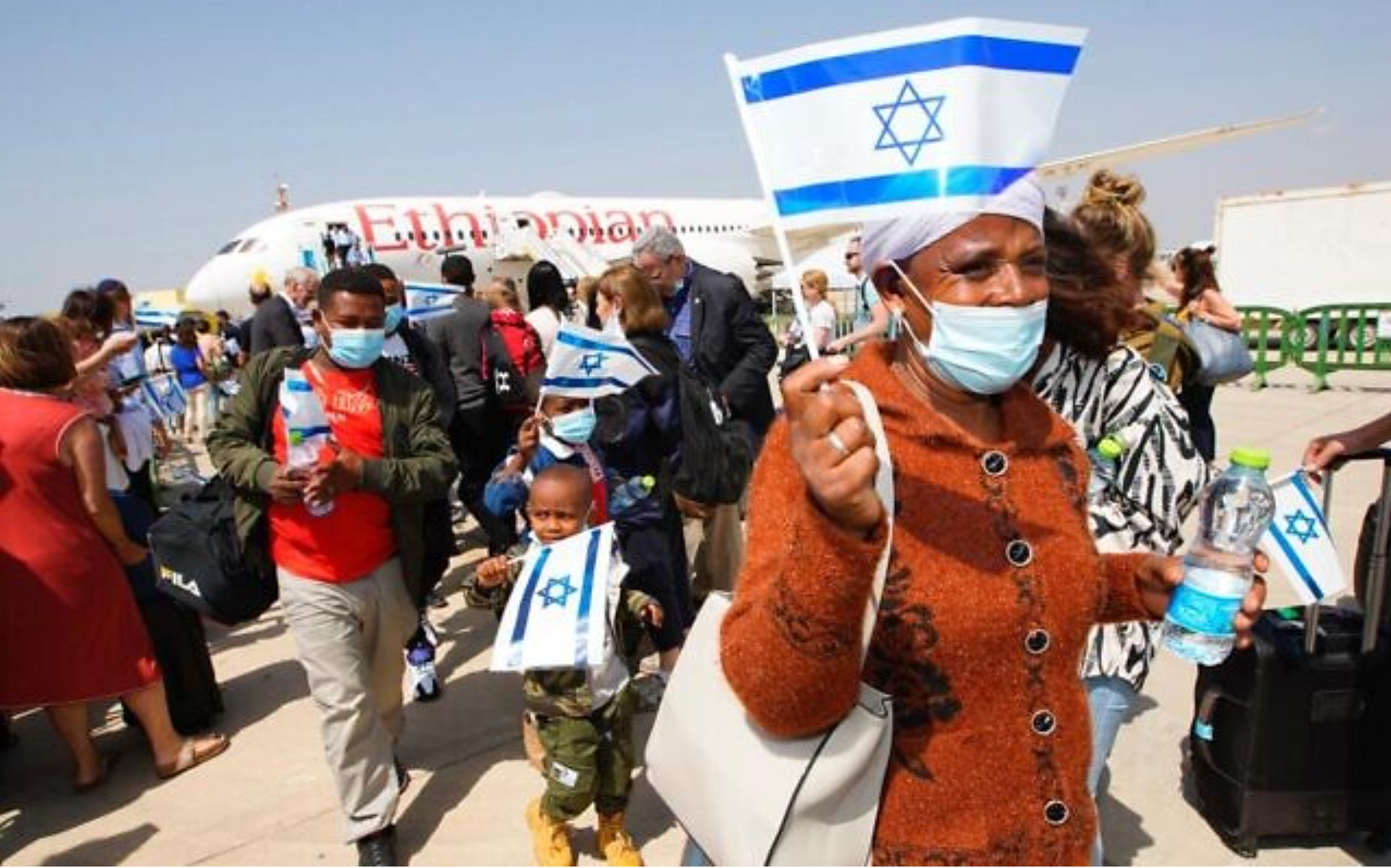
New immigrants from Ethiopia land at Ben Gurion Airport on June 1, 2022. (Maxim Dinshtein)
Some loves are maintained by messages. Others require a chair pulled up to the table. Israel can receive both. It cannot confuse them. A people that has spent centuries sending its heart eastward while its body remained elsewhere knows the difference between affection and presence. Affection is real. Presence changes the room.
Rabbi Efrem Goldberg offered the family comparison that refuses to stay theoretical. “Think of Israel as a parent. When they can’t travel to you, you don’t save up to go on vacation elsewhere and neglect seeing them. You aren’t satisfied checking in on them occasionally from afar. You make it a priority to show up whenever you can, to be present, to connect and experience what it means to be together and spend time. Your focus is fixated on their well-being, you remain eager to hear and learn how they are, you visit as often as possible and even though there are legitimate reasons to be apart, you can’t wait to next be together.” The paragraph is almost domestic. That is its strength. Parents are not a cause. They are a relationship with a face. Distance can be explained. Distance that never aches is something else.
The psalm raised the same loyalty into the body’s own speech. “May my tongue cleave to my palette if I do not remember you, if I do not raise Jerusalem above my highest joy!” Joy is not forbidden. It is ranked. A career milestone, a child’s recital, a quiet Friday at a table far from the hills — all of that may be good. The verse asks whether Jerusalem still sits above those goods when the ranking is honest. Aliyah is one way of making the ranking visible. So is a life that plans the next arrival before the last suitcase is unpacked.
Theodor Herzl knew that leaving one home for another is never only ideology. “There are old customs, old memories that attach us to our homes. We have cradles, we have graves, and we alone know how Jewish hearts cling to the graves. Our cradles we shall carry with us—they hold our future, rosy and smiling. Our beloved graves we must abandon—and I think this abandonment will cost us more than any other sacrifice. But it must be so.” He does not sneer at attachment. He names the cost and then names the cradles. The future travels. The decision is not a rejection of memory. It is a choice about where the next generation’s memory will be planted.
Prime Minister Ariel Sharon, speaking of the Land itself, refused the idea of a generic countryside. “Every inch of land, every hill and valley, every stream and rock, is saturated with Jewish history, replete with memories.” A parent is not interchangeable. Neither is this map. The hills are not scenery purchased with a tour bus. They are a family album written in stone and water. Showing up means walking ground that already knows your names.
None of this scolds the child who cannot yet move. Rabbi Goldberg left room for legitimate reasons to be apart. Aging parents in the other direction, work that has not yet become portable, a child in the middle of a hard year, those are reasons, not excuses. The standard he set is simpler and stricter: do not become satisfied with checking in. Do not let the vacation instinct replace the visit. Do not talk as if love were a newsletter.
I have watched families treat a week in Jerusalem as proof that the relationship is in order. A week can be holy. A parent still notices who lives nearby when the ordinary Tuesdays arrive. The well-being of Israel is not an abstraction measured only in headlines. It is schools, clinics, harvests, and the unglamorous work of neighbors. Eagerness to hear how they are is a habit. Aliyah is that habit taking a lease.
Herzl’s cradles are the argument against paralysis. The future is light enough to carry. The psalm’s tongue is the argument against a joy that never looks east. Prime Minister Sharon’s inches of land are the argument against treating the country as a symbol that can be loved without being stood upon. Rabbi Goldberg’s parent is the argument that visits are not a hobby.
Show up, then, in the ways that are possible this year, and keep the next way on the list. Raise Jerusalem above the highest joy without despising joy. Carry the cradles. Walk a hill that is already full of memory. The call home is not a guilt sermon. It is the old family fact: some relationships are kept by presence, and this is one of them.
Related Topics
Related Posts