
The Cartographer: Power, Precision and the New Middle East
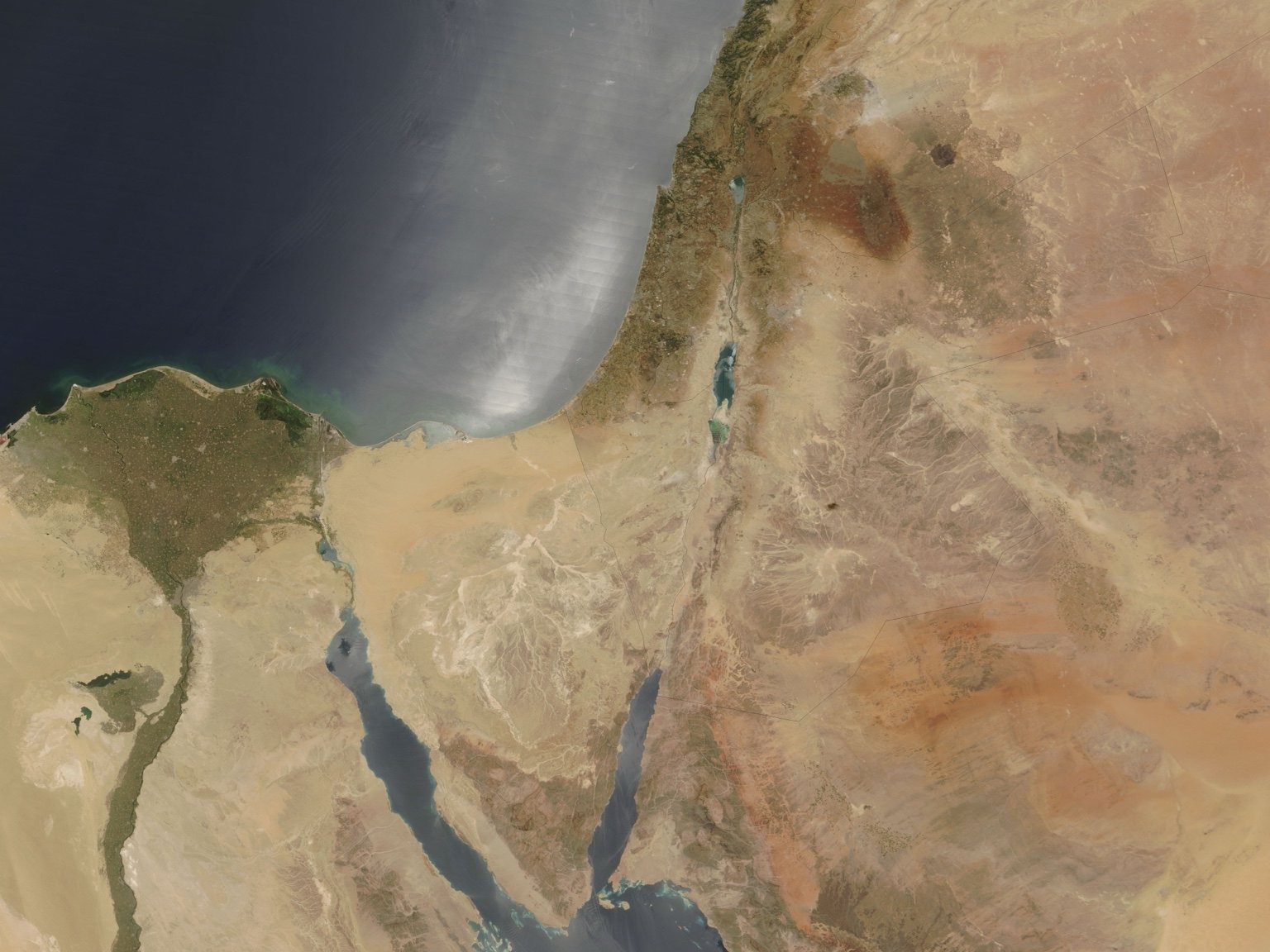
The Cartographer
Long before satellites and drones, when empires rose on will and ambition, cartographers wielded kingly power. Their maps, etched by candlelight on smoky vellum, charted unknown seas and untrodden lands. Each stroke an imperial claim, a silent warning. These unseen architects shaped history. Destiny obeyed their hand.
In modern-day Jerusalem, far from the ink-stained desks of old, a lone cartographer bends history to his will. Not a sovereign by blood, he is chosen and re-chosen by a restive democracy. His authority forged not by coronation, but consequence.
He paces the dark-paneled room, thick with the scent of whisky and smoke. Late, always late. A glass of single malt in his hand, its amber depths flickering with firelight. He sets it carefully on the edge of the map: of conflict zones, of rogue states, of shifting lines. The city slumbers beneath him as he redraws its fate.
In the quiet hours, the Cartographer wrestles with the weight of responsibility. Detached by necessity, yet tethered to the cost of his own design. The room hums with charged silence—decisions made, debts unpaid. His eyes, steeled by history and sharpened by will, trace not just territory, but power. Every mark a wager. Every omission, a wound.
Where quills once charted the unclaimed, drones now hum overhead. Parchments have been replaced by encrypted signals and shadow networks. Yet the essence endures: the power to define, to command, to conjure the future. The Cartographer bridges centuries, deploying ancient lessons on digital frontiers.
Tracing the Map
To grasp today’s complex map, one must first trace the century-old strokes that shaped it. Many of the Middle East’s modern borders were dictated by imperial architects, notably through the Sykes-Picot Agreement. Straight lines sliced through history, kinship, and faith. Lebanon, Syria, and beyond were summoned from dust. Arbitrary constructs destined to bleed. The ghosts of these mandates haunt every regional fracture to this day.
Beneath these imposed boundaries burns a fierce, unyielding claim. Judea remains the eternal heart of a people whose roots run deeper than any map or mandate. Though the state’s modern borders have narrowed from those once promised, its soul remains irrevocably bound to this ancient land.
The Abraham Accords carved new routes through old terrain, rivers cut into stone, mirrored in the skies above. Yet the next map already stirs beneath the surface. Saudi Arabia’s cautious but unmistakable opening looms like a desert mirage, just out of reach but moving closer. It is the Cartographer’s quiet obsession. A vision where pragmatic alliances overtake hollow gestures and history accelerates once more.
Battlefields
The October breach threatened to erase every mark he had drawn. A rupture so deep it redrew the map in blood and fire. For a moment, the Cartographer’s hand faltered. History demanded a price he could not refuse. And so, as sirens wailed and borders burned, he returned to the task. Quietly. Precisely. Without mercy.
Exploding pagers signaled the surgical dismantling of Hezbollah’s shadowy empire; swift, brutal, unstoppable. Syria’s forces crumbled in the distance as he watched from his chair, unmoved, before severing the sinews of hostile power: missile factories, supply lines, command posts.
Still larger looms the shadow over Tehran. Its nuclear sites disrupted, missile systems blunted, its reach quietly constrained. Decades of vigilance and restraint echo through the Cartographer’s every move. The pressure is no longer theoretical. It is measured. Relentless. Closing in.
The redrawings from Jerusalem ripple far beyond the desert sands. Washington, Brussels, and Moscow recalibrate in real time. The Cartographer’s vision shapes not only a region, but the scaffolding of global power.
Veins of Commerce
Beyond armies and headlines, the Cartographer guides the veins of commerce—his reach coursing through ports and passages, both ancient and new, where loyalty follows logistics. Sometimes diplomacy clears the path. Sometimes commerce drags politics behind it, one shipment at a time. The Cartographer knows both are instruments. He wields them interchangeably.
The Abraham Accords charted diplomacy’s course. The India–Saudi Arabia–Israel corridor now lays the trade lines that follow—not always in order—from the Negev’s solar fields to Haifa’s cranes, to Gulf gateways and Indian ports. Bypassing chokepoints, reorienting supply chains, it opens strategic arteries for energy, infrastructure, and quiet leverage.
In East Africa, Israeli water technology and security expertise reshape partnerships on the ground, turning scarcity into stability, stability into trust. In Central Asia, the Caucasus, and the Americas, subtle threads of innovation, defense, and diplomacy weave a mesh of quiet influence. Trade becomes covenant.
At the heart of this expansion lies a truth seldom spoken aloud: sovereignty transcends territory. It is command over motion of goods, alliances and consequence.
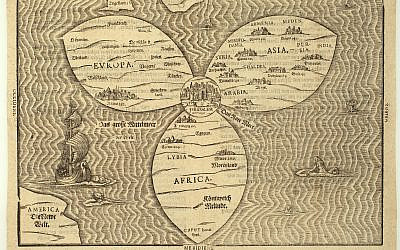
Heinrich Bunting’s Clover Leaf Map (1581) with Jerusalem at the center. Public domain via Wikimedia Commons.
Jerusalem Recentered
In the Middle Ages, maps such as the Bunting Clover Leaf framed the world through faith’s lens—placing Jerusalem at the spiritual and political heart of the known world. This was no mere geography; it was a declaration of cosmic order.
Today, the Cartographer commands from Jerusalem once more. Like Bunting’s map, his vision places the city at the crossroads of legacy and emergence—where an old world yields to a new Middle East.
He embodies the restless appetite of sovereignty and the inevitability of history. Surrounded by maps both ancient and encrypted, he charts a course through the fate of peoples and the currents of power—knowing each decision carries weight.
The world may watch the surface skirmishes. He sees past them. Beneath the noise, beyond distraction, he moves in patterns that will define generations.
The Cartographer does not dream. He remembers.
And as dawn breaks over Jerusalem, the glass remains untouched. Not abandoned, but waiting. The map is still unfolding.