Solicitor & foreign policy adviser
Featured Post
The case for a permanent US base in Israel
As Gulf allies grow hesitant and transactional, Washington should recognize the strategic reality that Israel is already its most reliable regional military partner
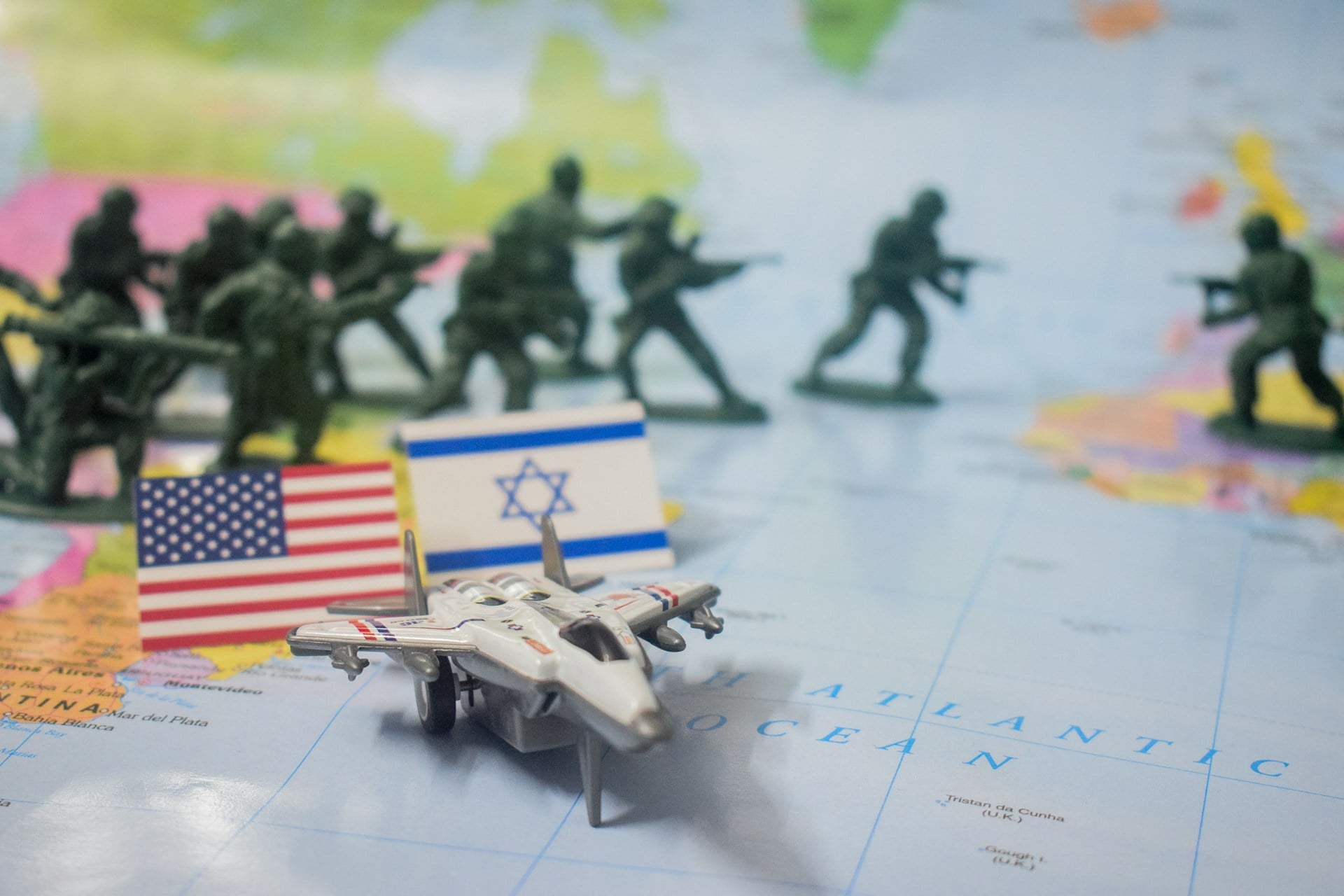
Photo by Saifee Art (Unsplash)
Reports now circulating in the International circuit and picked up by Israeli press suggest that Washington is considering a long-term military presence in Israel following the joint US–Israeli campaign against Iran. Israel Hayom has written that American officials are weighing whether to leave a significant force in place rather than rely exclusively on the old network of Gulf bases. Previous reporting, including from Channel 12, had described discussions about relocating parts of the US regional posture from increasingly constrained Arab hosts to Israeli territory, further validating leaked information. Whether the proposal matures into policy and the timing thereof remains uncertain to date. The strategic logic behind it, however, is sound.
A permanent US base in Israel would be a prudent development and one that deserves support. It would not mark a revolution in American strategy. It would formalize an existing reality. Israel is already Washington’s most dependable military partner in the region. The United States already depends on Israeli intelligence, Israeli missile defence integration, and Israeli operational coordination. The question is not whether the alliance exists. It does. But it should finally be organized with the clarity that present conditions require.
For decades, American power in the Middle East rested on a Gulf architecture built around Saudi Arabia, Qatar, Bahrain, and Kuwait. That arrangement reflected the strategic assumptions of another era. It assumed that energy security required permanent deference to Gulf monarchies and that American freedom of action could be preserved through transactional understandings with regimes whose priorities were often temporary and narrow.
That order is weakening. Gulf states increasingly hedge between Washington, Beijing, and Moscow. They seek American protection while limiting American freedom of manoeuvre. They are often reluctant to permit operations that may expose them to Iranian retaliation or domestic political costs. Saudi Arabia reportedly refused US use of Prince Sultan Air Base and its airspace for a Hormuz operation, according to a CNBC revelation citing Saudi sources. Access becomes negotiable precisely when strategic clarity is required.
Israel presents the opposite case. It is politically stable, militarily capable, and strategically aligned with the United States in a way no Gulf monarchy can replicate. Its armed forces are fully interoperable with American systems. Its leadership does not impose artificial restrictions on common defence. During recent operations against Iranian assets, US personnel reportedly worked directly from Israeli command infrastructure. That is not an experiment. It is evidence of an alliance already functioning at a level that makes formal basing the natural next step.
There is already an American military presence in Israel, but it is limited in scope and different in purpose. Since 2017, the United States has operated what was described as its first permanent installation on Israeli soil: a small air-defence and missile-warning facility inside the Israeli Air Force’s Mashabim base in the Negev. It is a base within a base, tied to the X-Band radar and broader missile-defence architecture designed to detect and track ballistic launches from Iran. It houses only a few dozen, later roughly one hundred, US personnel. Its function is defensive, technical, and narrow. It is not a major power-projection platform. Even at the time, US European Command (EUCOM) was careful to describe it less as a new American base than as a living and operational facility inside an existing Israeli installation. Temporary US deployments already expanded in Israel in early 2026, including reported deployment of F-22s to Ovda Airbase, described as the first deployment of offensive US weaponry there.
What is now being discussed is something far larger. The proposal is not simply to maintain radar crews or missile-defence officers, but to leave a significant standing US force in Israel and potentially shift assets now dependent on Gulf basing arrangements. That could mean combat aircraft, command elements, logistics infrastructure, and the kind of operational permanence associated with major American regional hubs. The difference is the difference between a symbolic foothold and a strategic anchor. One supports cooperation. The other reshapes the regional map of American power.
The strongest argument is deterrence. Iran and its proxies respect capability, not rhetoric. A permanent American presence on Israeli soil would change the regional balance because it would make any major attack on Israel an immediate challenge to US forces themselves. It would reduce the temptation for calibrated aggression by removing ambiguity about the American threshold for response.
Such a posture would also reassure allies. Jordan, Egypt, and the Abraham Accords states all benefit from a stable order underwritten by credible US power. A visible and enduring American commitment would reduce the impression of retreat that has encouraged opportunism across the region. It would also place greater constraints on the remains of Hezbollah, the Houthis, and other Iranian instruments whose strategy depends on the belief that escalation can be managed without decisive Western consequences.
Critics argue that a permanent base would inflame Arab opinion. That objection is outdated. The United States is already the principal guarantor of Israeli security and every serious regional actor knows it. Symbolic ambiguity convinces no one. Strategic coherence matters more than diplomatic theatre.
Others warn of entrapment. The opposite is often true. Clear commitments prevent wars more effectively than vague promises. Forward deployment raises the cost of miscalculation. It reduces the chance that adversaries will test limits in the belief that Washington may hesitate.
A permanent US base in Israel would be an adjustment to strategic fact. As Iranian power projection is curtailed, Red Sea insecurity dealt with, and Gulf basing becomes less reliable, the United States needs an anchor that is durable rather than convenient. That anchor is Israel. The map has already been drawn; American strategy should finally reflect it.
Related Topics
Related Posts