
A Foreign Correspondent in Tel Aviv
The Case of Somaliland—and Ankara’s Predictable Outrage
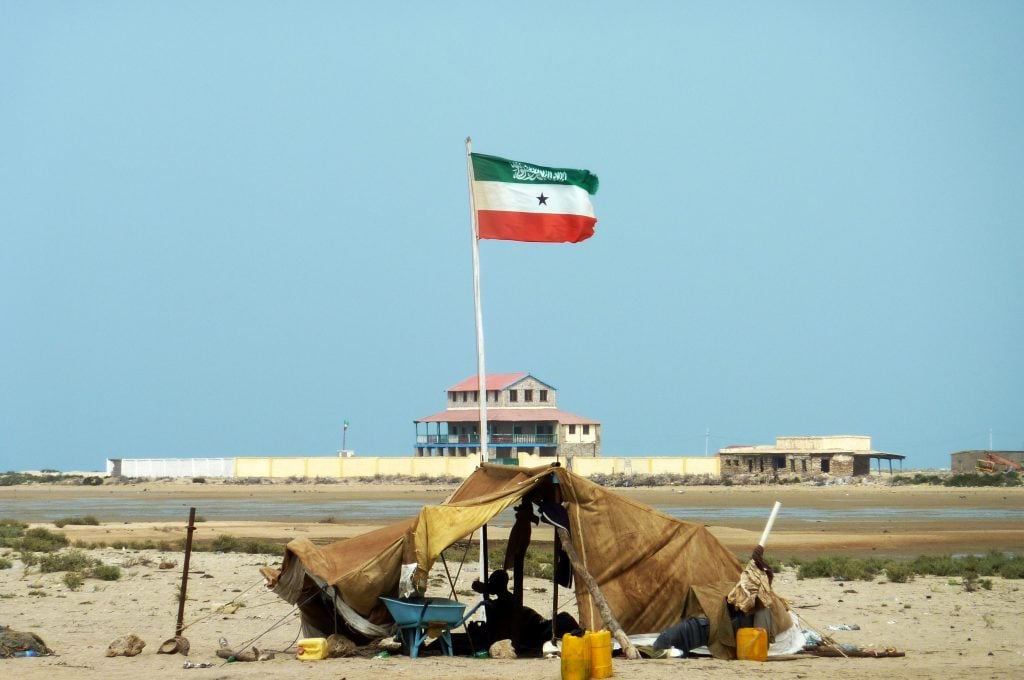
Israel’s decision to recognize Somaliland’s independence is not symbolic. It is a calculated geopolitical move with implications that extend far beyond bilateral relations, reshaping dynamics in the Horn of Africa and along critical maritime corridors.
Somaliland, a former British protectorate, declared independence on June 26, 1960, and was recognized by several countries. Five days later, Italian Somalia gained independence, and the two merged to form the modern Somali state. Following the collapse of Somalia into civil war and the fall of Siad Barre’s regime in 1991, Somaliland reasserted its separation, arguing that it had entered the union voluntarily and as an equal constituent state.
At the core of its claim lies the principle of uti possidetis juris, under which newly independent states retain their colonial-era borders. Somaliland maintains that it achieved independence first, was internationally recognized, and later withdrew from the union—making its claim, in its view, restorative rather than revisionist.
Despite this argument, Somaliland remained unrecognized for more than three decades. Israel’s move therefore marks a significant departure from established international practice.
The reactions—from Somalia and especially Turkey—are telling. Ankara has long positioned itself as a key external backer of Somalia’s federal government, investing heavily in political, military, and economic influence as part of a broader effort to expand its footprint in the Horn of Africa. Similar ambitions have played out in neighboring Djibouti, though with more limited success.
Djibouti has pursued a different strategy, hosting military and security presences from multiple global powers—including the United States, China, France, Japan, and Italy—reflecting its control over access to the Bab el-Mandeb strait. The presence of China’s first overseas military base alongside Western installations underscores Djibouti’s role as a geopolitical landlord rather than a proxy.
Somaliland, by contrast, has cultivated close ties with the United Arab Emirates. Emirati investment—particularly in the port of Berbera—has elevated Somaliland’s strategic importance and aligns with broader opposition to political Islam and to the agendas advanced by Turkey and Qatar. Israel’s recognition is widely understood to have occurred with Abu Dhabi’s backing.
Geography explains much of the calculus. Berbera lies near the Gulf of Aden, adjacent to one of the world’s most vital maritime routes linking the Indian Ocean to the Suez Canal. For Israel, access to this area carries economic significance, but more importantly security value, particularly given developments across the water in Yemen, where the Houthis—alongside Al-Shabaab-linked networks—operate within Iran’s regional orbit.
Israel is likely to face diplomatic resistance within the African Union, where Turkey, Iran, and Qatar maintain influence. From Jerusalem’s perspective, however, these costs may be outweighed by the risks posed by an increasingly unstable Horn of Africa and Red Sea corridor.
The recognition may also have ripple effects. Diplomatic sources suggest Ethiopia could be the first to follow, particularly in light of its recent agreement securing access to a maritime corridor. In the case of an unrecognized entity, a second recognition is qualitatively different from the first: it introduces momentum, transforming an isolated act into the early stages of a broader shift.
Whether Israel’s decision marks the beginning of such a shift—or remains a singular but consequential exception—remains to be seen.
Related Topics
Related Posts