The City My Father Lost — Part II
III. The Synagogue My Grandfather Knew
“A synagogue is not a building. It is a room in which a community agrees, weekly, to be addressed.”
On the third morning I walked from Marchettigasse to Stumpergasse, which takes about eight minutes, and which my grandfather did on foot every Shabbat for thirty-four years.
I did it slowly, on purpose. This is the one piece of the trip I would defend to a sceptic on methodological grounds: you cannot understand a family’s religious life from a map. You must know whether the walk was long enough to argue on. It was. Eight minutes is enough for a man to correct his son’s Hebrew, or to say nothing at all, which in my family has always been the more common liturgy.
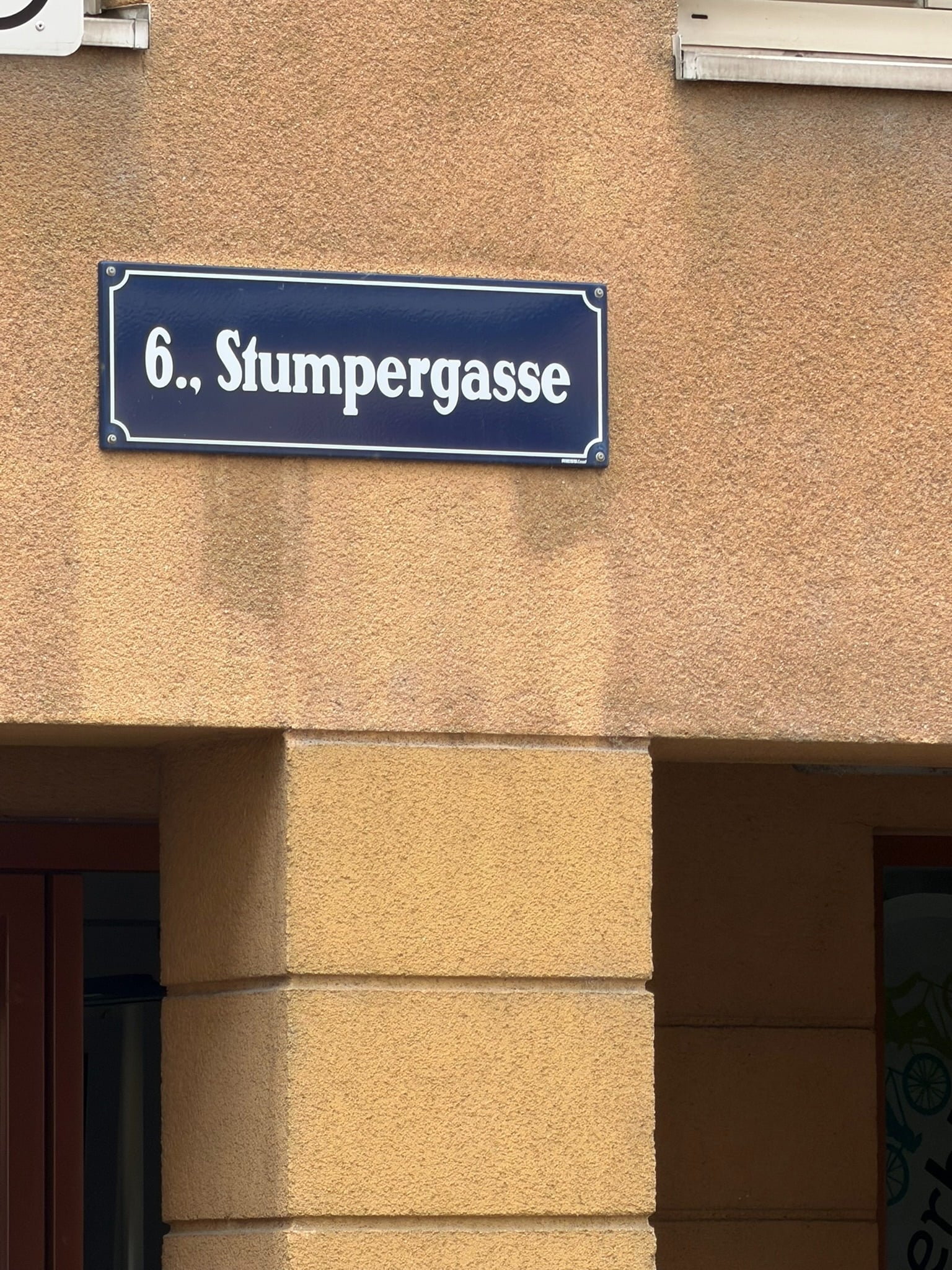
The synagogue is not there — only a police station.
I knew this before I came. I had read the record: the Israelitischer Tempel- und Schulverein built it in 1894 in the rear courtyard of Stumpergasse 42, backing onto the Schmalzhofgasse — the Stumper-Schul, not quite two hundred seats, a courtyard shul of the kind that filled the districts, unremarkable, sufficient. It was wrecked on the ninth and tenth of November 1938. It was never restored. The building came down in 1973; the city put up housing on the site between 1976 and 1978; and in 2010 the district council of Mariahilf fixed a memorial tablet above the street sign, made to match the street sign, so that at a glance you take the two for one object.
So, I stood in front of a residential block from the late seventies, of the kind that exists in every European city, faced in a colour I can only describe as municipal, and read a plaque. Two young police officers emerged from the station looking quizzically at us.
I want to say what this is like, because I have read a great many accounts of standing before Holocaust memorials and almost none of them describe the actual experience, which is one of inadequacy on both sides. The site is inadequate to the event. And I was inadequate to the site. I stood there for perhaps four minutes, which is not very long, and then I noticed that I had begun thinking about lunch, and I was appalled at myself, and then I understood that being appalled at myself was also a performance, and I stopped and simply stood in the street feeling nothing much, in front of a building where a shul full of people used to pray until a night when men came with petrol.
Here is what the absence taught me, and it took the rest of the day to arrive.
I have written a good deal about hester panim — the hiding of the face — and about the Lurianic tzimtzum, the divine self-contraction that makes room for a world by withdrawing from it. These are, in the literature and in my own essays, theological categories: they describe something about God. Standing on the Stumpergasse I understood for the first time that they also describe something about a street.
The absence of that synagogue is not a gap in the streetscape. There is no gap. The site is full — full of apartments, a police station, of people who have lived their whole lives there, of bicycles in the entryway and satellite dishes and the ordinary press of Viennese domesticity. The erasure is complete precisely because it is not visible. Nothing announces it. The city closed over the wound and healed without a scar, and the plaque, which is honest and well-intentioned and which I am glad exists, is a small sign informing you of an absence you could not otherwise detect.
That is what concealment looks like when it is achieved. Not a ruin. A functioning apartment block.
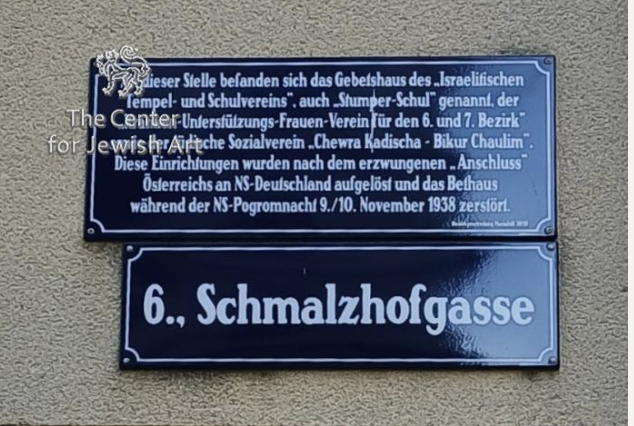
The Stumper Shul
On this site stood the synagogue of the Israelite Temple and School Association, affectionately known as the Stumper Shul. It was home not only to a congregation but also to charitable organizations that cared for the sick and served the Jewish community of Vienna’s Sixth and Seventh Districts.
Following the Nazi annexation of Austria in 1938, these Jewish institutions were dissolved. During Kristallnacht, on the night of November 9–10, 1938, the synagogue was destroyed.
Today, only this plaque bears witness to the vibrant Jewish life that once flourished here. For my family, this was more than a historical site — it was the place where my grandfather worshipped before that world was extinguished.
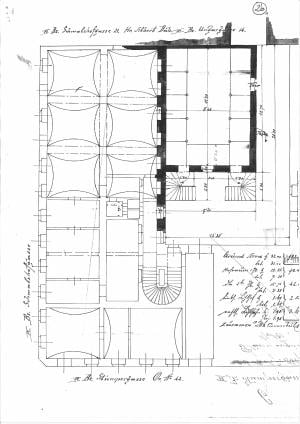
And it is here, three days in, that the word began to form which I would not be able to say until the last evening. Because a ruin would have been easier. A ruin would at least be an admission. What Vienna offers instead is a city in perfect working order, its trams punctual, its façades washed, its history noted on tasteful plaques at the correct height, and beneath all of it a subtraction so thorough that a stranger could live in Mariahilf for a decade and never suspect that a congregation had been burned out of its courtyard eight minutes from the Marchettigasse.
I wondered again why his parents chose the sixth, not the second, district — and found a possibility in the personality of their Rabbi.
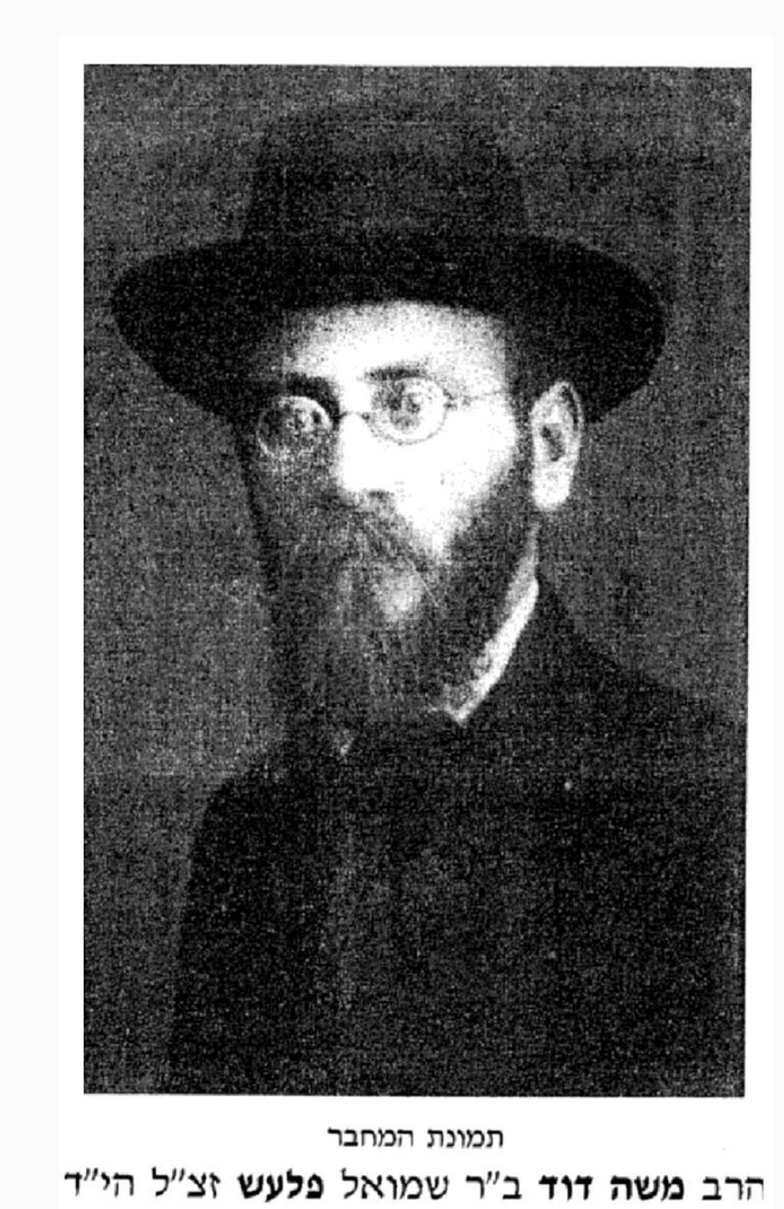
Rabbi Moshe David Flesch (1879–1944) was one of the most influential Orthodox rabbis in prewar Vienna, although his name is less well known today than the movement he helped inspire.
Rabbi Flesch was born in Pressburg (Bratislava) in 1879 into a rabbinic family. He studied at the famous Pressburg Yeshivah under Rabbi Simcha Bunim Sofer (the Shevet Sofer), grandson of the Chatam Sofer. He later continued his studies in Frankfurt with Rabbi Salomon Breuer, absorbing the philosophy of Rabbi Samson Raphael Hirsch. This gave him a rare synthesis of Hungarian yeshivah scholarship and German Neo-Orthodoxy (Torah im Derekh Eretz). (The Bais Yaakov Project)
In 1913 he became rabbi of the Israelitischer Tempel- und Schulverein at 42 Stumpergasse in Vienna’s 6th District.
This synagogue was not the Schiffschul, but it was founded in 1893 as a subsidiary (daughter congregation) of the Schiffschul (Khal Adas Yisroel) in Leopoldstadt. It followed the same Hungarian Oberland Orthodox tradition and served Orthodox families who lived farther west in Vienna. (The Bais Yaakov Project)
Under Rabbi Flesch:
- the congregation grew substantially,
- the adjoining Talmud Torah expanded,
- he attracted both men and women to regular Torah classes,
- and he became one of Vienna’s best-known Orthodox preachers. (Mishpacha)
Sarah Schenirer and Bais Yaakov
His greatest historical legacy came almost by accident.
During World War I, Sarah Schenirer, a refugee from Kraków, attended his Chanukah sermon on Judith (Yehudit) in December 1914. She later wrote that this lecture inspired her to found the Bais Yaakov movement for Orthodox girls.
She continued attending his classes in Tanakh, Tehillim, and Pirkei Avot. Rabbi Flesch introduced her to the writings of Rabbi Samson Raphael Hirsch, which became foundational texts in early Bais Yaakov education. Rabbi Flesch later visited Bais Yaakov schools in Poland and regarded the movement as one of the great achievements of his career. (The Bais Yaakov Project)
Rabbi Flesch stands at a unique crossroads in modern Jewish history. He united:
- the Pressburg tradition of the Chatam Sofer,
- the Hirschian philosophy of Torah im Derekh Eretz,
- the Schiffschul’s Hungarian Orthodox heritage,
- and, through Sarah Schenirer, became one of the intellectual catalysts for the worldwide Bais Yaakov movement.
For Orthodox Vienna, Rabbi Flesch is a pivotal figure because he links the great Hungarian Orthodox tradition of the Schiffschul with the emergence of modern Orthodox Jewish education for women.
IV. The Map of a Confidence
“You cannot measure what was lost until you have understood what the losers believed about their own security.”
On the next day I went to look at the Vienna my father never saw, which is to say the Vienna that made him possible.
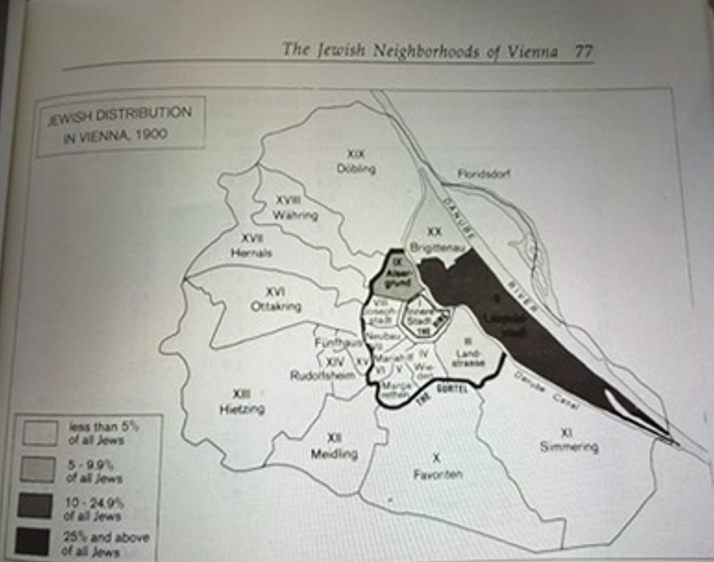
The map is a simple thing — a distribution of the Jewish population by district, drawn for 1900, the districts shaded by proportion, the second district black with density, the sixth a middling grey. I photographed it from a printed page, badly, at an angle, with a reflection across one corner. It is the least beautiful image in this book and possibly the most important, and I want to say why.
By 1900 Vienna held one of the largest and by any measure one of the most consequential Jewish communities in Europe. They had come from Moravia, Bohemia, Galicia, Hungary — my grandfather among them, out of Nádszeg in 1904 — into a city that had, within living memory, granted them civic equality and then, astonishingly, appeared to mean it. They filled the medical faculty. They filled the law. They filled the journals, the concert halls, the coffee houses, the publishing houses, the psychoanalytic societies, the Kultur my father would later carry to London and administer to his children as though it were a vaccine.
And they believed — this is the point, and it is the point the map makes better than any prose — that they were home. Not tolerated. Not provisionally accommodated. Home. Austrian, Viennese, of the place, citizens with the ordinary boredom of citizens. They fought in the emperor’s army. They took their examinations. They complained about the trams. They were in a city of civil servants who ran the Austro-Hungarian Empire, for Pete’s sake; even their humor looked down upon Jews of other countries, especially the Ostjuden who poured into Vienna after WWI.
The map is a picture of a confidence.
Every account of Jewish Vienna before 1938 must decide how to handle that confidence, and most handle it badly, in one of two directions. The first is condescension: they should have known, the warnings were plain, Schönerer and Lueger were in the open, the Jewish Question was debated in the newspapers for fifty years. My father spoke of the few Jews in his school being picked on, the teacher measuring his forehead in front of the class for its non-Aryan slope. This is the historiography of hindsight, and it is a way of assuring the reader that we would have read the signs, which is a fantasy and a cheap one.
The second is nostalgia, which is the more seductive failure and the one this book was in danger of committing before I stopped it. Nostalgia turns the map into an elegy for a golden age and thereby makes 1938 into a tragedy in the theatrical sense — a beautiful thing broken, with all the aesthetic satisfaction that arrangement provides. There is real pleasure in that, and the pleasure is obscene, and I have come to think that the coffee-table book about vanished Jewish Europe is a genre that exists largely to supply it.
What I want from the map is neither. I want the reader to hold two facts simultaneously and not resolve them: that these people were right about their belonging, in every sense that a claim about belonging can be right — legally, culturally, contributively, by any standard a state can articulate — and that it made not the slightest difference.
That is not a tragedy. Tragedy requires a flaw. This was a category applied from outside by an efficient administration to people who had done nothing but succeed at being Viennese. (I remember a picture of Uncle Barci in his WWI Austrian uniform, so proud.)
Which brings me to the coffee house, where I sat on the fourth afternoon under a vaulted ceiling among students and tourists and one old man reading a newspaper on a wooden spindle, drinking a mélange, being served with the elaborate and slightly hostile courtesy that is the house style. And I want to record, because it is true, that it was wonderful. The room was wonderful. The coffee was wonderful. The waiter’s contempt was wonderful.
And I sat there in the middle of it thinking this is the room. Not this room specifically. This institution — the thing my father meant when he said Kultur, the disciplined beauty he drove us across Europe every summer to stand in front of, in the conviction, never stated but perfectly legible to a child, that if we could be made to love these things we would be safe. The Latin phrases, the continuous commentary, the Greek myths explaining this or that statue, the history of European wars as we weaved our way across the autobahns in his Westminster overdrive.
He was wrong about that, and I think he knew he was wrong, and I think he taught it to us anyway. I have spent some time on the question of why, and the only answer I can defend is the hardest one: not because Vienna proved that culture saves, but because Vienna proved that it does not, and he wanted us to have the beautiful things anyway, unarmed, with no illusion that they were armor.
V. The Questionnaire
“Every family becomes, in the end, a folder. The task is to get back out of the folder to the people.”
On the first day I sat in an archive, and a woman brought me a screen.
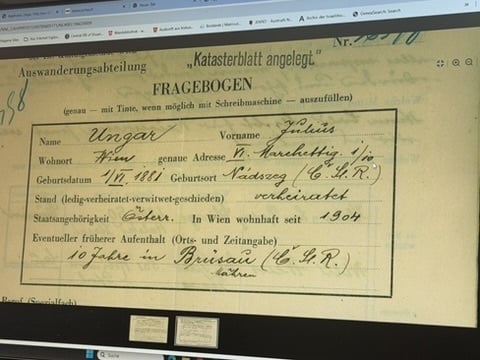
This is the document. Auswanderungsabteilung — Emigration Department. Fragebogen — questionnaire. To be completed in ink, or where possible by typewriter. Name: Ungar. First name: Julius. Residence: Wien. Precise address: VI Marchettigasse 1/10. Date of birth: 1 IV 1881. Place of birth: Nádszeg. Marital status: married. Nationality: Czechoslovak. In Vienna since 1904. Previous residence: ten years in Brünn.
A form. Ruled boxes, printed instructions, a place for the signature. Bureaucratically speaking, a competent piece of design: it gathers what it needs and nothing more.
I am a physician. I have spent fifty years reading documents that reduce human beings to fields — the chart, the intake, the problem list, the discharge summary — and I have written repeatedly against the reduction, arguing that the patient is a text requiring interpretation and that the chart is at best a crude concordance to it. I thought I understood administrative violence. I did not understand it until I read this form.
Because here is what the form is. It is an inverted liturgy.
A liturgy asks a person to say who he is before God and thereby constitutes him: I am the son of your servant. This form asks a man to say who he is before a department, and thereby constitutes him too — as a case, as a quantity of property to be assessed, as an emigration problem with a file number. The questions are not hostile. That is the horror of it. They are the same questions any consulate might ask. Born where, resident since when, married or single. The violence is not in any individual field. It is in the fact that the completed form was sufficient: that once the boxes were filled a man could be processed, that nothing further about him was required or wanted, and that the department could then do what it did without ever having to encounter him.
And my grandfather filled it in. That is the part I keep returning to. He sat down, presumably at a table in the apartment on the Marchettigasse, and wrote his own name in the box, in his own hand, in the loops and angles of a man who had learned to write in a Hungarian village school in the 1880s. He supplied the information. He cooperated with the instrument of his own cataloguing, because what else does a man do, and because in 1938 filling in the form was still, plausibly, the way out. He vainly tried to get a visa.
I sat in front of that screen for a long time. Longer than I sat at the memorial, which tells me something about myself I have not finished examining.
What broke through, finally, was not the content. It was the handwriting. Ungar, in ink, with a particular downstroke on the g. I had never seen my grandfather’s hand. There is no letter, no inscription, no signed photograph; the family came out with what could be carried and paper was not what was carried. And here, preserved because a genocidal bureaucracy was methodical about its records, in an archive that exists because the perpetrators were archivists, was the one surviving specimen of the way my father’s father formed a letter.
That is the position we are in. The evidence of their lives survives principally in the files of the apparatus that ended them. Every genealogist of this period knows it, and few say it plainly: we are dependent on the murderers’ paperwork. Our recovery of these people is conducted through documents produced to dispose of them, and there is no clean way to hold that, and I have decided not to pretend there is.
Part II of a three-part series.