


The Country Must Still Belong to the Loser
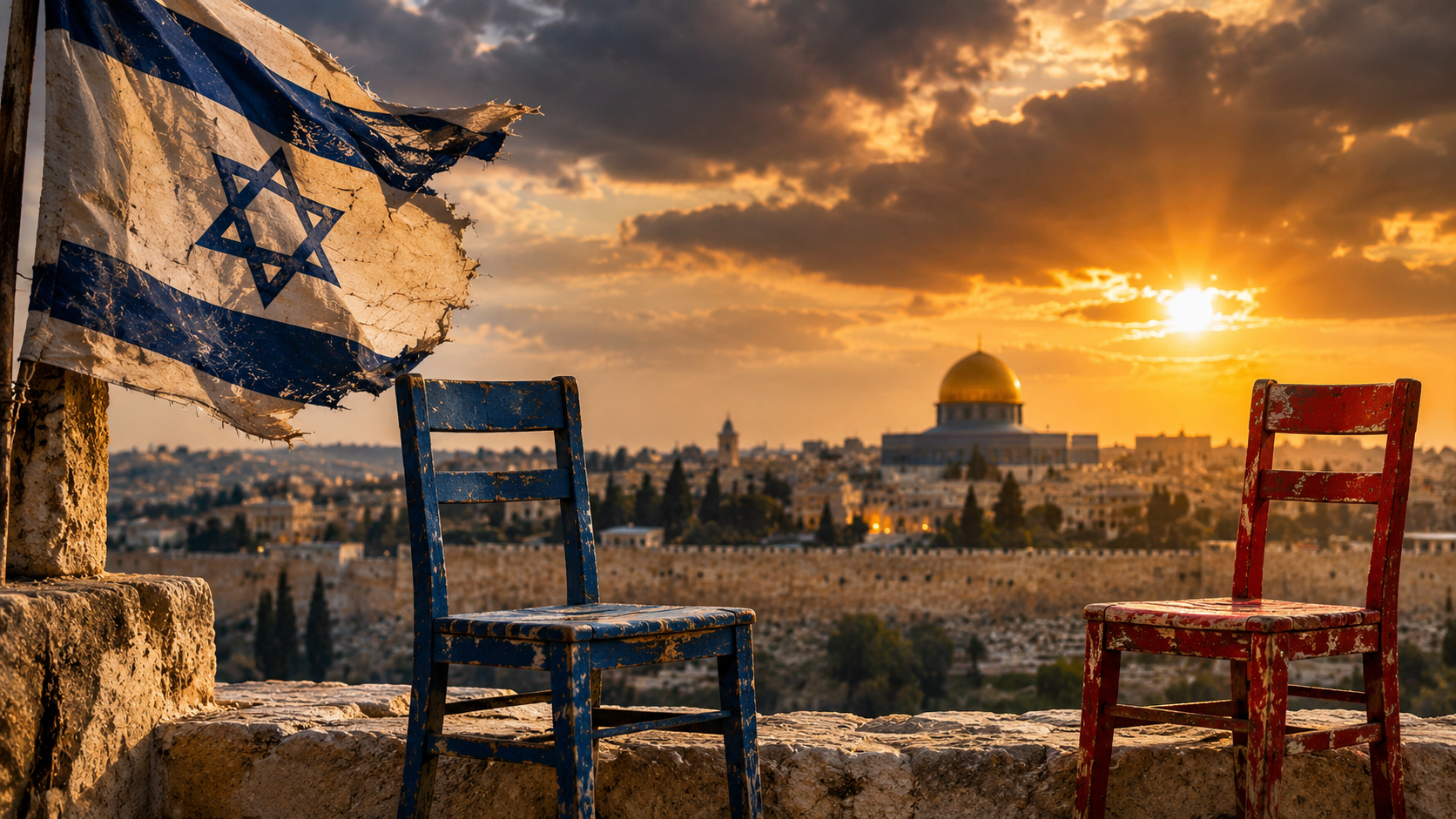
Israel’s next democratic test is not who forms the government. It is whether political defeat can remain political without becoming exile.
There is a sentence Israelis have started saying too easily.
“This is no longer my country.”
Sometimes it comes from the left.
Sometimes from the right.
Sometimes from secular Israelis, sometimes from religious ones. From reservists. Protesters. Settlers. Parents. Academics. People who built companies here. People who buried children here.
The wording changes.
The wound does not.
If they win, I no longer belong.
That may be one of the most dangerous sentences in Israeli public life.
Not because everyone who says it intends to leave. Most do not.
It is dangerous because democracies begin to break long before elections disappear.
They begin to break when political defeat starts to feel like dispossession.
When losing power feels like losing the country.
We are used to measuring democracy through institutions: elections, courts, coalition agreements, laws, checks and balances.
All of these matter.
But there is another institution no law can create by itself.
The loser must still believe the country is his.
Without that, democracy becomes little more than a recurring contest between tribes trying to capture the state.
The winner governs.
The loser waits to recover his homeland.
Then power is not transferred.
It is seized.
And every election becomes a small war of liberation.
Israel is especially vulnerable to this.
We have spent our entire national life becoming experts in existential danger.
That expertise has saved us.
It may also be deforming us.
We know what to do when threatened.
Mobilize.
Choose sides.
Identify the perimeter.
Close ranks.
Survive.
These instincts are not imaginary. They were built by history.
But survival instincts do not politely disappear when the emergency ends.
They migrate.
A society can begin using wartime reflexes on civilian disagreement.
The political opponent stops being wrong and becomes dangerous.
A court ruling becomes an attack.
A protest becomes treason.
A coalition becomes occupation.
A compromise becomes surrender.
Language teaches the nervous system what to fear.
And once political disagreement is repeatedly described in existential terms, defeat begins to feel less like losing an argument and more like being pushed out of the country.
That is the fracture underneath Israeli politics now.
Not division.
Division is normal.
Democracy requires it.
We should disagree about borders, religion, courts, settlements, security, taxation, education, the place of Arab citizens, the role of ultra-Orthodox communities, the meaning of Jewish sovereignty.
A country without such arguments would not be healthy.
It would be silent.
Our deeper problem is that disagreement has begun to threaten membership.
We have confused two sentences:
I lost.
I have been expelled.
They are not the same.
A citizen must sometimes lose.
A citizen must never be taught that defeat revoked his place in the country.
That distinction is the moral infrastructure of democratic life.
It is also extraordinarily difficult.
Because democracy asks something unnatural of us.
It asks us to hand power to people we may sincerely believe are wrong.
Not mildly wrong.
Sometimes dangerously wrong.
It asks us to accept that millions of fellow citizens can look at the same country, remember the same wars, fear for the same children, and reach conclusions we find almost incomprehensible.
Then it asks us to remain citizens together.
Voting is easy compared with that.
Remaining together after the vote is democracy’s harder ritual.
Israel has not learned that ritual well enough.
We know how to celebrate victory.
We know how to explain defeat through betrayal.
The media.
The elites.
The settlers.
The courts.
The Haredim.
The Arabs.
The protesters.
The generals.
Tel Aviv.
The periphery.
Someone stole the country.
This story is emotionally useful because it protects us from a harder truth:
The people who defeated us are also the country.
That sentence is more demanding than tolerance.
Tolerance says: unfortunately, they are here.
Democratic belonging says: they are part of the “we” whose decisions I may sometimes have to endure.
It does not mean every position is legitimate.
Some ideas should be fought fiercely.
Some policies should be resisted.
Some actions cross moral or legal lines.
Democracy is not moral anesthesia.
But there is a difference between resisting a government and withdrawing recognition from the citizens who elected it.
We cross that line constantly.
The right often speaks about the left as though it were an alien elite that somehow captured Israeli institutions without truly belonging to the people.
The left sometimes speaks about the right as though the country were being occupied from within by citizens too religious, angry, provincial or primitive to be trusted with democratic power.
Each side has grievances.
Each side also has contempt.
Contempt is efficient.
It saves time.
Once I know the other person is stupid, brainwashed, corrupt, messianic, privileged, parasitic, fascist, anti-Zionist or morally defective, I no longer have to ask why he voted as he did.
The diagnosis replaces curiosity.
The other side stops being a constituency.
It becomes a pathology.
And you do not negotiate with a pathology.
You remove it.
This is how a society can become emotionally authoritarian while its institutions remain formally democratic.
Everyone still votes.
But fewer people are willing to be governed by those who vote differently.
That is the fracture we should fear.
Not disagreement.
Disqualification.
The question after an election is therefore larger than who assembles a majority.
It is whether the people outside that majority can still look at the flag and feel that it belongs to them.
Can a secular mother in Tel Aviv watch a religious coalition take power and still say: this is my country?
Can a settler watch a government dismantle a policy he considers central to Israel’s future and still say: this is my country?
Can an Arab citizen hear parties debate whether his representatives are legitimate political partners and still believe citizenship is more than paperwork?
Can a Haredi family hear demands for integration without experiencing them as demands for disappearance?
Can anyone lose without feeling conquered?
This does not require unity.
“Unity” has become one of the most overused words in Israel.
We invoke it after funerals.
We print it on banners.
We demand it when disagreement makes us uncomfortable.
Then we go home and resume treating one another as existential threats.
Unity is too ambitious.
We do not need to become the same.
We need something more modest and, in practice, much harder:
to disagree without canceling one another’s place in the house.
A home is not a place where you always get your way.
Anyone who has lived in one knows this.
A home is a place where conflict does not automatically cancel belonging.
That may be the political definition Israel needs now.
Not harmony.
Not consensus.
Not sentimental reconciliation.
A structure of belonging strong enough to survive disagreement.
The difference matters.
Because Israel’s crisis is not only political.
It is domestic.
Too many Israelis now experience citizenship as conditional.
Belonging depends on answering the national entrance exam correctly.
Where do you stand on the war?
The hostages?
The court?
Settlements?
Religion?
October 7?
Gaza?
Netanyahu?
Zionism?
The army?
The protests?
Each camp has its own version of the test.
Fail enough questions and you are no longer simply wrong.
You are no longer one of us.
This is how nations hollow out from within.
Not necessarily through dramatic collapse.
A country can remain economically strong, militarily formidable and technologically brilliant while the emotional foundations beneath citizenship erode.
The Knesset meets.
The army operates.
Taxes are collected.
Startups are funded.
Planes land.
Restaurants fill.
And beneath all of it, the shared “we” can grow thinner.
One day the country discovers that it still contains millions of citizens but no civic language large enough to hold them together.
That is why the morning after an election matters more than election night.
Election night gives us numbers.
The morning after reveals the culture.
Can the winner resist humiliation?
Can the loser resist apocalypse?
Can victory be exercised without vengeance?
Can defeat be endured without declaring the country dead?
These are not questions of manners.
They determine whether democratic transfer of power remains psychologically possible.
A winner who believes victory grants ownership of the state eventually stops distinguishing governing from conquering.
A loser who believes defeat means exile eventually stops distinguishing opposition from resistance to occupation.
Both destroy the middle territory democracy needs.
We need a different civic discipline.
It begins with a sentence that sounds almost embarrassingly simple:
The country is not mine because I won.
And it does not stop being mine because I lost.
That sentence should probably be taught before most civics lessons.
Because democracy is not fundamentally an arrangement for producing winners.
Every political system can produce winners.
Democracy’s deeper achievement is different.
It makes defeat survivable.
For most of human history, losing political power could mean exile, dispossession, confiscation, imprisonment, death.
Democracy replaces the battlefield with a calendar.
You lose.
You remain.
You organize.
You argue.
You vote again.
This works only if the losing side trusts that there will still be a country to vote in, and that the country will still recognize them while they wait.
When that trust disappears, politics becomes existential again.
For Jews, there is another layer.
Exile is not merely a metaphor in our political vocabulary.
It sits deep in historical memory.
For centuries, losing power really did mean living under someone else’s sovereignty.
Jewish political history trained us to understand powerlessness as danger.
Zionism was, in part, the answer to that condition.
And yet here is the tragic irony:
A people that returned from exile has begun reproducing the emotional structure of exile inside sovereignty.
We threaten one another with internal homelessness.
If they win, this is no longer Israel.
If their values prevail, I have no place here.
If they control the institutions, the country has been taken.
We have imported exile into the state that was supposed to end it.
That may be one of the deepest failures of Israeli political imagination.
The next Zionist task may therefore be different from the one we inherited.
Not merely defending the existence of a Jewish state.
Learning how to inhabit it without constantly making one another feel like guests.
A sovereign society should be capable of something exile never allowed:
losing power without losing home.
That is what we have not yet learned.
We often speak as though belonging were a reward for ideological agreement.
It is not.
Belonging is the condition that makes disagreement possible in the first place.
If you and I can only remain in the same country when we agree, then we do not have a democracy.
We have alternating occupations.
This is where the argument becomes personal for me.
LEGATO began with a question about the individual:
How far can a person drift away from themselves without noticing?
But countries can drift too.
They can continue functioning long after something essential has gone missing.
A person can keep showing up to work, answering messages, paying bills, appearing competent, while becoming estranged from his own life.
A country can do something similar.
The institutions continue.
The symbols remain.
The economy moves.
The army functions.
And still the society can drift away from the reason those institutions were supposed to serve.
Not survival alone.
Not victory alone.
A shared life.
A place in which people who disagree profoundly can still recognize one another as participants in the same human and political story.
That is what we are in danger of losing.
Israel does not need less argument.
It needs an argument strong enough to contain belonging.
We need people capable of saying:
I believe your government is wrong.
I may protest it.
I may fight its legislation.
I may work every day to replace it.
But I will not pretend that your vote erased my country.
And I will not pretend that my disagreement erased your citizenship.
That sentence is harder than unity.
It asks more of us.
It asks us to separate moral conviction from civic annihilation.
There will always be people who prefer politics to feel like war.
War offers clarity.
There is an enemy.
A line.
A victory.
Democracy is less satisfying.
It asks you to wake up after defeat, look at the people who caused it, and continue building a country with them.
Not because they are right.
Because they are here.
Because you are here.
Because neither of you gets to disappear the other without destroying the very thing you are fighting over.
This does not mean everything must be forgiven.
It does not mean every coalition deserves legitimacy.
It does not mean institutions should become neutral in the face of abuse.
There are lines.
There must be.
But a society that draws every disagreement as a red line eventually has nowhere left to stand.
The question is not whether we can avoid conflict.
We cannot.
The question is whether conflict can remain inside a larger structure of mutual possession.
Not possession of one another.
Possession of the country together.
This may be what must come after survival.
Israel has become extraordinarily skilled at staying alive.
The next question is whether we can become skilled at staying together.
Not united.
Not reconciled.
Not free of rage.
Together.
There is a difference.
A mature country is not one in which everyone feels represented by every government.
That country has never existed.
A mature country is one in which losing representation does not mean losing membership.
The winner receives power.
The loser keeps the country.
That is the bargain.
Lose that bargain and coalition arithmetic becomes meaningless.
Recover it and even a bitter election can remain what an election is supposed to be:
not a battle over who owns Israel,
but an argument among people who have understood that no one does.
The country is not the prize.
It is not the property of the coalition.
It is not the inheritance of the opposition.
It is the room in which the argument continues.
And perhaps that is what we have failed to understand.
The room only remains a room if the person who lost is still allowed to enter it tomorrow.
Still has a chair.
Still has a voice.
Still has a claim.
Still has a home.
Eran Landau
LEGATO
Notes from the way back.

