The Courage That Sparked a Revolt — Then and Now
A midrashic heroine, a modern survivor, and the cost of speaking the truth.
As we begin the holiday of Chanukah, a time defined by small lights pushing through deep darkness, I keep returning to a midrash that focuses on the act of courage that set the Maccabean revolt in motion. It is a story that has particular resonance for anyone who works with survivors of sexual abuse.
The midrash in Megillat Taanit describes a horrific decree imposed by the Greek governor of Jerusalem, Horrodeus. According to the commentary, he instituted what medieval sources refer to as jus primae noctis — “the right of the first night.” Jewish brides were taken to him before their wedding night, assaulted, and then sent home to their new husbands.
Some families tried to hide engagements, holding quiet, unmarked weddings in an attempt to escape this decree. But many young women were simply taken. Their families and communities stood by, horrified and powerless.
Until one young bride refused.
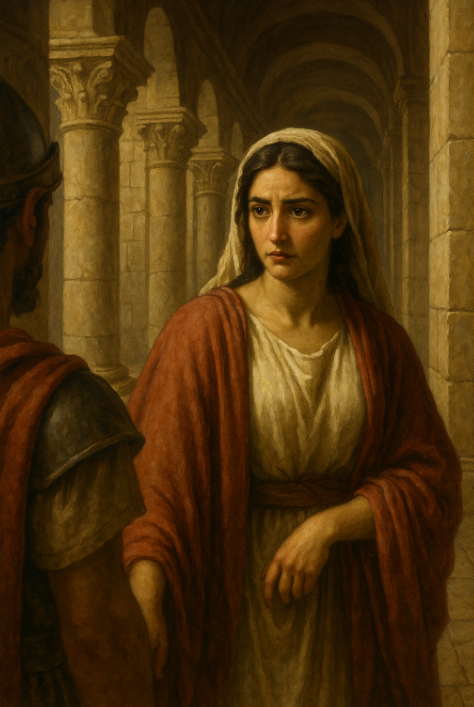
She was the daughter of Matityahu, the progenitor of the Maccabees. According to the midrash, during her own wedding celebration, she publicly tore her clothing, threw off her jewelry, and confronted her family. She called them out: how could they be embarrassed by her lack of modesty, she cried, yet not ashamed to allow her, and all the women of Israel, to be handed over to rape?
Her act of defiance was the breaking point. The Maccabees followed her to the governor’s home, and the revolt began.
What is striking about this story is not only her courage but the risk. The punishment for defying the governor was death. She knew that by speaking out, she was risking not only her dignity but her life. The midrash tells us she did so because she feared her silence would signal to the women of Israel that they were lost. She chose to risk martyrdom rather than become a symbol of desecration and victimhood.
The legendary courage of our foremothers
Those who spend time with survivors know that this bravery is not confined to ancient texts. We see it today. We see it often. And it is no less extraordinary now than it was then.
At Magen, one young woman regularly reminds me of this. I first heard her family’s name when she was a young teenager, and my heart dropped. It was a name known globally in Jewish circles — and also a name associated with whispered allegations stretching back decades.
Those whispers turned out to be true. Generations of sexual abuse had been allowed to fester in plain sight, under the noses of community leaders on both sides of the Atlantic. They sent abusive family members back and forth between America and Israel; nothing was reported or addressed. For decades, they tried to contain a raging fire with hopes, prayers, and airline tickets.
Until this then 18-year-old young woman stood up and said: Enough. No more.
She did not stand on a table and tear her clothing, but given the response she received she might as well have.
How dare she? Doesn’t she understand who her family is?
She risked everything. She lost her family, her school, her friends, the only community she had ever known. The emotional pressure nearly crushed her. More than once, she tried to end her own life.
But she kept speaking up.
She testified. She refused to retract her truth. She refused to let her family’s name continue to be used as a shield for abusers. And because of her, for the first time in that family’s history, someone is actually incarcerated and being held responsible for his actions.
I meet many brave people in my work, but I still do not fully understand the enormity of what it takes to do what she did, to turn your back on everything familiar and choose to break a deeply ingrained pattern of trauma.
Chanukah is, at its core, a holiday about defiant light – light that should not logically exist, light that survives against reason, light that continues to burn even brighter in the aftermath of violence and desecration.
Survivors are that light.
Their courage does not erase the darkness, but it refuses to let the darkness define the future. Survivors who come forward, at enormous personal cost, are often the catalysts for change that entire communities have failed to initiate. Their voices force a reckoning that would otherwise never come.
As we begin Chanukah this year, I am thinking about the human beings who become unexpected sources of illumination in the most unlikely places. And I am profoundly grateful for every survivor whose bravery continues to challenge our communal complacency and force us toward accountability, truth, and healing.
May this holiday remind us that light can begin with one person standing up and saying “Enough,” and may we commit ourselves to seeing, supporting, and protecting those who carry that light forward.