
Be the change you wish to see in the world.
The Courage to Look Forward: When the Past Becomes a Purpose
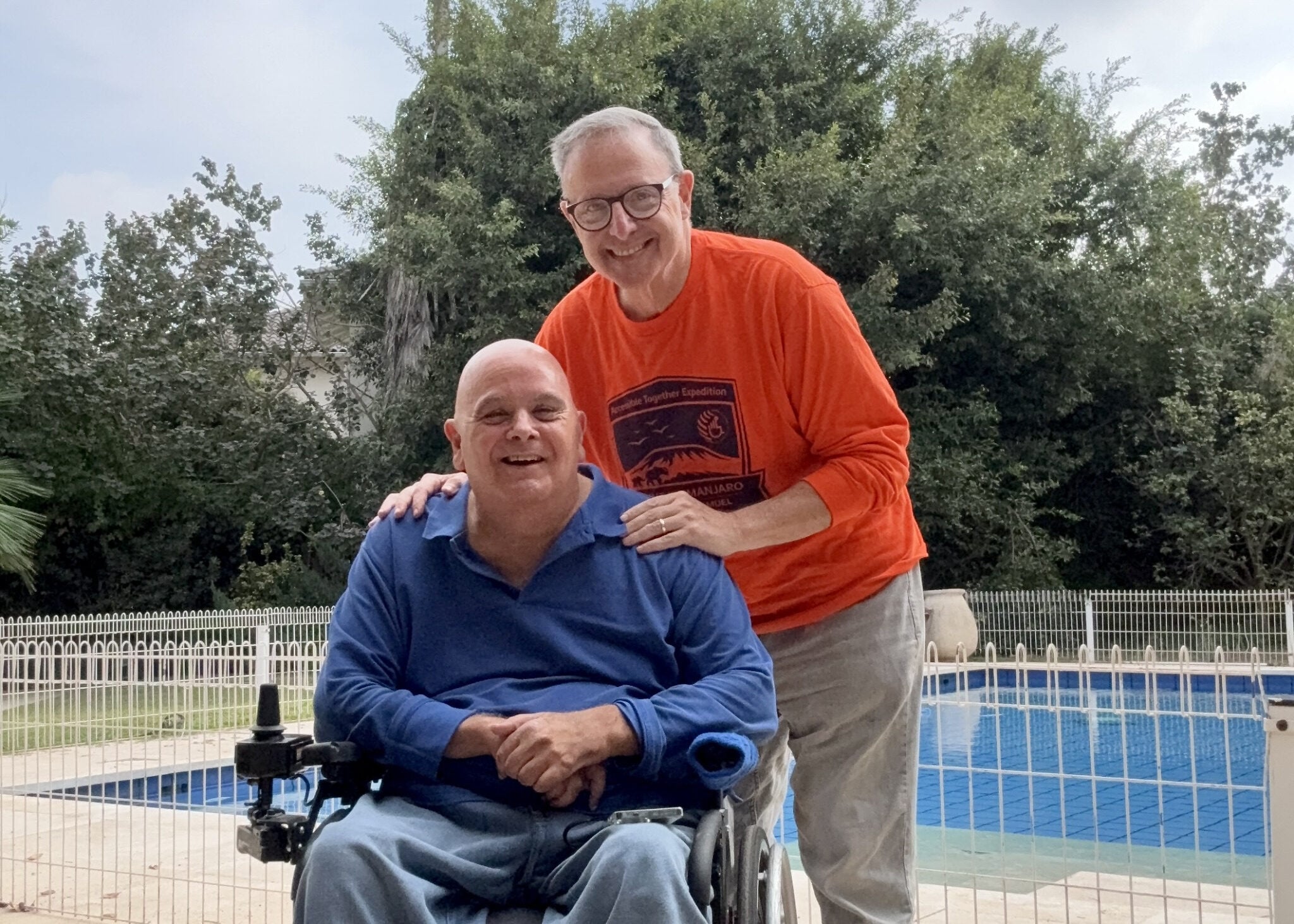
A memorable visit to Yuval, Founder of Access Israel.
Trauma does not always diminish with time. Decades may pass, yet an unexpected memory can bring the past painfully into the present. For those living with long-term post-traumatic stress disorder (PTSD), the challenge is not simply managing those memories but finding ways to embrace life without allowing them to define every tomorrow.
In my earlier TOI reflection, September 11 Is Yesterday, Today and Tomorrow, I wrote about the lasting psychological impact of that tragic day. My connection to this subject is deeply personal. More than two decades later, its effects remain part of my life, despite years of progress and professional care. That experience has deepened my appreciation for human connection, meaningful engagement, and having something to anticipate, even when the past remains difficult to escape.
These thoughts took on particular significance during a face-to-face conversation this week with Yuval Wagner, founder and chairman of Access Israel, a cherished friend, colleague, and mentor. Having worked alongside Yuval and witnessed his commitment to accessibility and human dignity, I have long admired his determination. Yet what stayed with me from our conversation was something less conspicuous than his accomplishments: his genuine excitement about what remains possible.
Yuval spoke of future initiatives, new partnerships, and opportunities to improve the lives of others. There was little inclination to dwell on past achievements or seek recognition for what he had already accomplished. His attention was directed toward unfinished work, with the enthusiasm of someone who continues to find personal meaning in the challenges ahead.
That outlook carries particular significance when considered alongside his history. In 1987, while serving as a combat helicopter pilot in the Israeli Air Force, Yuval was involved in a helicopter crash caused by a technical failure. The accident claimed the life of his commander and left Yuval paralyzed. He continued his military service and built a family life, while confronting a society in which inaccessible environments often imposed restrictions beyond those of his injury.
A frustrating encounter with inaccessible vacation accommodations eventually prompted him to seek broader change. His ‘letter with a stamp’ to Israeli President Ezer Weizman helped lay the groundwork for Access Israel, established in 1999. What began as a determination to address barriers encountered in everyday life evolved into a global organization advancing accessibility, inclusion, and equal opportunity.
Promoting a vision of Israel and a world where accessibility and inclusion are fundamental principles, enabling people with disabilities and older adults to participate fully, independently, and with dignity in every aspect of society has been and continues to be Yuval’s lifelong mission.
During our conversation, however, it was not this history that occupied Yuval’s attention. He was focused on the people still encountering barriers, the institutions that could do better, and the practical work required to bring about change. I was struck by how naturally he spoke about the future, not as an abstract source of optimism but as a collection of responsibilities and possibilities deserving his continued attention.
That commitment is reflected in the work Access Israel undertakes today. Under the leadership of CEO Michal Rimon, the organization has expanded its reach into emergency preparedness and humanitarian response. Its award-winning Purple Vest Mission addresses a critical oversight in disaster planning: the heightened risks faced by people with disabilities and older persons when emergency procedures fail to account for their needs.
Through specialized training and practical exercises, the mission equips humanitarian workers and emergency responders to provide assistance with competence, sensitivity, and dignity.
Recently, this work brought Michal and Purple Vest Mission volunteers to Uganda, where four days of intensive training united humanitarian leaders serving refugee settlements across the country.
What moved me most was the participants’ determination to put their training into practice. Their enthusiasm reflected an understanding that accessibility in an emergency is not an abstract principle but a matter of human safety. The true significance of their efforts will be measured in the communities they serve, when someone who might otherwise have been overlooked receives the assistance needed to reach safety.
Looking back on my conversation with Yuval, I recognize an important distinction. His experience of physical disability is fundamentally different from the psychological and emotional realities of PTSD. The two should never be treated as interchangeable, nor does his life offer a prescription for how others should respond to adversity.
What resonated with me was his continuing engagement with life after circumstances profoundly altered its course. His aspirations evolved through personal experience, relationships, and years of practical effort. The organization he helped establish was not an inevitable consequence of tragedy, but the result of choices, collaboration, and opportunities that developed over time.
For those carrying the lasting effects of trauma, there is something quietly encouraging in that perspective. A meaningful future need not depend on extraordinary accomplishments or the disappearance of painful memories. Sometimes it takes shape through renewed interests, supportive relationships, modest personal goals, or the simple pleasure of looking forward to another day.
As we remember September 11, the atrocities of October 7, and the tragedies that have displaced families throughout the world, we recognize that the consequences of violence and loss extend far beyond the events themselves. Those living with these experiences deserve compassionate care, understanding, and the freedom to find their own way forward.
Yuval’s enthusiasm did not diminish the seriousness of his past, nor did it suggest that life’s difficulties can be overcome by determination alone. What remained with me was the unmistakable sense that his attention belonged to the life still unfolding, rather than exclusively to the circumstances that had changed it.
We cannot change what yesterday took from us, nor should we diminish the pain of that loss. But we can care for those still carrying its weight, including ourselves, and remain receptive to the relationships, experiences, and possibilities that tomorrow may bring.
Perhaps that is among the most meaningful ways to honor the past: by continuing to value the life still before us.
–
Author’s note: The historical background concerning Yuval Wagner and the founding of Access Israel draws on publicly documented accounts. The personal observations, reflections, and interpretations expressed in this blog post arise from my relationship with Yuval, our recent conversation, and my own experiences.
Related Topics