Educator, Mother, Learner, Wife — Guided by Torah
The Dance of Teshuvah: Ballet, Psychology, & Torah
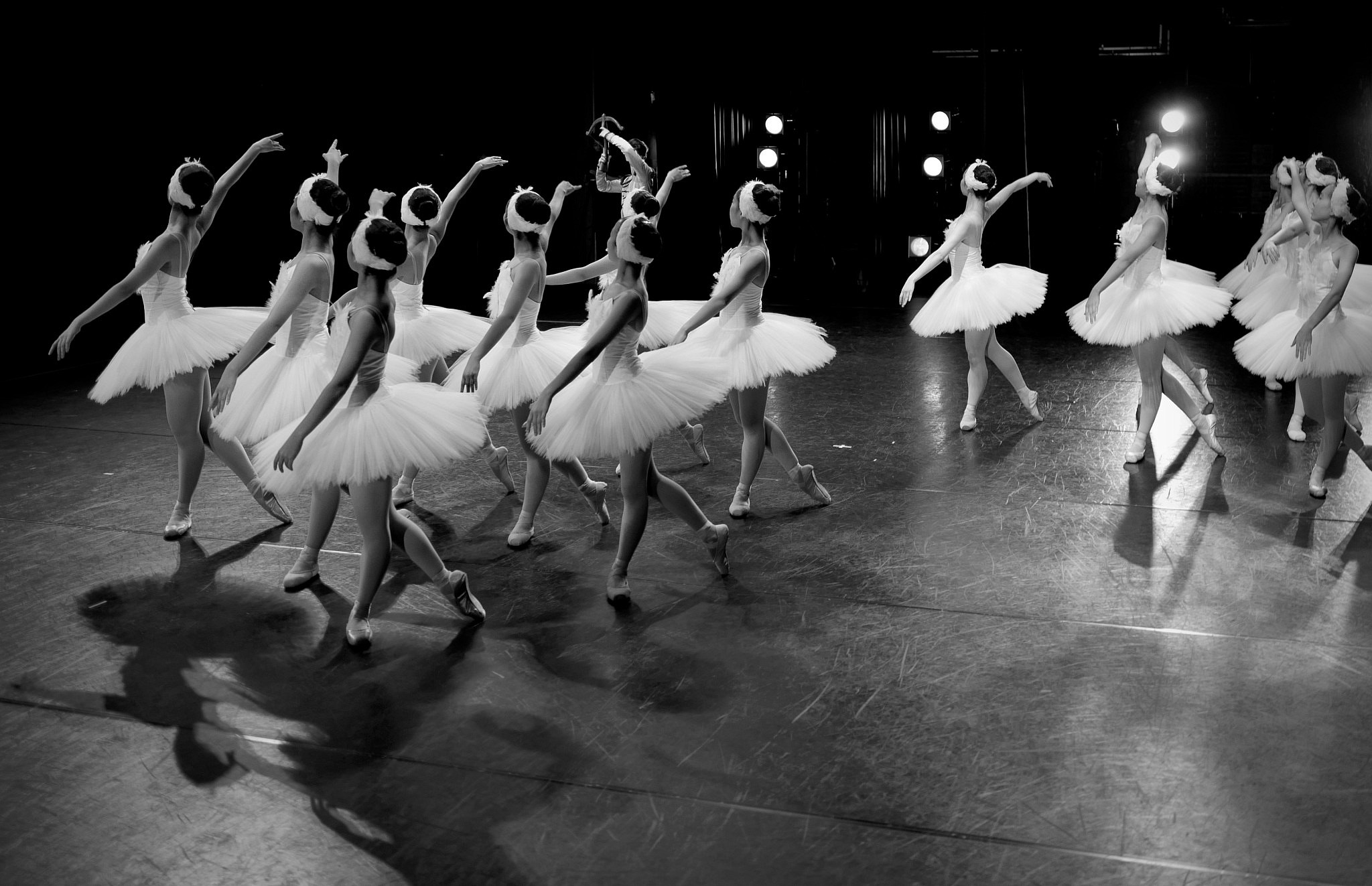
Every turn in harmony — the disciplined beauty on stage and in the soul (Photo: Kazuo Ota/Unsplash)
Teshuvah in Four Movements — A Dance for the Days of Awe
As someone with deep experience in ballet, psychology, and Torah learning, I have long been fascinated by how physical discipline mirrors spiritual and mental growth. Watching a dancer is, in many ways, like watching a mind and soul at work — every movement shaped by training, awareness, and an inner compass.
The first time I saw a ballerina perform a series of flawless pirouettes, I thought, “How is she not dizzy?” Her satin slippers whispered against the marley floor, the faint scent of rosin drifting upward with each turn. Under the glow of the stage lights, her skirt flared like a blossoming flower with every spin, each movement so precise it seemed to slice the air itself. She spun faster than I thought humanly possible, yet every turn brought her back to the exact same point, eyes locked on a single place in the audience as if nothing else in the world existed.
That “single point” is the dancer’s secret. In ballet, it is called “spotting”: picking one visual anchor and snapping your gaze back to it at the end of each rotation. Without it, you lose balance, spin out of control, and collapse. That is when it struck me — this is teshuvah.
Lesson 1 – Know Your Centre Before You Spin
A dancer does not choose her spot mid-turn. She identifies it before she starts. In life, too, we need a fixed reference point before the whirlwind begins. The Torah cautions, “lifnei iver lo sitein michshol — do not put a stumbling block before the blind” (Vayikra 19:14). Chazal explain this can also mean: proactively prepare yourself to avoid stumbling.
Our “spot” might be a pasuk we live by, a rebbe’s vort, or a daily mitzvah that anchors us — like the steady flame of Shabbos candles, unwavering even as footsteps and voices swirl through the home. The Rambam (Hilchos Teshuvah 2:1) says the first step of return is recognition — you cannot return if you do not know where “home” is. The Zohar (Vayikra 10b) likens a soul without a spiritual anchor to “a ship without a rudder, tossed in the storm.”
In mindfulness, spotting is like returning to the breath; in educational psychology, it is the process of setting a clear learning objective before any instruction begins. Students perform better when they know what they are aiming for — and so do souls. Whether in the studio, classroom, or beis midrash: the first move is knowing where you are headed.
- Pause and consider: What is the single point you will claim as your centre this Elul — the one that can steady you when the music quickens or the wind begins to spin?
Lesson 2 – Small Corrections Keep You Upright
Even professionals wobble. The secret is in the micro-adjustments — a hip shifting half an inch, a shoulder pulling back into line, toes pressing a little firmer into the floor. In teshuvah, we also need constant course corrections. “Shuvu eilai ve’ashuvah aleichem” (Malachi 3:7) — “return to Me, and I will return to you” — is not a one-time event; it is a series of small, steady turns back toward Hashem. The Mishneh Berurah (Orach Chaim 1:12) points out that even small improvements in rising early for tefilloh bring great zechus.
In psychology, these micro-adjustments are part of “self-monitoring” — checking your progress mid-task so you can adjust before drifting too far. In good teaching, this is the feedback loop: the moment when a teacher, seeing a student veer off course, quietly redirects them before a small mistake grows larger. In everyday life, it is like glancing at your Waze or GPS before you miss the turn. For the dancer, these invisible recalibrations keep her upright; for the Jew, they keep the heart aligned — whether that means adding a moment of kavonoh to a single brochoh, or pausing before speaking to choose a gentler word.
- Pause and consider: What is the smallest adjustment you could make today that would change where you land tomorrow?
Lesson 3 – Keep Your Eyes on the Right Thing
If a ballerina spots on the wrong object, the turn is clean but she lands facing the wrong way — like bowing gracefully toward an empty corner while the audience waits behind you. In life, we can also be hyper-focused — but on the wrong target. Rebbe Nachman of Breslov (Likutei Moharan I:282), expounding upon the Baal Shem Tov’s teachings, taught that every Jew has a nekudah tovah — a good point — but we must choose carefully what we fix our gaze on: truth, not ego; mitzvos, not distractions. The Torah offers cautionary tales as well: Lot’s wife, who looked back toward Sodom, drifted to see what was being left behind rather than continuing on with the salvation that could have been ahead.
The Sefer Macabiim (II, 2:21–22) — a historical Jewish text from the Second Temple period — praises those who “set their eyes upon the Heichal” even in exile, keeping the Beis Hamikdosh as their spiritual spot no matter how the world spun around them. In psychology, this is “goal alignment” — ensuring that the objective you are chasing is the one worth reaching. In education, it is the principle of backward design: deciding the desired outcome before planning the steps. A wise teacher does not simply fill time with activity; she ensures each task moves the learner toward the true goal. Spiritually, the same holds: we must be certain the point we are “spotting” is the one we wish to face when we land.
- Pause and consider: When the final curtain falls on your life’s performance, what stage will you be standing on — and in which direction will you be facing?
Lesson 4 – Teshuvah Is a Series of Turns, Not a Finale
A pirouette ends, but the dancer does not walk off stage; she draws breath, lifts her chin, and begins again. Likewise, teshuvah is not an Elul-to-Yom Kippur project — it is a lifelong practice. Pirkei Avos 2:10 says, “Shuv yom echod lifnei misascha — return one day before your death.” Since we never know that day, every day is the day to turn back to Hashem.
The Zohar (Vayeira 105b) calls teshuvah “the dance of the soul,” circling ever closer to its Source. Psychology calls it habit formation — repeated actions shaping our neural pathways until they become second nature. The dancer’s turns become muscle memory; the Jew’s acts of teshuvah become spiritual reflex.
In a classroom, this is the process of mastery: repeated practice, deliberate reflection, and small refinements until the skill becomes second nature. Think of the way a woman’s hands braid challah dough without looking, or a violinist’s fingers find the notes in the dark — the body remembers because the movement has been made sacred through repetition. Thus, the soul too can learn its own choreography of return.
- Pause and consider: What daily return point could you weave into your routine so that your soul never loses its rhythm?
The smallest steps, sustained over time, can create profound transformation. In ballet and in teshuvah, every adjustment matters, and every movement, no matter how slight, brings you closer to your ultimate goal. Midrash Tanchuma (Parashas Naso 29) teaches that Hashem treasures the tears of one who returns, storing them as precious pearls. In dance, a single, perfectly timed movement can bring the audience to tears; in the journey of teshuvah, those tears themselves become a masterpiece in the eyes of Heaven.
Behind every graceful landing is a hundred unseen stumbles — just as behind every serene smile in a beis midrash or at a Shabbos table are countless private struggles, small victories, and the quiet discipline that turns practice into poise.
When the ballerina finished her turns that night, she did not stumble; she landed exactly in place, poised and still. The audience saw elegance, but I knew the truth — she had been fighting for her centre the whole time.
Thus, it is with us. The world may see the polished silver and clean white linen at a Shabbos table. They may see the calm smile at kiddush or the beautiful harmony of a home — but only we know the hidden work it takes to keep returning to Hashem, turn after turn and day after day. May this year’s pirouettes — the spins of our daily lives — always bring us back to our true centre, and may we land each one facing the right direction.
Related Topics