
A Midwestern Jewish Politico
The Danger of Getting Iran Wrong
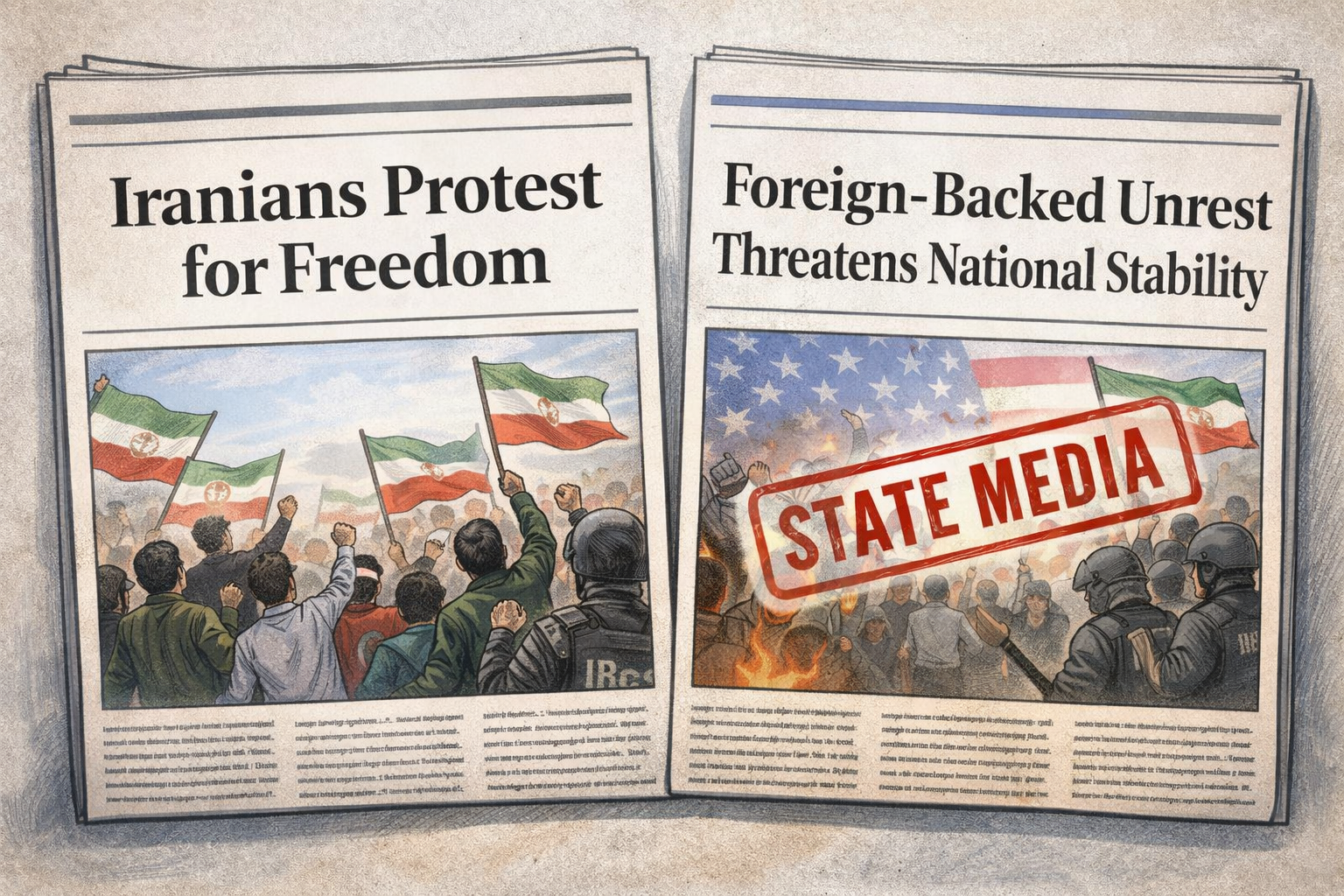
Image by Author/ChatGPT
There is a particular temptation in American foreign policy that feels especially strong during moments of visible repression. When people are in the streets, when the violence is undeniable, when the moral lines seem clear, the urge to declare sides publicly and loudly is powerful. As a liberal, I understand that instinct. As a Jew, I am deeply wary of where it can lead when it is not matched with realism.
What is happening in Iran is horrific. The protests are real. The repression is real. The courage of Iranians risking their lives is undeniable. But if the United States inserts itself directly into this moment and the Islamic Republic survives, the outcome will almost certainly be worse for Iranians, worse for American interests, and worse for the safety of people across the region, including Jews.
The first danger is legitimacy. Protest movements live or die on whether they are seen as organic expressions of popular will. The Islamic Republic has survived for decades by insisting that dissent is foreign engineered. This claim is cynical, often false, and brutally effective. When American leaders publicly encourage Iranians to overthrow their institutions or promise help from afar, they do not empower protesters. They confirm the regime’s most useful lie.
As Jews, this should sound familiar. We know what happens when movements are recast as foreign plots. We know how quickly legitimate grievances are reframed as conspiracies. The moment a protest is labeled externally driven, the moral calculus shifts for many observers inside the country. Crackdowns become easier to justify. Neutral bystanders retreat. Fear replaces solidarity.
If the regime survives, the second consequence is not moderation. It is radicalization. A shaken but intact Islamic Republic will not draw lessons about restraint or reform. It will draw lessons about survival. Hardliners will argue, with evidence, that engagement with the West invites chaos. Reformists and pragmatists will be pushed further to the margins. Surveillance will expand. Repression will deepen. The state will become harsher precisely because it believes it has defeated a foreign backed threat.
From a liberal standpoint, this is a strategic failure. Diplomacy requires channels. Arms control requires interlocutors. Humanitarian access requires minimal trust. Publicly positioning the United States as a force for regime change, then failing to deliver it, collapses all of that. What remains are sanctions and threats, tools that liberals have long recognized as blunt and often counterproductive.
For Jews, the regional consequences matter deeply. A regime that survives external pressure will seek to reassert strength beyond its borders. That means Hezbollah more aggressive along Israel’s northern border. It means militias in Iraq and Syria feeling emboldened. It means higher risk of miscalculation that could drag Israel and the United States into a wider conflict neither actually wants.
This is where historical memory matters. Jews have lived for generations with the consequences of great power games played over smaller populations. We understand, perhaps instinctively, that symbolic gestures from afar can carry real costs on the ground. Encouraging revolt without the ability or willingness to protect people afterward is not solidarity. It is abandonment with better branding.
There is also the credibility problem. The United States has repeatedly encouraged uprisings it did not ultimately support. The pattern is familiar. Rhetoric rises. Expectations rise. Then reality intrudes. Repression follows. The people who paid the price remember who spoke loudly and who disappeared quietly. As Jews, we are often told to remember history. This is one of those moments where remembering is not optional.
Inside Iran, nationalism complicates everything. Many Iranians despise the clerical regime and still recoil at foreign interference. Those positions are not contradictory. If protests are crushed under the banner of resisting the United States, resentment toward Washington will grow among people who might otherwise be natural partners in a future Iran. That resentment will not disappear when the regime eventually changes. It will linger.
The final lesson Tehran would draw from surviving American involvement is the most dangerous of all. Confrontation works. Deterrence works. Nuclear advancement works. From a Jewish perspective, from an Israeli security perspective, from a liberal nonproliferation perspective, this is the worst possible takeaway. A regime that believes it stared down Washington and won will not suddenly become cautious.
None of this argues for silence or indifference. It argues for restraint rooted in humility. Multilateral pressure. Documentation of abuses. Targeted sanctions against individuals. Humanitarian corridors. Quiet diplomacy. These tools are unsatisfying in the age of viral statements and performative outrage. They are also far less likely to end with mass graves and a stronger theocracy.
If the Islamic Republic falls because Iranians dismantle it themselves, that is their victory. If it survives an American backed confrontation, the United States will be weaker, its allies more exposed, and the Iranian people left with a more paranoid and brutal state. Jewish history teaches us to be suspicious of moral certainty untethered from consequences. Liberalism, at its best, demands the same.
Related Topics
Related Posts